Defeating Censorship When Transparency is Dead



Today, we are living in an era where users are bombarded with an overwhelming deluge of information coming at us at every possible moment. Furthermore, since the advent of AI, society and industries have surrendered their autonomy over to it.
Have you ever had a moment where you thought to take a step back and ask if the information you are receiving from your ChatGPT search prompts or the information returned from your Google search is objectively factual or the result of regulatory control?
As a researcher who relies on ChatGPT, social media, and the web as a whole when investigating certain topics, I am increasingly faced with roadblocks as policies continue to expand, and information becomes more heavily curated, politicised, and presented through approved narratives.
For example, when I was researching World War II history, ChatGPT constantly slammed on the brakes and warned me that my lines of questions had hit a policy barrier and that my questions could be deemed as “anti-Semitic.”
Other responses were met with similar warnings that my questions were not being “inclusive.” These are policy-based controlled narratives. Objective questions that encroach upon protected, politicised narratives are essentially a one-way ticket to the risk of being banned from a platform.
All too often, when I encounter what appears to be a famous quote, a dubious statistic, or a post involving historical figures or places, I have to independently verify whether it is actually factual. When it turns out to be false, users will often defend the misinformation relentlessly, arguing that cherry-picking common themes from speeches by figures such as Winston Churchill makes the quote consistent with his known views.
Arrests Over Social Media Posts
As the civil unrest expands amid a constantly changing political landscape in the US and the UK, information becomes power, and those who control the narrative during the current news cycle wield that power.
In the UK, under the Online Safety Act, the National Police Coordination Centre (NPoCC) operates a new intelligence unit that monitors social media content and flags users’ posts that contain anti-migrant sentiment and potential unrest as a response tactic to curb speech that could fuel violent incidents caused by online misinformation.
While there is no single official “scoreboard” by the UK government that specifically highlights how many arrests have taken place for social media comments, there do exist some data points and investigative reports that shed insight into criminalizing speech online.
For example, in 2023, UK police listed approximately 12,183 arrests for online comments deemed offensive, indecent, menacing, or even merely causing annoyance under Section 127 of the Communications Act 2003 and Section 1 of the Malicious Communications Act of 1988.
Because of the political turmoil involving the UK’s immigration policy, there arose several high-profile arrests described as controversial, borderline, and not clearly meeting the legal criteria for hate speech or intent to incite violence. This is made self-evident in the notably low conviction rates, implying many cases do not meet a high standard of criminality.
As of now, there is no central authority, police publication, or official aggregated data that breaks down arrests for online communications, specifically after July 2024.
Despite the low conviction rate for online posts, it is the looming threat of arrest for sharing an unpopular or disapproving opinion on a politicised and subsequently protected topic that cultivates an online culture of suppression. When the freedom to voice one’s thoughts may be met with handcuffs and a court appearance, it really underscores that speech is not fundamentally protected everywhere.
This also means that access to information is being suppressed if information cannot be expressed freely.
VPN Rejected, App Unavailable in Your Country
As an American living in the UK, I perceive free speech as a fundamental human right, despite the UK’s restrictions on it. After four decades of life and observing the global trajectory of online privacy amid political upheaval and war, it has become increasingly clear that sanitising one’s online presence is vital to protecting life and limb, regardless of where you live.
Earlier this month, I needed to create a Gmail account for work. It is my custom to use a VPN provider; however, the VPN servers I use were blacklisted by Google. Exasperated, I attempted to register an account without the VPN but was required to provide an actual phone number and not a VoIP number or an eSIM number. I gave up the pursuit altogether, not wanting to jeopardize my privacy for convenience.
Traditionally, the use of VPNs has been explicitly recommended by US cybersecurity experts and, in many government, military, and contractor environments, required by US cybersecurity policymakers as a standard control for remote access. It’s just good cybersecurity hygiene and helps protect against a wide range of attacks.
Additionally, I needed a WhatsApp account for work, but likewise VoIP and eSIM numbers aren’t accepted, since WhatsApp requires a physical device with a traditional phone number for registration. This means I couldn’t virtualize it. This number would be inherently registered to my physical device.
As a cybersecurity researcher and OSINT (Open-Source Intelligence) investigator, I know from extensive casework that backup email addresses and phone numbers provided for account recovery or two-factor authentication are frequently collected and shared within the data broker and data aggregation ecosystem.
This means that even if you believe only you can see your information, Google and similar platforms often retain and commercialize the data. Through commercial databases, licensed datasets, and data correlation practices, your data can become accessible to third parties via online commercial intelligence platforms and may be sold to journalists, private investigators, cybercriminals, and law enforcement. In some cases, law enforcement may even purchase data from brokers rather than obtaining warrants.
The point here is, if you cannot be anonymous on the web, you cannot truly fight against the ecosystem of censorship, whether the full brunt of it is now or later down the road.
Anonymity is Key to Defeating Online Censorship
It is now the year 2026, and it seems the reins of censorship are getting tighter on what can be said or viewed, despite not being legally defined as violent or traditionally designated as criminal.
For this reason, it is imperative to prioritize online privacy tools and separate your personal identity from everything that is non-essential. For work, I still need to use Microsoft Teams, Gmail, and other platforms. I just don’t gush my personal life across my work profiles – or my personal profiles for that matter.
It is absolutely mission-critical to stop oversharing on social media. This means if I do live streams, I am keen on ensuring that street signs and even what my housing complex looks like stay out of view, especially my children. This means that when I share something personal, I don’t do it as a public spectacle but in closed, private circles.
I use commercial intelligence platforms like OSINT.Industries to see what data brokers have collected on my phone number or email addresses. Then I opt to remove those data points, making them commercially unavailable on that platform. Then, I repeat that process on other platforms.
This removes any of the following data from being obtained:
- Social media accounts linked with your email address and/or phone number
- Any additional email addresses and/or phone numbers
- Any usernames associated with these accounts
- Any breached data that might contain passwords or other personal identifying information
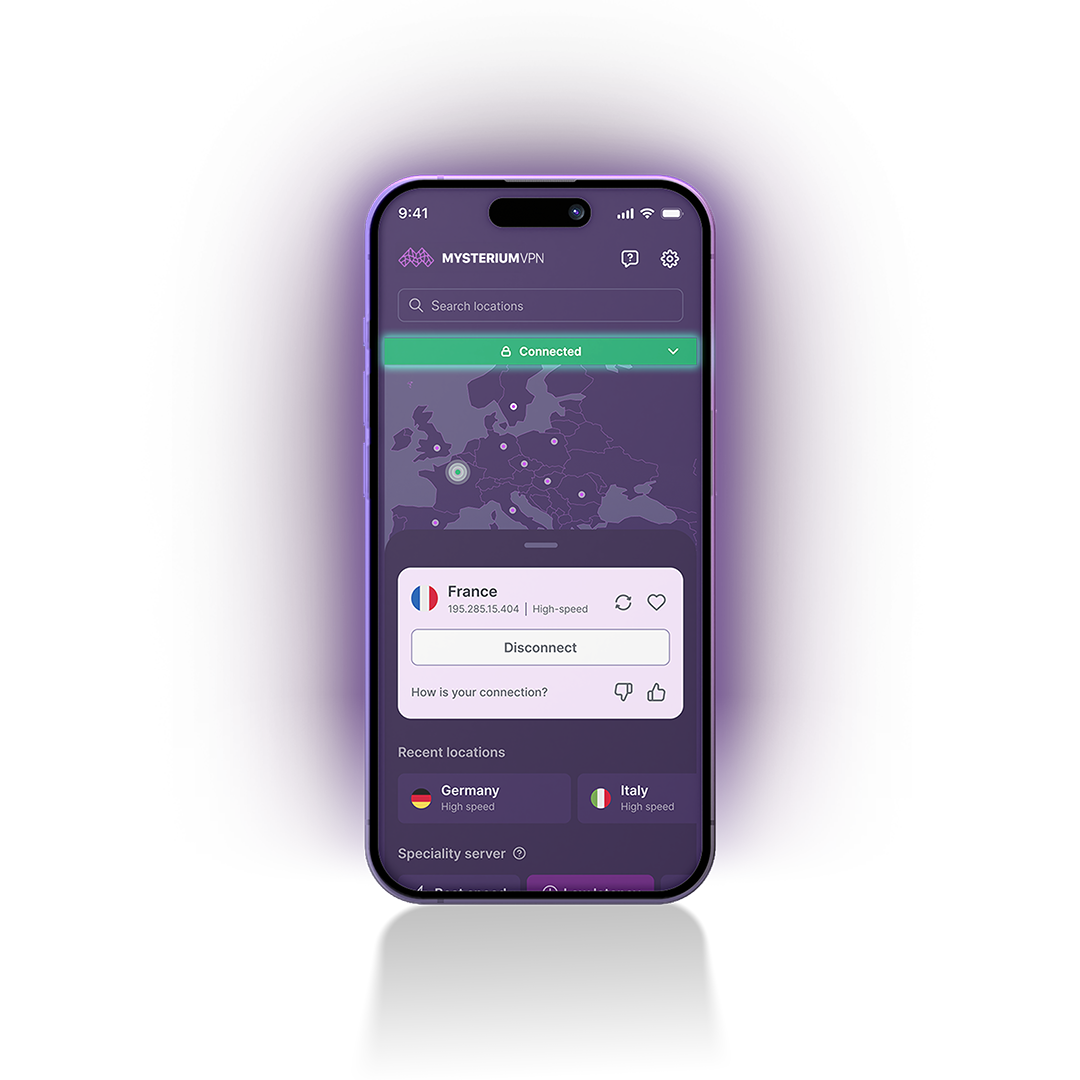
Using a reputable VPN provider creates an encrypted tunnel between your device and the VPN server, preventing your Internet Service Provider from seeing the contents or destinations of your traffic. This helps obscure your network origin from the sites you visit, though it does not provide complete anonymity at the endpoint.
Instead of linking all your apps to a Gmail account or any other mainstream email provider l prefer ProtonMail and Tutanota (now branded as Tuta) because they do not sell user data to data aggregators or third-party advertisers. Proton’s business model is founded on protecting user privacy rather than monetising its users’ data.
This stops data aggregation in its tracks. In turn, this allows users to start building a more sanitized online presence.
I also use the Brave web browser. It’s open-source, which means it's built with transparency in mind, with built-in ad and tracker blocking by default. It also means that third-party cookies are blocked and fingerprinting is blocked. Even better, Brave does not track user browsing habits or monetize user data.
Some of the cybersecurity circles I travel in might say that Tor Browser is better, since it encrypts and routes traffic through the Tor network and is specially designed so no browsing history or user identity is exposed. However, it's notoriously known to be slower than non-Tor-based browsers.
With these essential privacy components, you can create a carefully curated, privacy-focused online presence that helps you navigate regionally blocked platforms while reducing the likelihood that your personal data is collected or monetised by third parties.
In a world where people have become commodities and where information is increasingly censored and even weaponised, practising good anonymity hygiene helps preserve the free flow of information, even in an age where thoughts transmitted electronically across social media can result in prison time.
Trust nothing. Question everything.


Be part of the resistance, quietly.
Get Mysterium VPN
Jesse William McGraw, also known as GhostExodus is a former insider threat and threat actor. He became the first person in recent U.S. history to be convicted of corrupting industrial control systems. Nowadays he focuses on threat intelligence, OSINT, and public speaking, uses his knowledge to bring awareness to security risks.
Related Articles
.png)