FIFA's World Cup Rights Deals Show Why Sports Blackouts Push Fans to Piracy


Today, June 11, 2026, the biggest FIFA World Cup in history kicks off in Mexico City. 48 teams, 104 matches, 16 host cities across three countries, more tickets requested in the first 15 days of sales than the previous four tournaments combined.
By any metric, this is the most ambitious sporting event ever staged, and FIFA has spent years building the infrastructure to match it, including a dedicated public viewing licensing portal, a first-of-its-kind TikTok preferred platform agreement, and broadcast deals in more than 180 territories. And, you know, there is genuinely something worth celebrating in that scope.
Yet, by June 1 of this year, ten days before kickoff, India still had no confirmed broadcaster. India, a country of 1.4 billion people that delivered 745 million viewers across all platforms during Qatar 2022, the second-largest global audience behind only China. Only Zee Entertainment's last-minute entry saved Indian fans from watching the world's most popular sporting event through whatever was available. However, fans in some other parts of the world weren't so lucky.
Key Takeaways
- FIFA has sold World Cup 2026 broadcast rights in 180+ territories, but markets including India were unresolved until days before kickoff, with China's deal confirmed as late as May 15.
- The territorial rights system splits access country by country, producing wildly uneven outcomes: UK fans get all 104 matches free-to-air across BBC and ITV, while Indian fans faced the real prospect of no legal stream at all.
- Pirate streaming sites in India had already pre-sold advertising against unauthorized World Cup streams before Zee signed any rights deal, and the Delhi High Court issued a dynamic injunction against named sites on June 3.
- The EU's 2023 Recommendation on sports piracy and the European Commission's 2025 assessment push for rapid domain blocking to protect rights holders, adding enforcement infrastructure without addressing the access gap that drives piracy in the first place.
- The United States, as one of the host nations, lacks the dynamic site-blocking injunctions available in Canada and Mexico, a gap major sports leagues have flagged as a significant enforcement risk.
A Rights Architecture Nobody Built for the Fan
The way FIFA sells broadcast rights is straightforward to understand and almost impossible to defend as a fan-first policy. Rights are auctioned territory by territory, with free-to-air and streaming sublicenses negotiated separately, and the outcome in any given country depends entirely on what commercial deal closes, at what price, and with whom.
In the UK, BBC Sport and ITV struck a deal to split all 104 matches equally, including a shared final, across free-to-air television, radio, and digital platforms. Every match, free, for everyone. In Germany, Telekom Deutschland's Magenta TV holds all broadcast rights with a required sub-license to a free-to-air channel with nationwide coverage. In France, Groupe M6 was awarded 54 matches free-to-air across two tournaments, covering the competition that drew 25 million French viewers for the Qatar 2022 final.
Those outcomes are not guaranteed by design. They are the product of whoever showed up to the auction with enough money and a compatible regulatory environment. For markets where no one showed up, or where the price disagreement ran for months, the outcome is a legal vacuum.
FIFA itself recognized the fragility of this model in Asia. In June 2024, it announced a new approach to sell rights directly across the region rather than through a middleman, bringing in Infront as an advisory partner for South and Southeast Asia. A press release from March 1, 2026, confirmed deals in Japan, Hong Kong, Indonesia, Singapore, and the Philippines, with Vietnam noted as exclusive negotiations still ongoing. The full licensees overview published by FIFA tells its own story about how patchwork this coverage remains.
But when it comes to the fans, the reality is that they have no standing in any of this. Access to a tournament that FIFA describes as "the most inclusive sporting event in history" depends entirely on whether your country's broadcasters could agree on a price.
When the Deal Falls Through, the Injunction Arrives
The India situation is the clearest case study in what happens when the rights market fails. According to Al Jazeera, the months-long deadlock left India as one of the last major unsold markets globally. The Reliance-Disney joint venture, having spent billions dominating cricket rights, calculated that the 10-12 hour time zone difference between India and North America made the World Cup a hard commercial case at FIFA's price. That calculation produced a gap, and pirate streaming sites filled it immediately.
Investigators found that sites including Soccerbox, Sportsbay, DLHD, and Strumyk had not only set up infrastructure for unauthorized streaming but were also already selling advertising against expected pirate audiences, weeks before Zee signed anything.
Zee had secured rights only on June 1. The Delhi High Court issued a dynamic injunction on June 3, eight days before kickoff, naming rogue websites and directing internet service providers to block them, while empowering Zee to notify ISPs and domain registrars about mirror sites and redirects without returning to court each time.
China presents its own version of the same pattern. China Media Group was confirmed as the official Chinese broadcaster only on May 15, 2026, less than a month before kickoff, for a country whose fans represent an enormous slice of global viewership.
The piracy enforcement followed the rights deal. But the piracy appetite was created by the rights vacuum. And I think that sequence matters far more than the court order, because the court order addresses the symptom while the underlying structure remains intact.
The Enforcement Gets Faster While the Access Stays Fragmented
The legal and regulatory apparatus around sports piracy has grown considerably in the past three years. The EU published its Recommendation on combating online piracy of sports and other live events in May 2023, calling for rapid domain blocking for unauthorized streams, specifically targeting the live sports window where traditional enforcement is too slow.
The European Parliament's legislative tracker lists it as adopted and completed. The European Commission launched a Call for Evidence in April 2025 to assess whether the recommendation was working, signaling that a tougher binding instrument may follow.
Italy went furthest. Its Piracy Shield system, built specifically around Serie A soccer rights and already the subject of a major Cloudflare dispute, requires ISPs to block IP addresses within 30 minutes of a complaint, without judicial review, and with collateral damage that has knocked legitimate services offline repeatedly. AGCOM even attempted to extend the system's scope to DNS providers and VPNs, because VPNs route around IP-level blocks, and that is precisely the enforcement gap rights holders most want to close.
In the United States, major sports leagues have flagged the absence of dynamic site-blocking injunctions as a significant problem, pointing out that Canada and Mexico, the other two host nations, have such mechanisms, while the US does not. That gap is now a formal issue for the 2026 enforcement operation.
In Vietnam, piracy ecosystems, including XoilacTV and ThapcamTV, have already set up dedicated World Cup 2026 sections and published match schedules, generating revenue primarily through gambling and betting operations rather than subscriptions. Law enforcement has repeatedly shut down their operations, and they have repeatedly relaunched. The enforcement cycle costs money, produces arrests, and does not reduce demand by a single viewer.
The System That Made Piracy Inevitable
FIFA sold rights in 180+ territories, called the result the most inclusive tournament in history, and simultaneously ran a rights negotiation in India that nearly ended with 1.4 billion people having no legal access at all. The enforcement infrastructure, the court injunctions, the EU recommendations, and the dynamic blocking systems exist because the rights system routinely creates demand for illegal streams by failing to provide legal ones. And the worst part is that this is a design feature. Territorial exclusivity is the monetization model, and fragmentation of access is what that model produces by necessity.
And yet, the response to every piracy spike is more enforcement, faster blocking, extended scope, VPNs and DNS providers brought inside the perimeter. The access gap that produced the piracy is left exactly where it was.
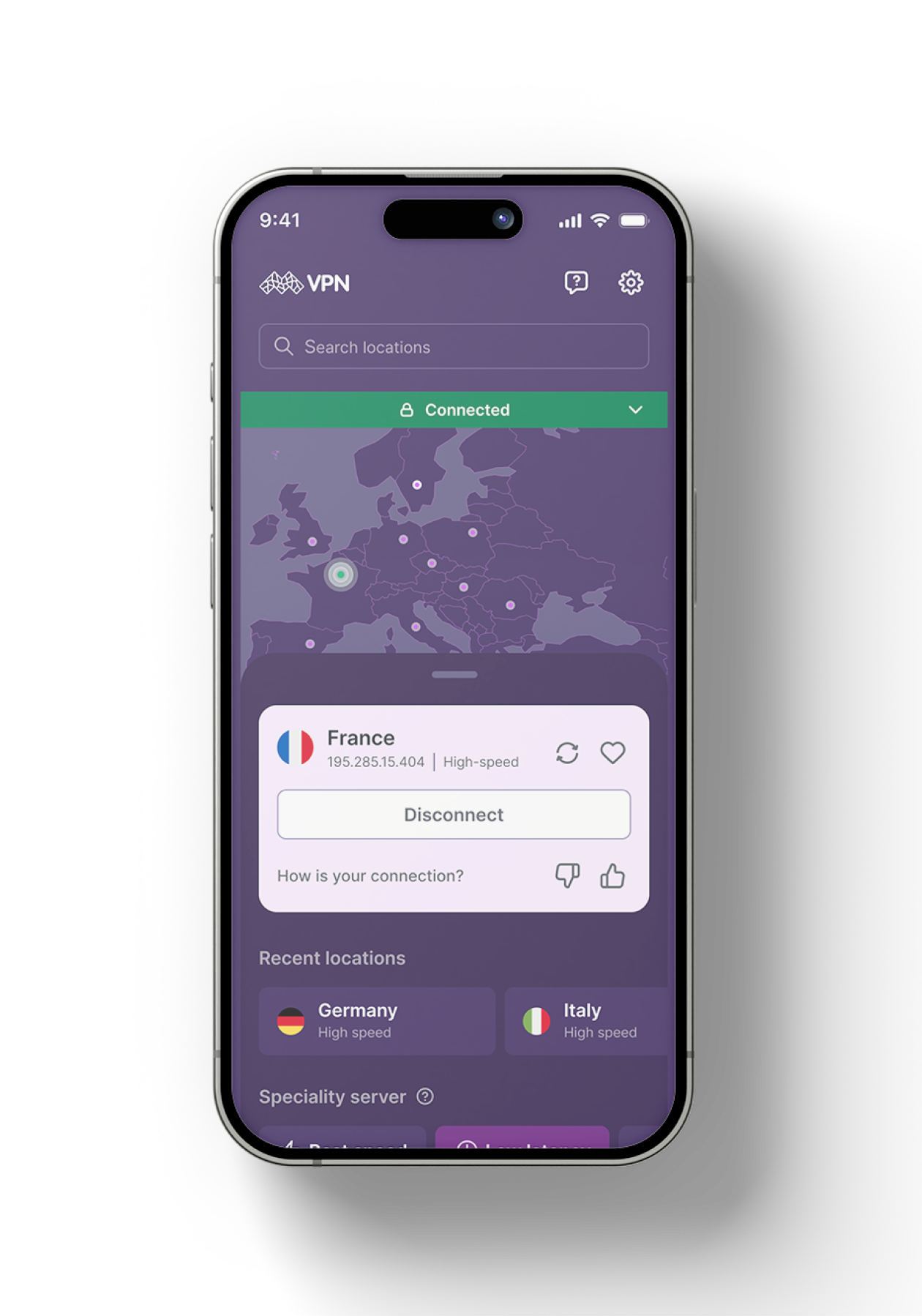
So while piracy is not okay, using a virtual private network to catch a stream freely available in another country may be the only option for the fans whose countries didn’t manage to secure the required rights on time. It’s not ideal, nor is it the way it should be in the first place, but hey, at least you can get Mysterium VPN with 78% off right now and not let these absurd deals stop you from enjoying the World Cup.
As the first whistle blows in Mexico City, it becomes quite clear who the enforcement is actually protecting. It is not protecting the fan in India who had no legal option for months. It is not protecting the viewer in Vietnam whose only alternative was a pirate site bundled with gambling infrastructure. It is protecting the territorial exclusivity that made both of those situations possible. And that system, well, it has no intention of fixing itself.


Be part of the resistance, quietly.
Get Mysterium VPN
Dominykas is a technical writer with a mission to bring you information that will help you keep your digital privacy and security protected at all times. If there's knowledge that can help keep you safe online, Dominykas will be there to cover it.
Related Articles
.png)