Fraudulent Copyright Claims Are Silencing Kazakh and Uzbek Journalists


Key Takeaways
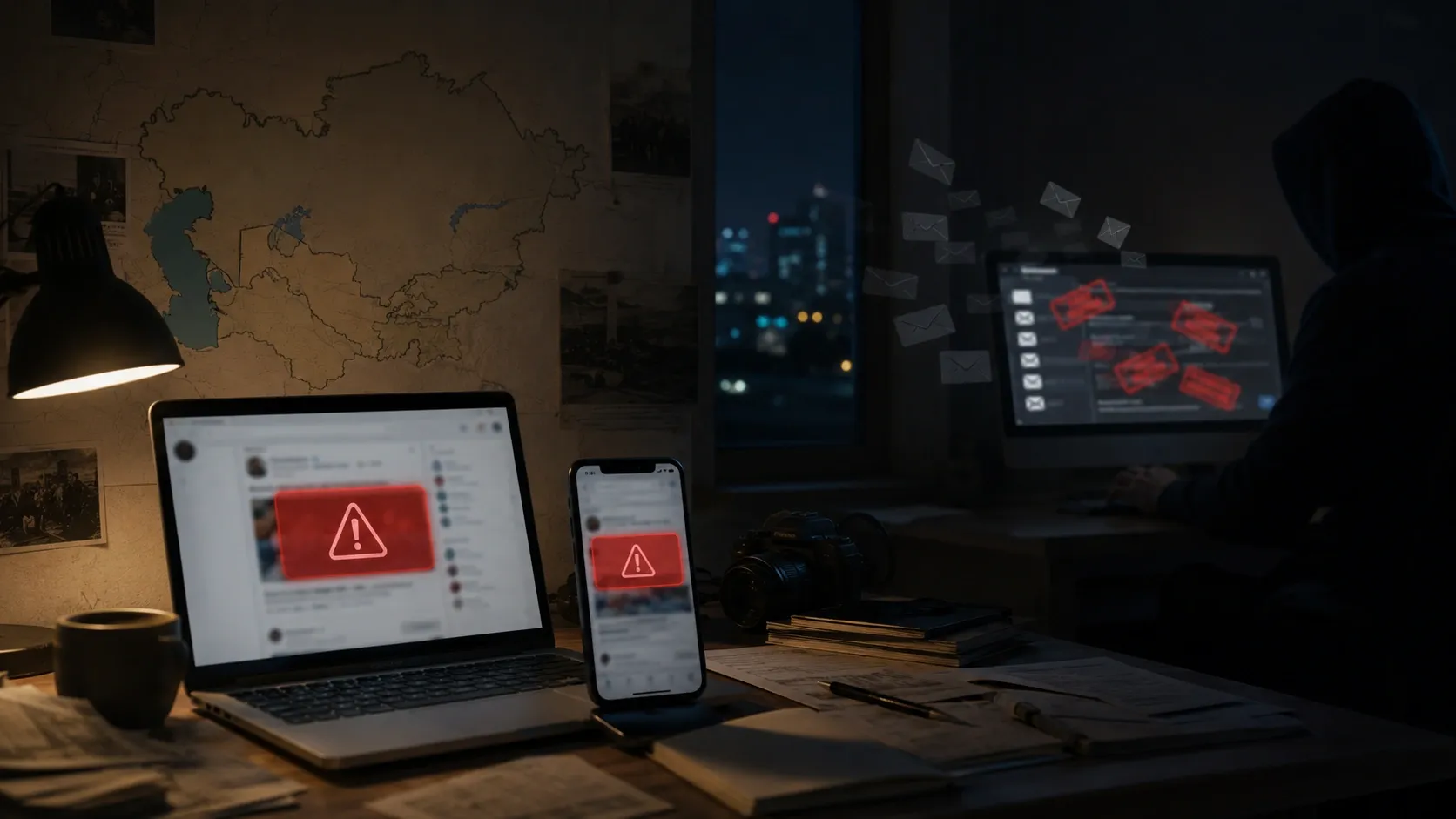
- Between January and April 2026, hundreds of posts from Kazakh outlets Respublika and BASE were removed from Facebook following waves of fake trademark and copyright complaints.
- Complaints were filed using the identities of uninvolved journalists and companies, including French cosmetics group L'Oréal, sent from disposable email addresses with no real connection to those entities.
- Uzbek journalist Ulugbek Khaydarov's Facebook page was blocked after a complaint filed using a fake email created in the name of journalist Aleksey Volosevich, who had no involvement and officially reported the fraud to Facebook without receiving a response.
- Exile outlet Eltuzar Media suffered four Telegram suspensions in 96 days, including one over alleged "illegal pornographic content" that was overturned on appeal.
- Kazakhstan and Uzbekistan rank 149th and 147th, respectively, out of 180 countries in the 2026 RSF Press Freedom Index, and neither Meta nor YouTube responded to RSF's requests for comment by publication.
Platform Moderation as a Demolition Tool
According to documentation by Reporters Without Borders, the takedowns targeting Kazakhstan's Respublika and BASE began after Respublika published a critical analysis of President Kassym-Jomart Tokayev's New Year's speech.
What followed was not a single removal but successive waves, each complaint filed from a disposable email address, each one invoking the name of a company with zero connection to the flagged content. One of those companies was L'Oréal, the French cosmetics group, whose name was apparently borrowed because it sounds credible enough to clear a platform's intake filter.
That is the design of this operation. The complaints were never meant to withstand scrutiny. They were meant to be filed faster than any human reviewer could process them, triggering automated removal before anyone checked whether L'Oréal has a legitimate trademark interest in Kazakh political commentary. Respublika's coverage of Central Asian internet control shows a government with a long history of squeezing independent media, and now, apparently, someone has found a way to use Big Tech's own infrastructure to do it for them.
A Fake Email and a Real Journalist's Name
The Uzbek cases are even more deliberate. Ulugbek Khaydarov, an Uzbek journalist based in Canada, had his Facebook page blocked after a complaint filed in the name of Uzbekistan's national news agency UzA, but not from UzA's actual email. The complaint came from an address that explicitly uses the name of journalist Aleksey Volosevich, founder of the media outlet AsiaTerra. Volosevich has no connection to the complaint or the email address. Someone created the account using his identity and used it to file against a journalist he presumably knows.
Volosevich reported the fake email to Facebook. He received no response. AsiaTerra was also targeted, with its Facebook page removed in early April, briefly restored, then removed again on 9 May after a new coordinated wave. Meanwhile, exile outlet Eltuzar Media, launched in Prague in March 2026, had three successive Telegram channels removed for alleged doxxing, an Instagram account suspended after fraudulent copyright complaints filed in under a minute, and its paid Meta verification mark revoked despite passing all identity checks.
On 5 May, a Telegram discussion group was suspended over alleged pornographic content and reinstated only after an appeal. That was the fourth suspension in 96 days. The mass spread of internet censorship across authoritarian-adjacent states has been well-documented, but the Eltuzar Media timeline makes the acceleration visible.
The Platforms That Aren't Answering
RSF contacted Meta and YouTube to ask how manifestly false complaints, filed from disposable addresses using the names of companies with no connection to the targeted content, could trigger mass removal of journalistic posts. YouTube had not responded to RSF's request for a representative who could comment. Meta said it intended to reply and then missed the deadline.
Kazakhstan ranks 149th and Uzbekistan 147th in the 2026 RSF World Press Freedom Index. Both are near the bottom of an 180-country ranking. The platforms are not operating without context here.
So, with that in mind, I think the non-response is the answer. A moderation system this easy to game, one that accepts trademark complaints from disposable email addresses filed under a cosmetics company's name and removes journalism within minutes, does not stay broken by accident. Fixing it would require reviewing these complaints before acting, which takes resources. Not fixing it costs nothing, except for the journalists whose work disappears and for press freedom, which becomes even more repressed than it already was.


Be part of the resistance, quietly.
Get Mysterium VPN
Dominykas is a technical writer with a mission to bring you information that will help you keep your digital privacy and security protected at all times. If there's knowledge that can help keep you safe online, Dominykas will be there to cover it.
Related Articles
.png)