Georgia Is Handing Speech Policing to Its Interior Ministry, Without Any Rules


Key Takeaways
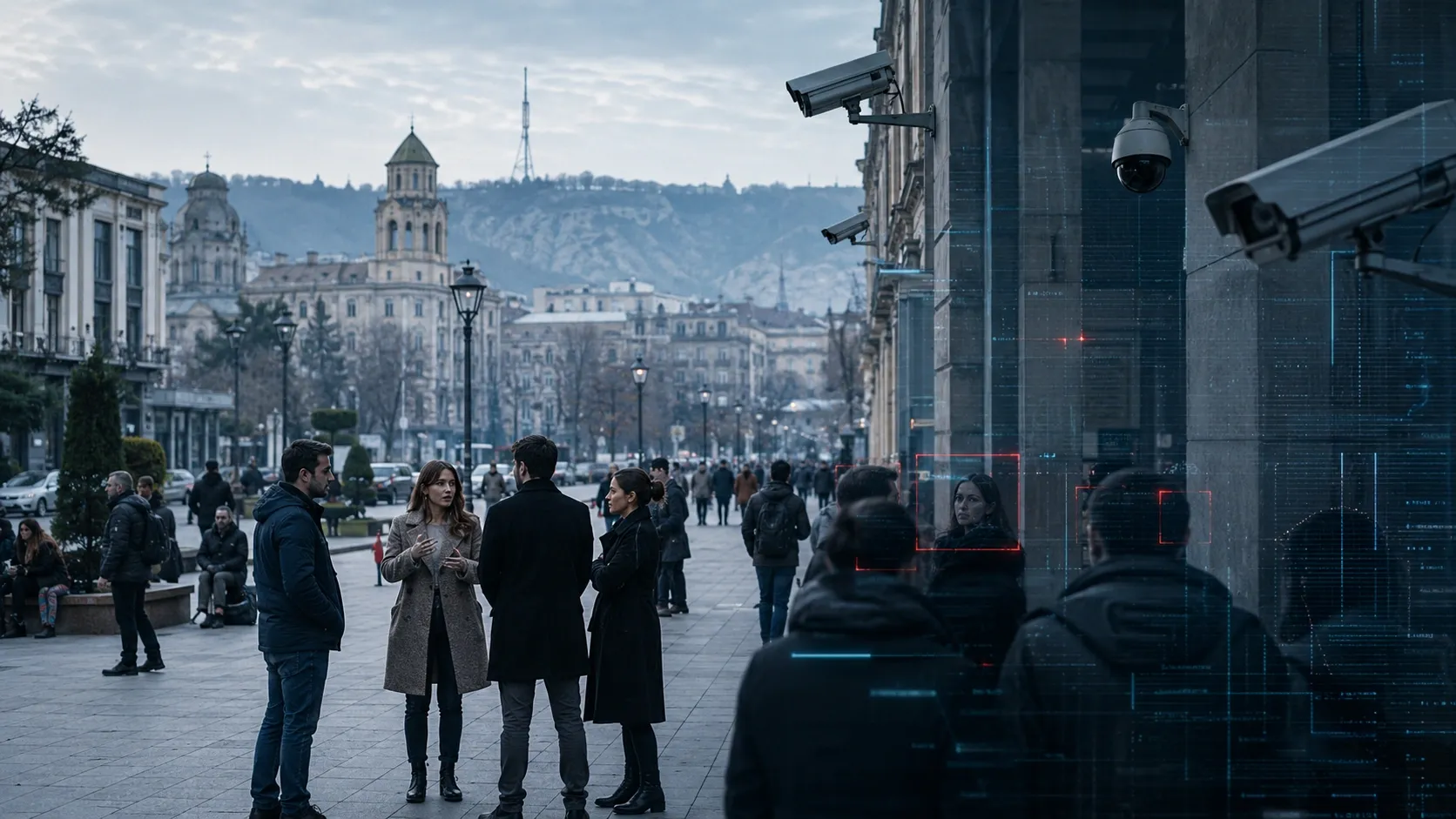
- Georgia's Interior Ministry is establishing a new department to proactively monitor public speech online, including social media posts, photos, and videos, for "hate speech," personal attacks, and "aggressive communication."
- The unit will act without waiting for citizen complaints, conduct its own legal assessments, and refer cases directly to court.
- No legal definition of "hate speech" or "aggressive communication" has been published, leaving the criteria entirely at the state's discretion.
- Tbilisi City Court already fined activists and journalists over social media posts in 2025 under a law introduced during pro-European protests.
- Critics describe the unit as a de facto morality police, arguing that in democratic systems, speech monitoring belongs to human rights institutions, not police structures.
When "Hate Speech" Means Whatever the Ruling Party Needs It to Mean
On May 18, Georgia's ruling Georgian Dream party announced it would create a special department within the Interior Ministry tasked with what officials called "systematic monitoring" of public communication. State Minister Mamuka Mdinaradze, who made the announcement at a government briefing, said the unit would cover hate speech, offensive campaigns, and aggressive communication in public spaces, explicitly including social media posts, photos, captions, and videos.
The unit will not wait for citizens to file complaints. It will monitor independently, prepare its own legal assessments, and refer cases to court when it decides something crosses the line. Deputy Interior Minister Aleksandre Darakhvelidze said a distinction would be made between criticism that falls within freedom of expression and actions that amount to promoting hatred or violating human dignity. He did not publish criteria for how that distinction would be made, because no such criteria exist yet. "Aggressive communication" has no legal definition in Georgian law.
A Country That Already Fines Journalists for Social Media Posts
As far as these things go, it’s pretty much a guarantee that this unit will be abused very soon. Tbilisi City Court fined a number of citizens, including activists and journalists, over social media posts deemed offensive by high-ranking officials in 2025. Police brought those proceedings under Article 173, Part 16 of the Criminal Code, a provision introduced on February 6, 2025, during a period of pro-European protests and heightened political tensions. The timing was not incidental.
The broader pattern of how Georgia applies state discretion against dissent is documented. Human Rights Watch found that in 2024 and the first nine months of 2025, authorities sanctioned 4,444 people for petty hooliganism and 6,725 for disobeying police orders, charges regularly deployed against protesters. Courts imposed detention in 6,504 cases. That is the institutional context into which a proactive, complaint-free, self-directing speech surveillance unit is now being inserted. Georgia's press freedom collapse over the past two years makes the direction of travel incredibly plain.
Morality Police, Rebranded as Public Safety
Tamta Mikeladze, Equality Policy Program Director at the Social Justice Center, was very direct when saying that in democratic systems, monitoring hate speech is assigned to human rights-oriented institutions, not police structures, because police involvement in the sphere of expression always carries the risk of abuse and political control. She described "aggressive communication" as a concept so vague it could be applied to practically any critical, sharp, ironic, or emotional political expression. Her phrase for what this amounts to was precise: a morality police.
She also noted that monitoring functions previously associated with the State Security Service are now expanding into the Interior Ministry, with the surveillance infrastructure growing rather than consolidating. Speech regulation used as political control follows a recognizable sequence: vague categories, undefined criteria, and the self-censorship that follows doing most of the enforcement work without requiring a single court case. The EU's own record on protecting journalists from state pressure makes clear this dynamic is not confined to Georgia.
I find it notable that Mdinaradze framed this initiative as reducing polarization in public debate and opening space for discussion. A police unit with undefined enforcement criteria and proactive surveillance powers does not open space for discussion. It closes it, quietly, by making anyone with a sharp opinion calculate whether their next post is worth the legal exposure.
Georgia's government should publish the legal criteria for what the unit will enforce and explain why the Interior Ministry, rather than an independent human rights body, is being handed that power. Until those answers are public, calling this a hate speech initiative is doing the government's framing work for them.


Be part of the resistance, quietly.
Get Mysterium VPN
Dominykas is a technical writer with a mission to bring you information that will help you keep your digital privacy and security protected at all times. If there's knowledge that can help keep you safe online, Dominykas will be there to cover it.
Related Articles
.png)