The Human Rights Council Has a Surveillance Report and a Room Full of the Guilty


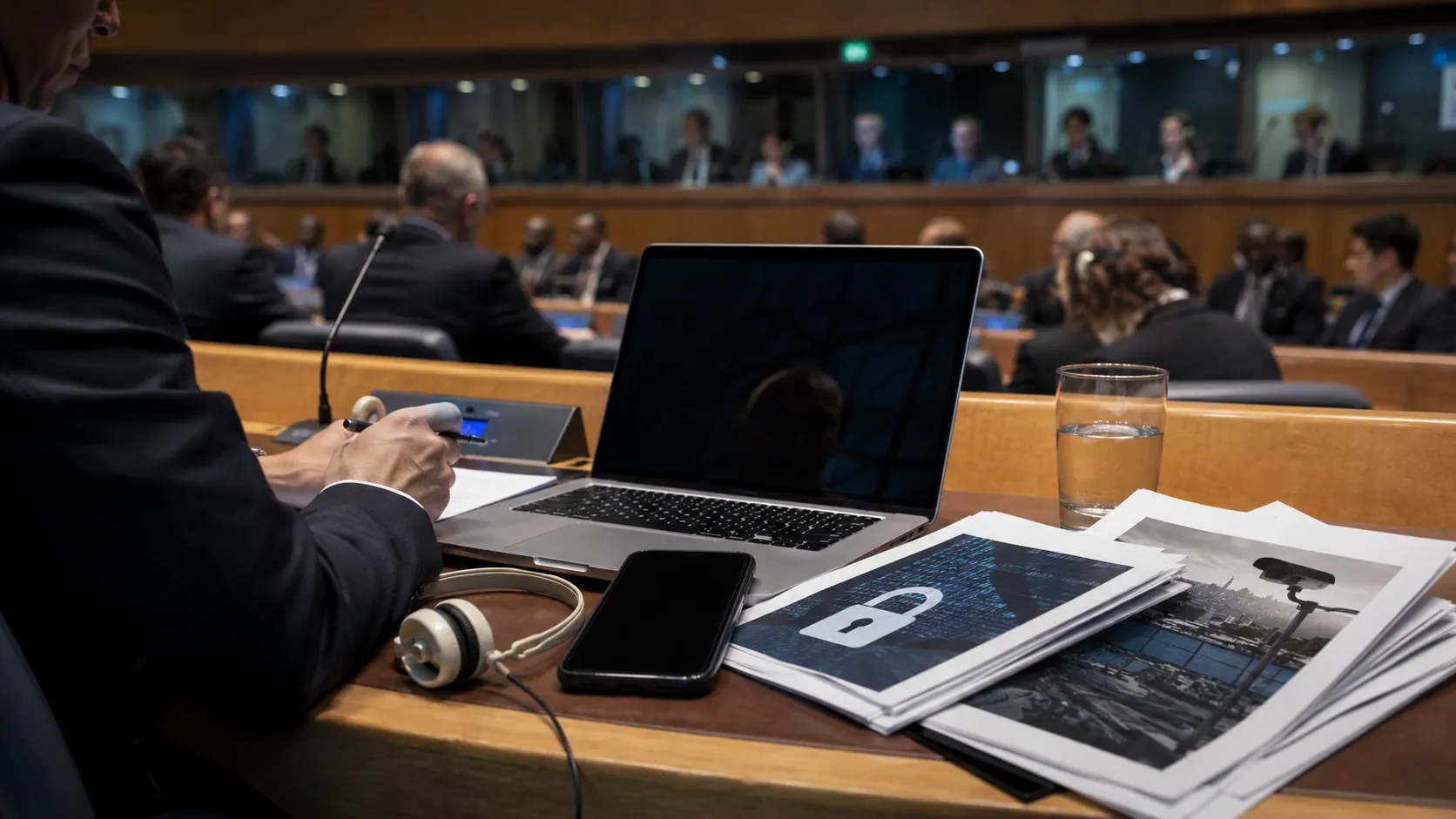
Today, June 15, marks the opening of the 62nd session of the Human Rights Council in Geneva, running through July 7. On paper it is genuinely one of the more substantive sessions the body has put together on digital rights in recent years. A landmark report on AI-assisted surveillance. A live debate on what states owe people whose data crosses borders with no binding legal protection. The full architecture of the modern surveillance state laid out for formal scrutiny, in daylight, at a body with a global mandate. The kind of things we really need right now.
Yet the room where all of this gets debated is filled with the same governments whose security services are the subject of the debate. The states sitting on the Human Rights Council include some of the most prolific deployers of commercial spyware, facial recognition infrastructure, and covert digital monitoring in the world. What a “coincidence,” huh?
Key Takeaways
- The 62nd session of the Human Rights Council, running June 15 to July 7 in Geneva, includes a formal report on how AI-assisted digital surveillance is suppressing assembly and association rights globally.
- Special Rapporteurs have confirmed that facial recognition, spyware, and mass monitoring tools are deployed by states citing security justifications, with no binding global legal framework currently in place to stop them.
- Civil society organizations most directly affected by these surveillance practices have reduced access to the session itself, narrowing the pool of voices shaping the standards supposedly written to protect them.
The Report That Explains Exactly What Is Happening Out There
The headline digital rights item at HRC62 is Special Rapporteur Gina Romero's report on the impact of digital and AI-assisted surveillance on assembly and association rights, including what the mandate calls "chilling effects." The surveillance tools the report examines read like a procurement catalogue for any government that wants to monitor its population without ever saying so openly.
Covert spyware, facial recognition with real-time and retrospective capability, biometric processing tools, AI-powered geofencing, and social media monitoring are all in scope, deployed by state authorities to track, identify, and, in documented cases, preemptively detain people for planning to exercise rights those same states have formally endorsed.
The report's framing is also something worth paying attention to. It says these tools are deployed "often on the pretext of protecting security and public order," and the word "pretext" is doing a remarkable amount of diplomatic work in that sentence.
Civil society submissions to the report were less restrained: real-time facial recognition is already being used to identify and detain activists and protesters across borders, with essentially no public disclosure about when the tools are active, what data they retain, or how long someone stays in a database once they have been flagged. Meanwhile, the pattern of state accountability for this use has been exactly what you would expect it to be, which is to say nonexistent.
A Second Report That Makes the First One Look Optimistic
Arriving at HRC62 as unfinished business from the previous session is the work of Ana Brian Nougrères, the UN Special Rapporteur on the right to privacy, whose March 2026 report to the 61st session laid out a problem that is genuinely staggering in scale.
Billions of people with internet access have their data collected internationally on a daily basis, and the existing legal frameworks, whether regional, national, or whatever applies in a given jurisdiction, do not cover international data collection as a distinct legal phenomenon. There is no comprehensive, binding global instrument. The internet, in the Rapporteur's words, has not been defined as a legal phenomenon in international documents. The data moves, and the law does not follow it.
The Rapporteur called for states to draft a binding international treaty. What HRC62 will produce is a non-binding resolution, if it produces anything at all, because that is how the council works when the topic is inconvenient for enough of its members.
What the Security-and-Order Framing Actually Does
The consistent pressure point in every digital rights negotiation at the Human Rights Council is national security language. States arrive at the table committed to preserving carve-outs, whether emergency exceptions, public order justifications, or counterterrorism provisions that function as open-ended licenses to surveil. The principle that human rights apply online as they do offline has been agreed upon in council language for years. The implementation question is where the exception swallows the rule.
What has changed is the scale at which AI makes the exception operational. Russia's mandatory MAX messenger, confirmed by security researchers to carry surveillance capabilities, including covert audio recording and VPN detection, is one data point among many. AI-enabled mass surveillance is no longer a capability reserved for the largest state actors. It is becoming affordable, scalable, and deployable by governments that previously lacked the technical capacity for it, and the Special Rapporteur's own report makes that point explicitly.
The People Most Affected Are Least Able to Say So
The International Service for Human Rights flagged ahead of HRC62 that civil society access to the session is being actively curtailed. NGOs holding ECOSOC consultative status are limited to three written statements instead of five, a cut imposed as a consequence of a UN liquidity crisis.
Many informal negotiations remain inaccessible remotely, which effectively shuts out organizations from the Global South that cannot afford Geneva travel. The people who have documented, lived with, and reported on the surveillance practices being debated in these rooms are the people with the least structural ability to speak into the process that produces the language governing those practices.
This is not an administrative footnote. It is the mechanism by which the gap between resolution text and lived reality stays intact. If the voices most likely to insist on specific, enforceable language are filtered out of the room during informal consultations, the language that emerges will reflect the preferences of the states doing the filtering. And I absolutely think that is the point.
What the Council Can and Cannot Do
The Human Rights Council is the primary international body for establishing human rights norms in the digital age, and the norms it produces are not meaningless. Special Rapporteur reports create records. Resolutions create political costs for states that ignore them. The work done at HRC62 on AI surveillance and the right to privacy will feed into future legal frameworks, domestic litigation, and civil society advocacy in ways that are real even when they are slow.
Yet the council produces recommendations, not enforcement. The Special Rapporteur called for a binding international treaty on personal data collection, and the odds of the council delivering one are roughly those of the surveillance states in the room voting to constrain themselves. The gap between what the reports say and what the resolutions require is a feature, and it has been for twenty years.
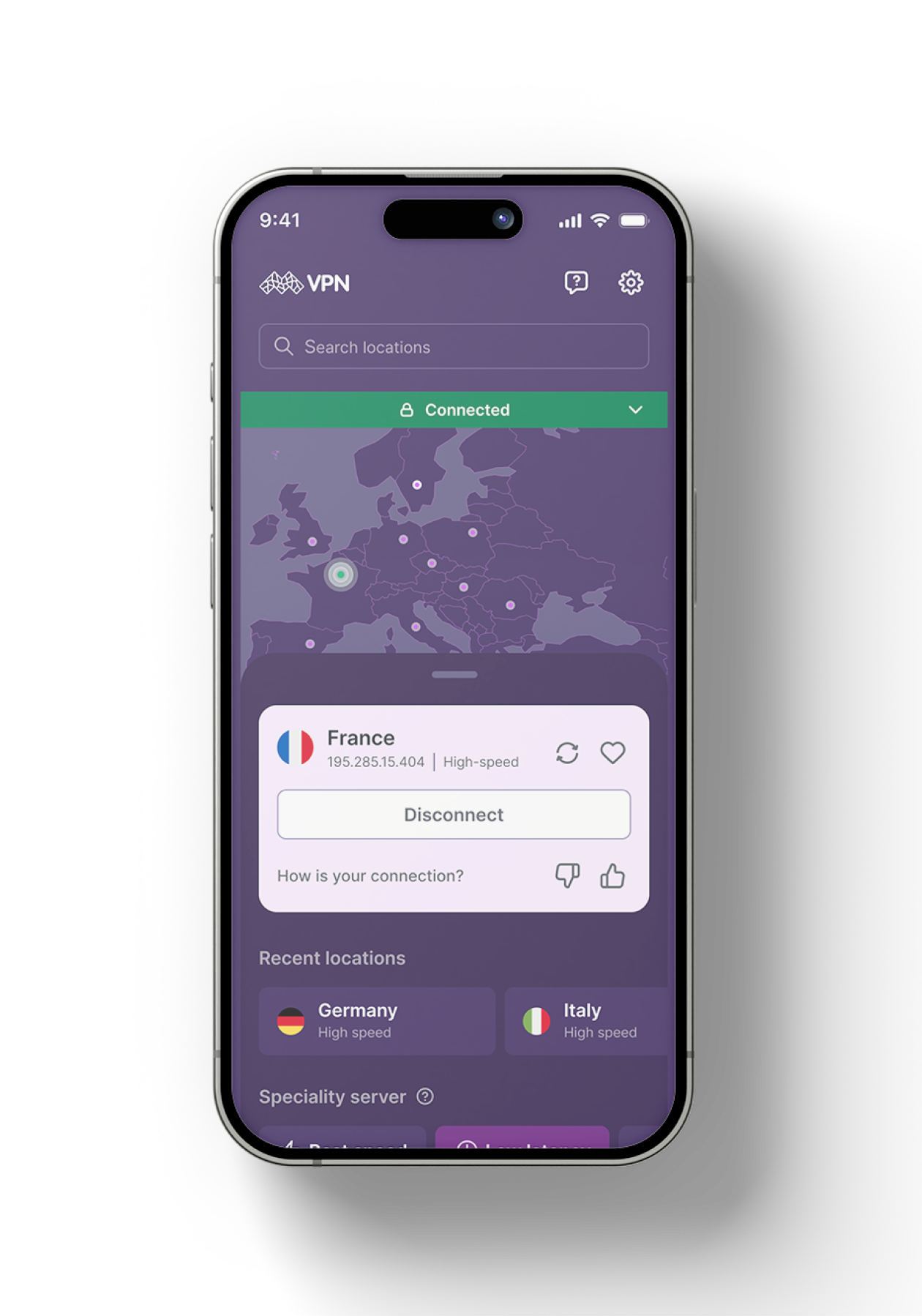
If you are waiting for Geneva to close that gap on your behalf, you are going to be waiting for a while. A VPN will not solve structural impunity, but if you want your traffic to stay your own business while the council deliberates, Mysterium VPN is currently 78% off. The resolutions take time. Your data does not wait.


Be part of the resistance, quietly.
Get Mysterium VPN
Dominykas is a technical writer with a mission to bring you information that will help you keep your digital privacy and security protected at all times. If there's knowledge that can help keep you safe online, Dominykas will be there to cover it.
Related Articles
.png)