Indiana's Teen Social Media Ban is One Signature Away From Becoming a Law


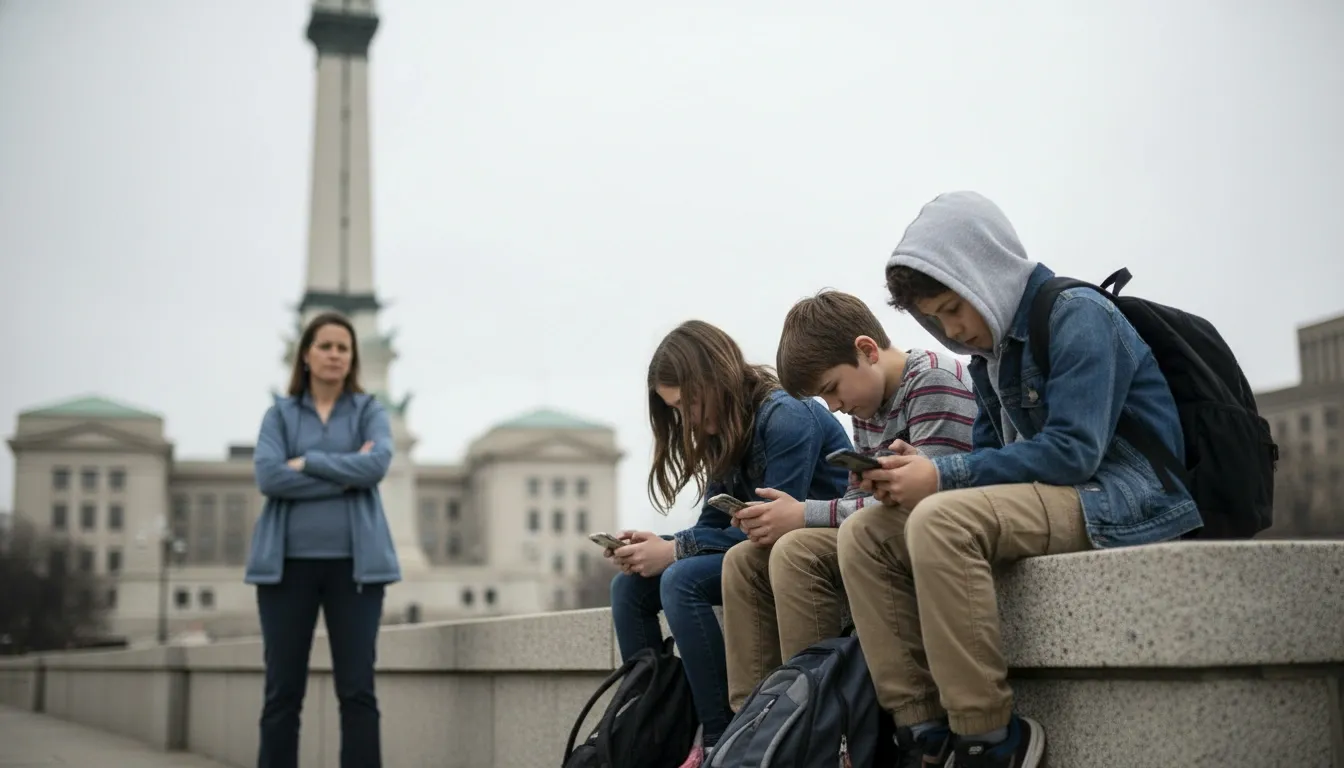
Another week, another place in the world moving to put teenagers behind an age verification wall. This time, we’re taken to the US, Indiana, where they’re standing just the governor's signature away from having one of the strictest youth social media rules in the country.
Senate Bill 199 cleared the legislature this week with bipartisan support and is now sitting on Gov. Mike Braun's desk. If he signs it, and all signs point to yes, it becomes law, and every Hoosier family with a teenager is about to live under a very different set of rules.
Indiana's New Rules For Your Kid's Feed
So what does this new Indiana social media restriction aim to achieve? Well, for under-14s, it means no social media account, period. Teens between the ages of 14 and 17 could use social media, but they’d need a parent or guardian to give written consent before their account could even be created. And for the platforms – they’d have to verify ages before letting anyone sign up, not just ticking a box saying you were born in 1990.
Once a teen's account is up and running, the rules get pretty specific. No algorithmic content recommendations, no showing up in search results for strangers, and DMs locked to approved contacts only. And in addition to that, there's a curfew, meaning that accounts would go dark between 10:30 PM and 6 AM.
At the same time, parents would get their own separate login to monitor the account whenever they want, and could cap daily usage on top of all that. Platforms that ignore any of this could face the state attorney general and be sued by parents for up to $1,000 per violation.
The amendment that cleared on Monday also quietly raised the age ceiling from 16 to 17, pulling one more year group into scope. Enforcement is planned to kick in on January 1, 2027, after the House committee pushed the date back to give platforms time to get ready.
From A Missing Teen To A Senate Vote
In the beginning, this bill almost didn't make it. An earlier version had an outright ban for children under 13. Senators killed that language in late January, spooked by First Amendment concerns. Similar laws had already been challenged in courts across the country, and it looked like Indiana was going to let the whole thing quietly die.
Then Hailey Buzbee went missing. The 17-year-old from Fishers disappeared in early January. Police later announced they believed she met the most tragic fate, and that she'd been in contact for over a year with a 39-year-old man in Ohio, now charged with child sexual exploitation offenses.
The girl’s father testified before the House committee, which was followed by Gov. Braun going on record, blaming big tech's algorithms. Indiana State Police dropped data showing nearly 30,000 child exploitation tips came in during 2025 alone, a 38% jump from the year before.
This forced a quick political calculus shift. The House revived the social media provisions, reworked them, and pushed the bill through. This is exactly what brings us to today.
The Surveillance Hiding In The Fine Print
The general idea of what Indiana is going for makes all the sense in the world. Social media opens up many doors, and it’s absolutely obvious that not all of them should ever be available, especially for minors.
However, these issues with social media have existed for a long time now, and nobody was doing anything about it. Now, faced with that reality, most of the world’s governments decided to find a magic pill that would solve the problem, when in reality, it just doesn’t exist.
Just like with any other illness, where the process of healing takes time and effort, so does fixing the problems with social media require education, platform regulation, and carefully crafted laws, not careless bans slapped on at a moment’s notice.
The truth is that age verification requires tons of data. The bill does restrict how platforms can use what they collect. The moment you build a system that ties real identities to social media accounts, you've built something that can be breached, subpoenaed, or quietly expanded. In reality, this approach may very well end up creating more issues than it solves.
But for the moment, we are exactly where we are. The governor's signature is coming, and whether the legal challenges will follow is another question entirely. For better or worse, the social media scene in Indiana is likely about to change in a big way.


Be part of the resistance, quietly.
Get Mysterium VPN
Dominykas is a technical writer with a mission to bring you information that will help you keep your digital privacy and security protected at all times. If there's knowledge that can help keep you safe online, Dominykas will be there to cover it.
Related Articles
.png)