- Blog >
- News >
- Motorola Weaponized Indian Defamation Law Against Platforms, and Speech Will Pay the Price
Motorola Weaponized Indian Defamation Law Against Platforms, and Speech Will Pay the Price


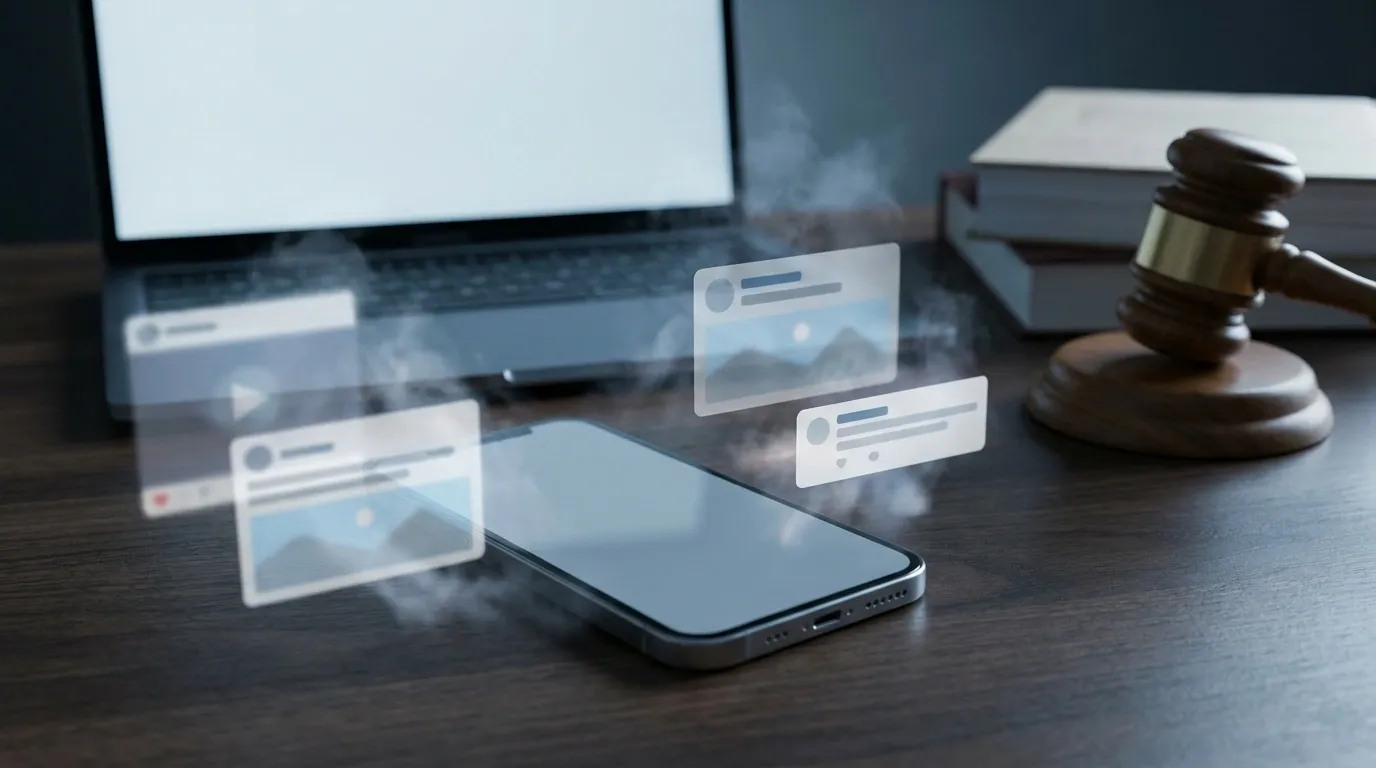
In March 2026, Motorola India filed a 60-plus-page lawsuit in a Bengaluru court naming Google, Meta, X, YouTube, Instagram, Facebook, and Threads as co-defendants alongside dozens of individual creators over more than 360 posts claiming its devices are unsafe, including videos alleging phones catching fire.
The filing seeks a permanent injunction against all existing and future critical content, and an Indian court issued a temporary injunction in April ordering removal of defamatory content, boycott campaigns, and negative campaigns until the June hearing. With the cost of resistance being higher than the cost of compliance, Motorola's Indian arm has found a near-perfect setting in India's current regulatory environment to deploy this dirty legal strategy and use it to the fullest.
Key Takeaways
- Motorola's Indian arm named Google, Meta, X, YouTube, Instagram, Facebook, and Threads as co-defendants in a lawsuit over 360+ user posts alleging its phones are unsafe.
- Rather than filing standard takedown requests, Motorola made platforms directly legally liable, which digital rights experts say will push them to remove content preemptively to avoid litigation.
- A "John Doe" provision extends the chilling effect to unidentified future creators, signaling legal exposure before anyone has even posted anything critical.
- India already cut the platform content removal window from 36 hours to 3 hours in early 2026, and proposed IT rule amendments would tie safe harbor protection to compliance with any executive-issued directive.
- An Indian court sided with Motorola in April, and YouTube videos critical of the company are already unavailable in the country.
What Motorola Actually Did, and Why the Method Is the Point
When a company wants specific content removed, it files takedown requests with the platforms hosting it. The platform reviews the request, removes or rejects it, and the matter is resolved. Motorola skipped that process entirely.
What it did was name platforms as co-defendants, making YouTube, Meta, X, and the rest parties to a defamation lawsuit rather than passive recipients of a request. A takedown request asks platforms to do something. A lawsuit requires them to respond, hire counsel, appear in an Indian court, and defend their role in hosting the content. The legal exposure is categorically different.
"Motorola could have filed takedown requests with the social media platforms," said Jayshree Bajoria, Asia associate director at Human Rights Watch. "Instead, it bypassed that and chose to name them as co-defendants."
The filing targets not just posts alleging device defects or safety hazards but also unfavorable product reviews and general user commentary that Motorola characterizes as false or defamatory. Two creators named in the suit told TechCrunch they only learned about the case after receiving an email from X's support team. One said the post cited related to an incident they had already verified, with Motorola having replaced the device. "Brand is just mentally harassing us, and they want to set an example," that creator said.
Apar Gupta, a lawyer and founding director of the Internet Freedom Foundation, was direct about what the blanket approach actually does. "When a single complaint pulls together hundreds of URLs and asks for a blanket injunction against all of them, it collapses categories that the law has traditionally kept separate," he told TechCrunch, warning that many creators will choose to remove content rather than face the cost and stress of legal proceedings.
I'd say Motorola's legal team understood that perfectly. The goal was not to win a defamation case. It was to make removal cheaper than resistance for everyone involved, and the filing achieves that before a single verdict is delivered.
The John Doe Clause That Chills Speech Before Anyone Posts
John Doe orders in India were designed for piracy cases involving genuinely unidentifiable infringers. Motorola's filing extends the provision to defamation, applying it to creators who have not yet posted anything at all. The order's existence signals to the entire creator ecosystem that critical content about Motorola's products carries legal exposure, regardless of whether the creator is ever named.
Gupta was precise about the consequence, telling Rest of World that "the chilling effect operates before any creator is even named, because the order's existence signals to the entire ecosystem that critical content carries legal exposure. Worse, platforms faced with subsequent takedown requests citing the John Doe order will typically comply rather than litigate."
A platform receiving a takedown request that references an existing John Doe injunction has every legal reason to remove the content without reviewing whether it is actually defamatory. Litigation is expensive. Compliance is free. The John Doe provision converts a court order against unknown future parties into a standing instruction to clear the field.
The April 17 injunction made this concrete, with videos already unavailable in India. Gupta also flagged that some targeted URLs date back to 2019, raising an obvious question about genuine injury from content the company allowed to remain online for more than five years before filing.
India is Motorola's second-largest market after the US, accounting for roughly 21% of global shipments in 2025, with more than 90% of those devices in the sub-$250 segment, where buyers depend most heavily on independent reviews. "The category at greatest risk is precisely the one consumers most depend on: independent product criticism that holds manufacturers accountable for genuine safety and quality issues," Gupta told TechCrunch.
India's Platforms Were Already Conditioned to Comply
Since 2021, India's IT rules have expanded in successive rounds, requiring platforms to set up local offices, appoint grievance officers, and meet increasingly demanding content obligations as conditions for retaining safe harbor protection under Section 79 of the IT Act. In February 2026, the government shortened the removal window from 36 hours to 3 hours. The March 2026 draft amendments from MeitY would go further still, requiring platforms to comply with any executive-issued clarification, advisory, or guideline as a condition of retaining safe harbor, with no requirement for a court order.
Human Rights Watch noted that platforms are already likely to over-censor to retain their safe harbor, and that a civil defamation case of this kind carries an identical chilling effect on top of government pressure, with the Motorola lawsuit adding corporate litigation pointing in exactly the same direction.
Prateek Waghre, a public policy researcher at Tech Policy Press, put the broader logic plainly, saying that governments and companies "will use whatever means they have at their disposal to suppress speech they do not like." India's IT rules rewrite has been tightening this dynamic for years, and the Motorola case slots directly into that pattern.
India is the largest user base for both YouTube and Instagram, and among the top five for X. No platform wants to litigate its operating model in an Indian court when removing a few hundred posts is the alternative.
A Split Industry and a Pattern Worth Naming
Not everyone in India's smartphone industry saw the lawsuit as reasonable. Sunil Raina, managing director of Lava International, framed the choice plainly on X, writing that "when faced with criticism, you have two choices: intimidate or improve. One silences the feedback. The other silences the need for it." Madhav Sheth, CEO of Ai+ and former Realme India head, took the opposite view, arguing that freedom of speech is not a license for defamation.
The Sheth argument sounds like a principled defense of reputation while actually describing a mechanism that removes verified complaints about defective products. One creator named in the suit had already had their device replaced by Motorola. The post allegedly defaming the company documented an incident the company itself acknowledged by issuing a replacement. That is what the blanket injunction sweeps up alongside any genuinely false content.
India has a documented history of corporate defamation suits used to stifle legitimate criticism, established well enough that legal commentators regularly describe them as Strategic Lawsuits Against Public Participation. What distinguishes this approach is scope: most prior actions targeted specific journalists or publishers, while this one targets platforms alongside individual creators, shifting the legal weight onto entities with far more to lose from litigation and far more capacity to comply at scale.
What Comes Next for Platform Speech in India
If the injunction holds at the June hearing, it establishes a template any brand in India can follow: file a broad defamation complaint, name platforms as co-defendants, include a John Doe provision, and wait for a temporary injunction. Platforms remove the content because litigation costs exceed compliance costs. No verdict on the underlying claim is ever required.
This approach would be legally impossible in the United States, where Section 230 of the Communications Decency Act shields platforms from liability for user-generated content. India has no equivalent protection, and that absence, combined with compressed removal timelines and safe harbor conditions, creates exactly the environment where this strategy works.
But the thing is that the wider damage is not to Motorola's critics specifically. It is to the entire category of independent product criticism. Every creator covering consumer technology in India now operates knowing that a brand with sufficient legal resources can obtain a temporary injunction and have content pulled across multiple platforms before any court examines whether a single post was actually false. The chilling effect requires no conviction. The process produces the outcome the filing was designed to achieve.
Platforms removing content because litigation is expensive is not content moderation. It is outsourced censorship with a corporate logo on it, and the June hearing will not change the fact that the template has already been proven to work. I'd argue the only question worth asking now is how many brands are already drafting their own version of the complaint, given that the April injunction delivered results before the case was even heard.


Be part of the resistance, quietly.
Get Mysterium VPN
Dominykas is a technical writer with a mission to bring you information that will help you keep your digital privacy and security protected at all times. If there's knowledge that can help keep you safe online, Dominykas will be there to cover it.
Related Articles
.png)