How Senegal Convicted Journalist René Capain Bassène


Key Takeaways
- CPJ's new six-part podcast presents firsthand accounts from co-defendants who say they were beaten and electrocuted to force false testimony against journalist René Capain Bassène
- César Atoute Badiate, the rebel leader Bassène supposedly incited to carry out the killings, says Bassène was never a member or representative of his movement
- Despite prior CPJ reporting exposing serious flaws in the conviction, Senegal's Supreme Court upheld the life sentence in 2025
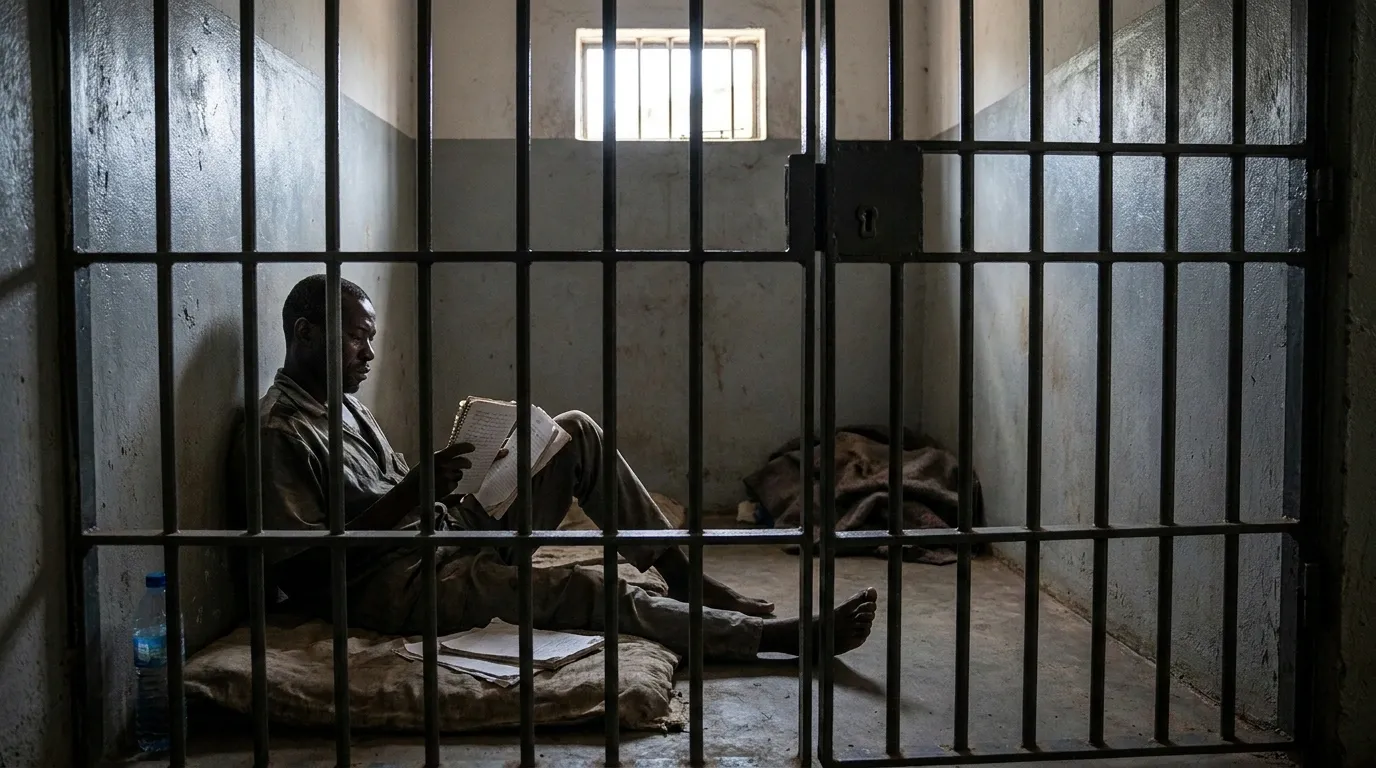
- Bassène himself describes being stripped, beaten until he lost hearing in one ear, and electrocuted during interrogation
- CPJ is calling on President Faye to pardon Bassène by Eid al-Adha, May 27, 2026
Eight Years in Prison for Covering the Wrong Conflict
René Capain Bassène spent his career doing the kind of journalism that actually matters in a place where it's genuinely dangerous. A journalist and author of three books on Senegal's Casamance conflict, he spent years interviewing both sides of a separatist war that has ground on since 1982, one that most of the outside world has never heard of and that the Senegalese government has rarely been eager to have documented.
On January 6, 2018, 14 illegal loggers were killed in the Bayottes forest in Casamance. No group claimed responsibility. Eight days later, heavily armed, masked gendarmes arrived at Bassène's home before dawn, beat him, handcuffed him, and took him into custody without explanation.
In June 2022, a Casamance court convicted him of complicity in murder, attempted murder, and criminal association for those killings, with the prosecution's theory being that Bassène had acted as a militant operative for the Movement of Democratic Forces of Casamance (MFDC) and incited the group's leader, César Atoute Badiate, to carry out the massacre.
A CPJ investigation published in January 2025 found significant flaws in the trial, including altered witness transcripts, disputed email evidence, and contested phone geolocation. Senegal's Supreme Court upheld the life sentence anyway.
What It Actually Took to Build That Case
On May 4, CPJ released a six-part podcast documenting extensive new evidence about how Bassène's conviction was secured. Drawing on interviews with former co-defendants, all of whom were acquitted in 2022, the series describes how they were arrested, held for years, and subjected to beatings and electric shocks to force statements implicating Bassène.
Bassène's own account adds to that picture. He describes being stripped naked, beaten until he lost hearing in one ear, and electrocuted on the genitals during interrogation. His alleged confession contains factual inconsistencies and timeline contradictions, and four separate witnesses placed him at a football match at the time of the killings.
The podcast also notes that Bassène had tried to warn authorities of the increasing risk of an attack on the loggers, based on knowledge from his contacts while researching his fourth book on the conflict. Senegalese prosecutors took that knowledge as evidence of guilt rather than what it actually was: journalism.
The Rebel Leader Just Pulled the Prosecution's Central Claim Apart
The prosecution's entire theory rested on Bassène having a commanding relationship with Badiate, the MFDC faction leader who allegedly carried out the killings on his orders. Badiate, speaking publicly for the first time since 2018 in a statement to CPJ, has now dismantled that claim directly. "René Capain Bassène is neither an MFDC representative nor a leader to give me orders," Badiate wrote from exile in Guinea-Bissau. He knew Bassène as a journalist and writer, having been interviewed by him for a Zig FM radio program called "Carrefour de la paix," focused on resolving the conflict.
While Bassène has spent eight years in a Dakar prison, Badiate has moved freely, meeting Senegalese government officials and signing peace agreements, including one in August 2022 and a follow-up plan in February 2025, all despite holding his own in-absentia life sentence for the same killings. Bassène told CPJ that Badiate's absence from trial had "deprived me of a unique opportunity to prove my innocence." The Senegalese government did not respond to CPJ's requests for comment.
The prosecution's case now has no credible floor. Its testimony was beaten out of acquitted co-defendants, its central actor denies the story, its physical evidence was challenged from the start, and the one man whose testimony could have confirmed or contradicted the whole narrative was allowed to walk free while the journalist rotted in prison. This is the pattern across Africa where state infrastructure gets used not to keep people safe but to keep inconvenient people quiet.
CPJ is calling on Senegal's President Bassirou Diomaye Diakhar Faye to grant Bassène a presidential pardon by Eid al-Adha on May 27, 2026. Bassène's wife, Odette Victorine Coly, has raised their four children alone since his arrest and has been petitioning publicly for his release. President Faye has a petition, a deadline, and a body of evidence that makes this conviction look like exactly what it is. What exactly is he waiting for?


Be part of the resistance, quietly.
Get Mysterium VPN

Dominykas is a technical writer with a mission to bring you information that will help you keep your digital privacy and security protected at all times. If there's knowledge that can help keep you safe online, Dominykas will be there to cover it.
Related Articles
.png)