Tunisia Sentences a TV Commentator to 18 Months in Prison for Migration Remarks


Key Takeaways
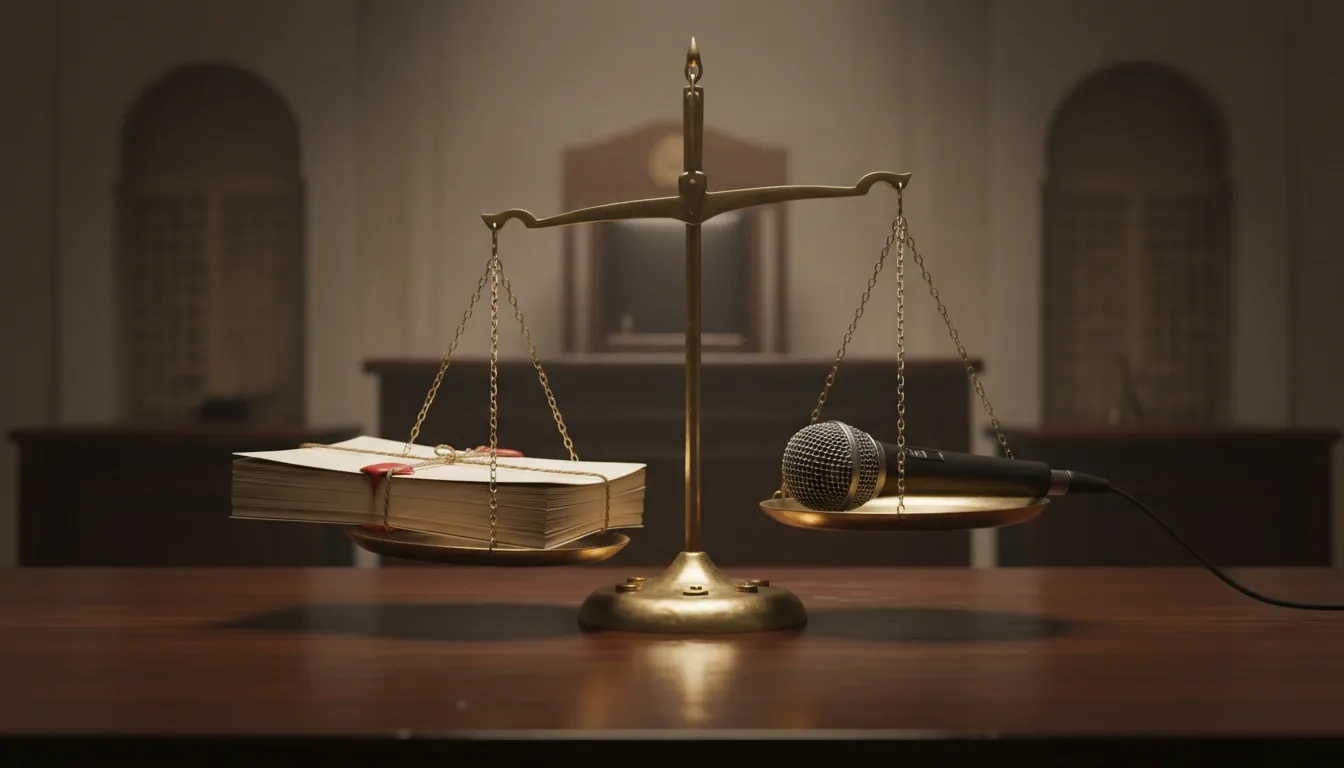
- On April 13, 2026, a Tunisian appeals court upheld the conviction of political commentator and lawyer Sonia Dahmani, reducing her sentence to 18 months under Decree-Law 54.
- The conviction stems from remarks made on Carthage+ TV in 2024 about racism and migration. That is all.
- Dahmani, who received CPJ's 2025 International Press Freedom Award, faces at least five separate cases for her public commentary and risks re-arrest at any moment.
- Decree-Law 54, Tunisia's cybercrime law, has been widely condemned by human rights groups as a purpose-built tool to criminalize dissent and silence journalists.
- The CPJ is calling for the full repeal of Dahmani's conviction and an end to the judicial use of Decree-Law 54 against all journalists in the country.
An 18-Month Sentence for Talking on Television
On April 13, 2026, a Tunisian appeals court upheld the conviction of Sonia Dahmani, a lawyer and political commentator, reducing her original sentence to 18 months in prison. She is currently free, but her sister, Ramla Dahmani, told the Committee to Protect Journalists she risks arrest at any moment. CPJ program director Carlos Martínez de la Serna put it plainly, saying that the sentence reduction does not change the fact that Dahmani is being punished for her speech.
The conviction traces back to remarks Dahmani made on the Carthage+ channel in 2024 about racism and migration. Those remarks were charged under Article 24 of Decree-Law 54, Tunisia's cybercrime law, which imposes heavy prison terms for vaguely defined "false information." Before this latest ruling, she had already served more than a year in prison, released in November 2025 on the same day the European Parliament issued an urgent resolution demanding her freedom amid mounting press freedom concerns. Tunisia's response to that international pressure was, naturally, a fresh conviction.
Tunisia's Favorite Tool for Silencing Critics
Decree-Law 54 is the mechanism, but the pattern runs deeper. Human rights organizations, including Amnesty International and Human Rights Watch, have documented how the law's deliberately imprecise language makes it a ready instrument against anyone willing to say something inconvenient in public, and Dahmani's case is the clearest illustration of that machinery in action.
At least five separate cases have been brought against her for public commentary, which stops being coincidence and becomes a coordinated strategy somewhere around case two. In May 2024, security forces raided the Tunis Bar Association specifically to detain her over media comments, an escalation that drew condemnation internationally. This is what state-sponsored self-censorship actually costs in practice: not just the commentator who goes to prison, but every voice that watches it happen and decides to say less.
Dahmani is far from alone. Journalist Ghassen Ben Khelifa, editor-in-chief of the independent newspaper Inhiyez, was sentenced to two years in March 2026 under the same law, following a prosecution that originally stemmed from a 2022 terrorism accusation. Journalists Mourad Zghidi and Borhen Bsaies remain detained.
Tunisia has turned Decree-Law 54 into a production line, and the pattern mirrors what plays out wherever African governments build surveillance infrastructure to track who said what to whom: broad legal language, compliant courts, and critics who find themselves facing multiple cases at once.
Tunisia Has the Tools to Stop This and Is Choosing Not to Use Them
The CPJ's demands are straightforward: repeal Dahmani's conviction immediately and unconditionally, release all detained journalists, and replace Decree-Law 54 with the country's own press code, Decree-Law 115, which was designed to protect journalists from exactly this kind of non-press-related prosecution. Tunisia has a legal framework that would end this. It simply refuses to apply it.
What is happening to Sonia Dahmani is not a legal gray area or an overzealous prosecutor acting alone. Five cases, a bar association raid, an international press freedom award, a European Parliament resolution, and an appeals court that responded to all of it by handing down another sentence: this is a government that has calculated the cost of silencing critics and decided it is worth paying.
Tunisia needs to repeal Decree-Law 54, release every journalist it has jailed under it, and answer one simple question: If the goal was ever anything other than keeping critical voices quiet, what exactly is the evidence of that?


Be part of the resistance, quietly.
Get Mysterium VPN
Dominykas is a technical writer with a mission to bring you information that will help you keep your digital privacy and security protected at all times. If there's knowledge that can help keep you safe online, Dominykas will be there to cover it.
Related Articles
.png)
.png)