The UK Government Wants to Use Your Biometric Data for Law Enforcement



Key Takeaways
- The Local Government Association (LGA) published a submission on February 2nd supporting a comprehensive legal framework for law enforcement's use of biometric technologies, including facial recognition, inferential AI, and object-based identification.
- The submission reportedly argues for a single, flexible, "principles-based" framework to replace the current patchwork of rules governing biometric technology use.
- The framework is described as intended to accommodate future/emerging technologies (e.g., gait analysis, emotion detection, behavioral prediction) without requiring separate parliamentary debate for each new tool.
- The submission reportedly supports law enforcement use of technologies that identify people by face, infer emotion/intent from body language, track individuals via clothing/belongings/vehicles, and search biometric data across other government databases.
The UK government is quietly laying the groundwork for one of the most expansive biometric surveillance regimes in Europe – and it’s doing it under the comforting language of “clarity,” “frameworks,” and “public confidence.”
A new submission from the Local Government Association (LGA), published on February 2nd, openly supports a comprehensive legal framework governing how law enforcement uses biometric technologies, including facial recognition, inferential AI, and object-based identification.
On paper, it’s about oversight. In reality, it’s about normalising surveillance that would have sparked outrage just a few years ago.
Let’s be clear: this isn’t a debate about whether police should use facial recognition. That decision has already been made. What’s happening now is far more dangerous – the state is deciding how to make it permanent.
From “Exceptional Use” to Everyday Policing
The LGA argues that a single, flexible, principles-based framework is needed to replace the current “patchwork” of rules. That flexibility is the red flag.
A framework designed to adapt to “future technologies” means Parliament won’t need to debate each new tool as it emerges. Facial recognition today. Emotion detection tomorrow. Behaviour prediction the day after that.
In simple terms, “future technologies” doesn't refer to a single, clearly defined system. It's an intentionally unclear category that covers tools that may not yet be deployed (or even fully developed), such as facial recognition, gait analysis, emotion detection, behavioural prediction, and other forms of automated identification. By writing the law to accommodate these future developments, Parliament effectively signs off on technologies before they exist, removing the need for public debate as each new capability appears.
Once the legal door is open, it stays open. The proposal explicitly supports law enforcement using technologies that:
- Identify people by their faces;
- Infer emotions or intentions from body language;
- Track individuals via clothing, belongings, or vehicles;
- Search biometric data across other government databases.
This isn’t targeted surveillance. It’s population-scale monitoring with legal cover.
Public Spaces, Private Data
One of the most telling sections of the submission discusses where these tools may be used: public spaces, protests, community centres, schools, and areas linked to assemblies.
That matters because surveillance doesn’t need to be constant to be effective; it only needs to be possible. When people know their face can be scanned, logged, cross-referenced, and retained, behaviour changes, and fear creeps in. Protests thin out. Speech softens. Participation drops.
The LGA acknowledges this effect on freedom of expression and assembly, then supports moving forward anyway, as long as the paperwork looks right. This is how rights erode in practice: not through bans, but through “proportionate” systems that quietly reshape public life.
Oversight Won’t Save You
Supporters of the framework lean heavily on oversight as the solution. Independent bodies. Authorisation layers. Audit trails. Annual reports. Here’s the problem: oversight occurs after the surveillance infrastructure is in place.
Once biometric systems are deployed across cities, transport hubs, and shared public spaces, rolling them back becomes politically impossible. Oversight doesn’t dismantle systems – it legitimises them.
And let’s not pretend this creepy mission is hypothetical. The framework explicitly supports expanding use cases, integrating new databases, and adapting to evolving standards. That’s not restraint. That’s a plan to scale up.
This Isn’t About Safety – It’s About Control
Governments always justify surveillance by pointing to serious crimes, safeguarding, or imminent threats. But the framework isn’t limited to emergencies. It’s designed for routine use, embedded into everyday policing.
And once biometric surveillance becomes routine, refusing it becomes suspicious.
You won’t be asked whether you consent to facial recognition in a public square. You won’t be able to opt out of having your movements analysed near a protest. You’ll simply be told it’s lawful, authorised, and necessary.
That’s not public safety. That’s behavioural management.


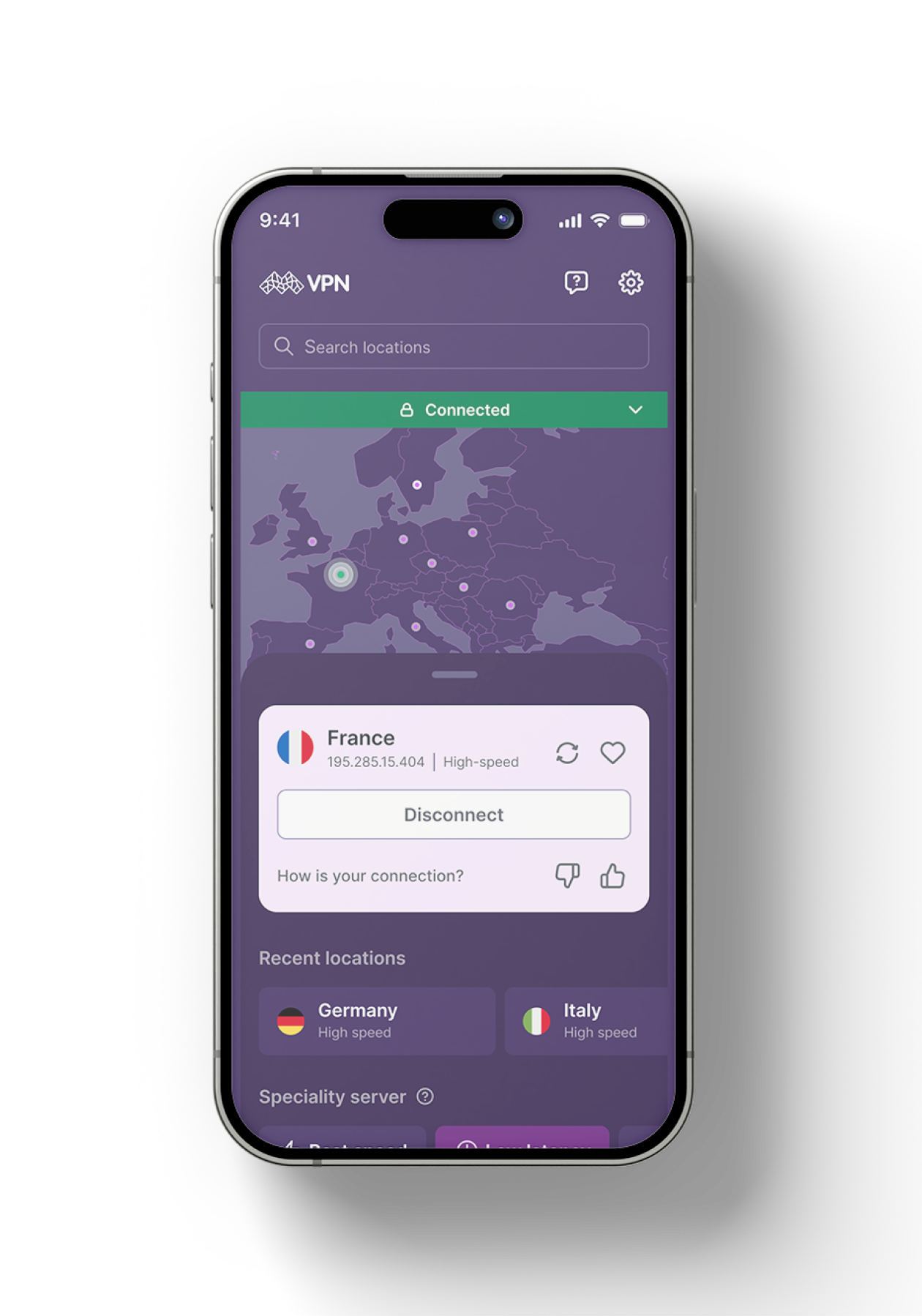
Be part of the resistance, quietly.
Get Mysterium VPN
Gintarė is a cybersecurity writer at Mysterium VPN, where she explores online privacy, VPN technology, and the latest digital threats in editorial pieces. With hands-on experience researching and writing about data protection and digital freedom, Gintarė makes complex security topics accessible and actionable.
Related Articles
.png)