Protecting Your Campaigns: What Is Ad Fraud and How Can You Fight It


Key Takeaways
- Ad fraud manipulates advertising systems to fake engagement, draining budgets through fraudulent clicks, impressions, or installs that never lead to real conversions.
- Fraud takes many forms beyond simple click fraud: bot traffic, ad stacking (hidden layered ads), domain spoofing (misrepresenting where ads appear), and ad hijacking all exploit different weaknesses in the advertising ecosystem.
- Warning signs are detectable before major losses occur. Unusual traffic spikes, high bounce rates, inconsistent impression-to-click ratios, and rapid-fire clicking patterns are all red flags worth monitoring closely.
- Prevention combines technology and vigilance. Ad fraud detection tools (like DoubleVerify or IAS), setting conversion-based goals rather than click-based ones, and choosing ad networks with strict fraud policies all reduce exposure — as demonstrated by large-scale schemes like Methbot and 3ve that went undetected for extended periods.
In the ever-expanding world of digital advertising, businesses invest billions in online ads each year to capture the attention of their intended audience. But here’s the kicker: not every click, view, or interaction comes from a real person genuinely interested in what you’re selling.
Sometimes, it’s just a bot trying to steal your money. Yep, digital ad fraud is the shadowy underbelly of the advertising industry, and it’s more common than you’d think.
Let’s dive into what ad fraud is, how it works, the many forms it takes, and—most importantly—how to keep your ad campaigns safe from these digital fraudsters. Ready? Let’s roll.
What Is Ad Fraud?
Ad fraud refers to any malicious activity where actors manipulate advertising systems to generate fake ad interactions, resulting in advertisers paying for fraudulent activity rather than genuine engagement from real users.
The goal? Pure financial gain. These fraudulent activities, often referred to as online advertising fraud, are engineered to generate revenue for the scammers while leaving you with a hefty bill and no actual conversions.
It’s a bit like throwing a party and paying for a packed venue, only to find out most of the “guests” are cardboard cutouts. That’s ad fraud in a nutshell.
Types of Ad Fraud
Let’s break down the sneaky tactics fraudsters use to commit ad fraud. Trust me, it’s not just one type of scam—there’s a whole buffet of ways to pull off a scam ad scheme.
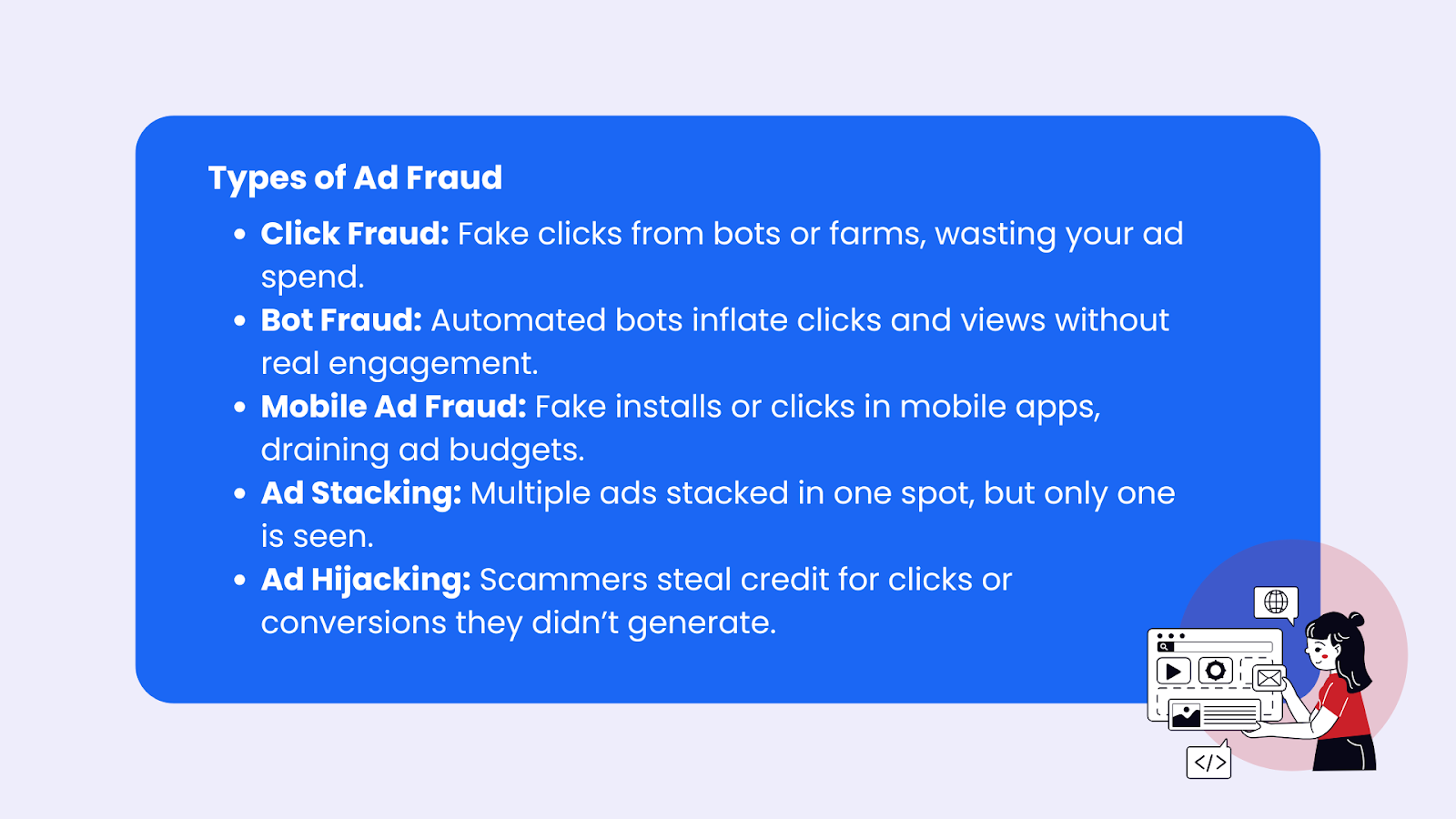
Click Fraud
This is when fraudulent clicks are generated on an ad by "click" bots or "click" farms (more on those later), with no real intention of interacting with the advertised product. The result? You pay for the clicks, but your ad campaign sees no return.
Bot Fraud
Bot traffic refers to automated software programs (a.k.a. “click” bots) that mimic human behavior by “interacting” with ads, websites, or mobile apps.
These bots drive ad fraud by generating misleading advertising metrics, such as automatically clicking large volumes of ads or falsely enhancing engagement stats.
Unlike genuine human behavior, these interactions don’t lead to any actual conversions. It’s basically paying for a lot of digital noise.
Mobile Ad Fraud
Ah, the Wild West of mobile technology. Here, fraudsters take advantage of mobile devices and apps to commit mobile ad fraud—whether by generating fake installs, conversion fraud, or click spamming.
Ad Stacking
Here’s a sneaky one: ad stacking happens when multiple ads are layered on top of each other in a single ad placement, creating hidden ads where only the top ad is visible. You pay for ad impressions on several ads, but the viewer only sees one.
Domain Spoofing
In this scam, malicious actors pretend to be legitimate websites, tricking advertising platforms into thinking your ad is being served on a high-quality site when it’s actually being shown on a low-value or even fraudulent website. It’s digital advertising’s version of catfishing.
Ad Hijacking
This is where a scammer steals the credit for a click or conversion that they had no part in. In ad hijacking, they intercept a legitimate ad, often in an attempt to avoid detection, making it seem like they’ve driven traffic to your ad.
The Impact of Ad Fraud on Businesses
Now, let’s get into why ad fraud is such a big deal. First off, it leads to skewed data. If your ad campaign is being bombarded by fraudulent traffic, you’re getting inaccurate information on what’s working and what isn’t. Your ROI becomes a guessing game.
More importantly, fraudulent clicks, fake ad impressions, and other types of invalid traffic drain your ad budgets fast. Whether you’re running Google Ads, video ads on Connected TV, or mobile app installs, fraudulent activities mean you’re paying for results that aren’t real.
And let’s be real, no one wants to blow their entire ad spend on fake traffic.
How Ad Fraud Works: The Dark Side of the Digital Advertising Ecosystem
So, how exactly do fraudsters pull off these scams in the online advertising ecosystem? Let’s take a peek behind the curtain.
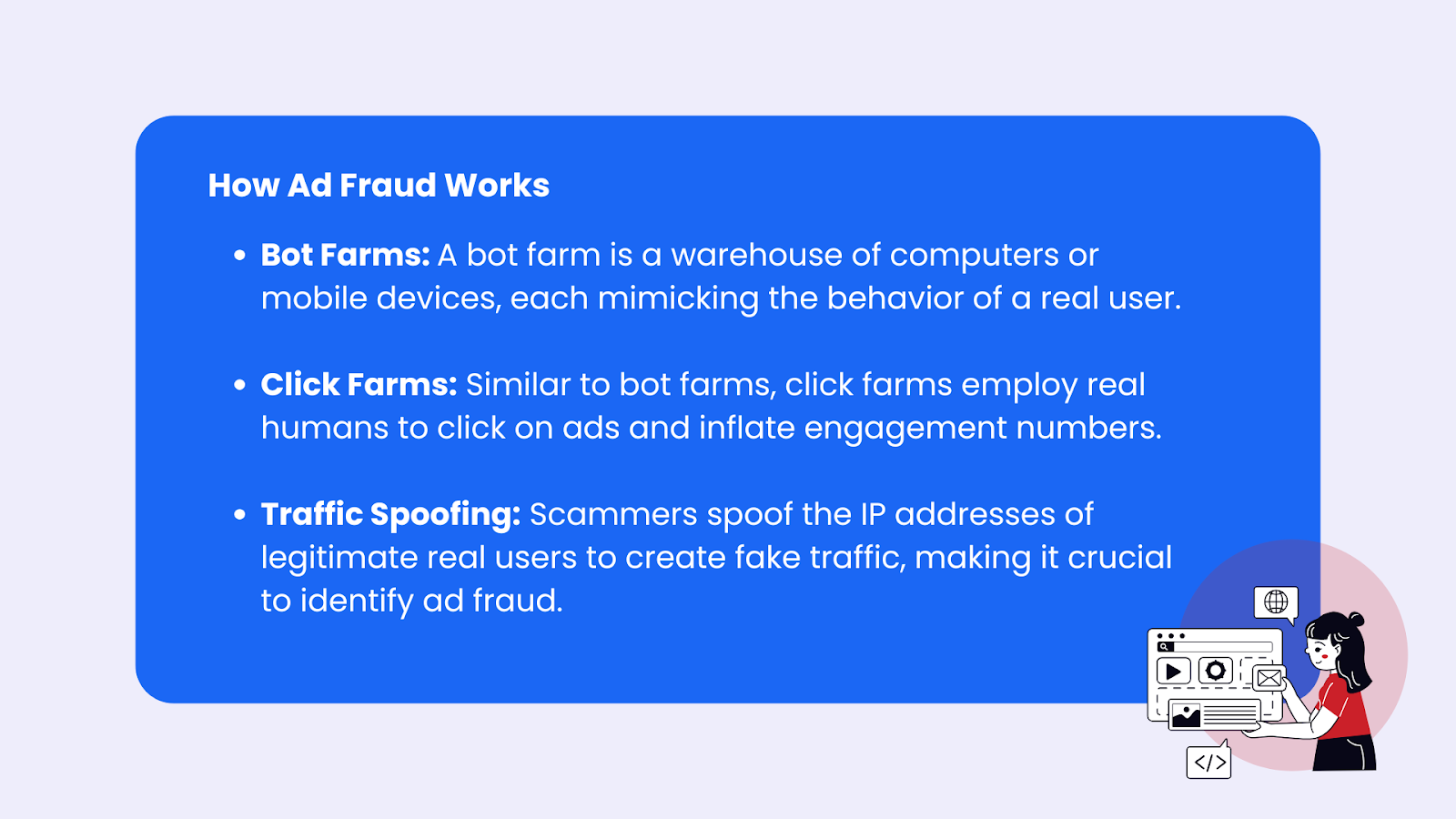
Bot Farms
A bot farm, sometimes called a device farm, is a warehouse of computers or mobile devices, each mimicking the behavior of a real user. These farms can generate thousands of fraudulent clicks and ad impressions, which trick advertising platforms into thinking that real users are interacting with your ads.
Click Farms
Similar to bot farms, click farms employ real humans (or, in some cases, semi-automated software) to click on ads and inflate engagement numbers. The real devices make it harder for detection systems to identify the fraud.
Traffic Spoofing
Here, scammers spoof the IP addresses of legitimate users to create fake traffic, making it crucial to identify ad fraud. These bad actors make it appear as if users from credible sources are interacting with your ads, but it’s just an elaborate illusion.
Identifying Ad Fraud
Identifying ad fraud can be a challenging task, but there are certain signs and techniques that can help advertisers detect and prevent it.
Signs of Ad Fraud
Spotting ad fraud early can save your ad budgets from being drained by fraudulent activities. Here are some red flags to watch out for:
- Unusual Traffic Patterns: If you notice sudden spikes in traffic or visits from geographic locations where you’re not actively advertising, it could be a sign of fraudulent traffic.
- High Bounce Rates or Low Engagement Rates: When users land on your site and leave almost immediately, it suggests that the traffic might not be genuine.
- Inconsistencies in Ad Performance Data: Discrepancies between ad impressions and clicks can indicate that something fishy is going on.
- Suspicious User Behavior: Rapid-fire clicks or unusual navigation patterns are often signs of bots rather than real users.
- Inflated Ad Metrics: Artificially high click-through rates or conversion rates can be a sign that your metrics are being manipulated.

Tools for Detection
Thankfully, there are several tools and techniques available to help you identify and block ad fraud:
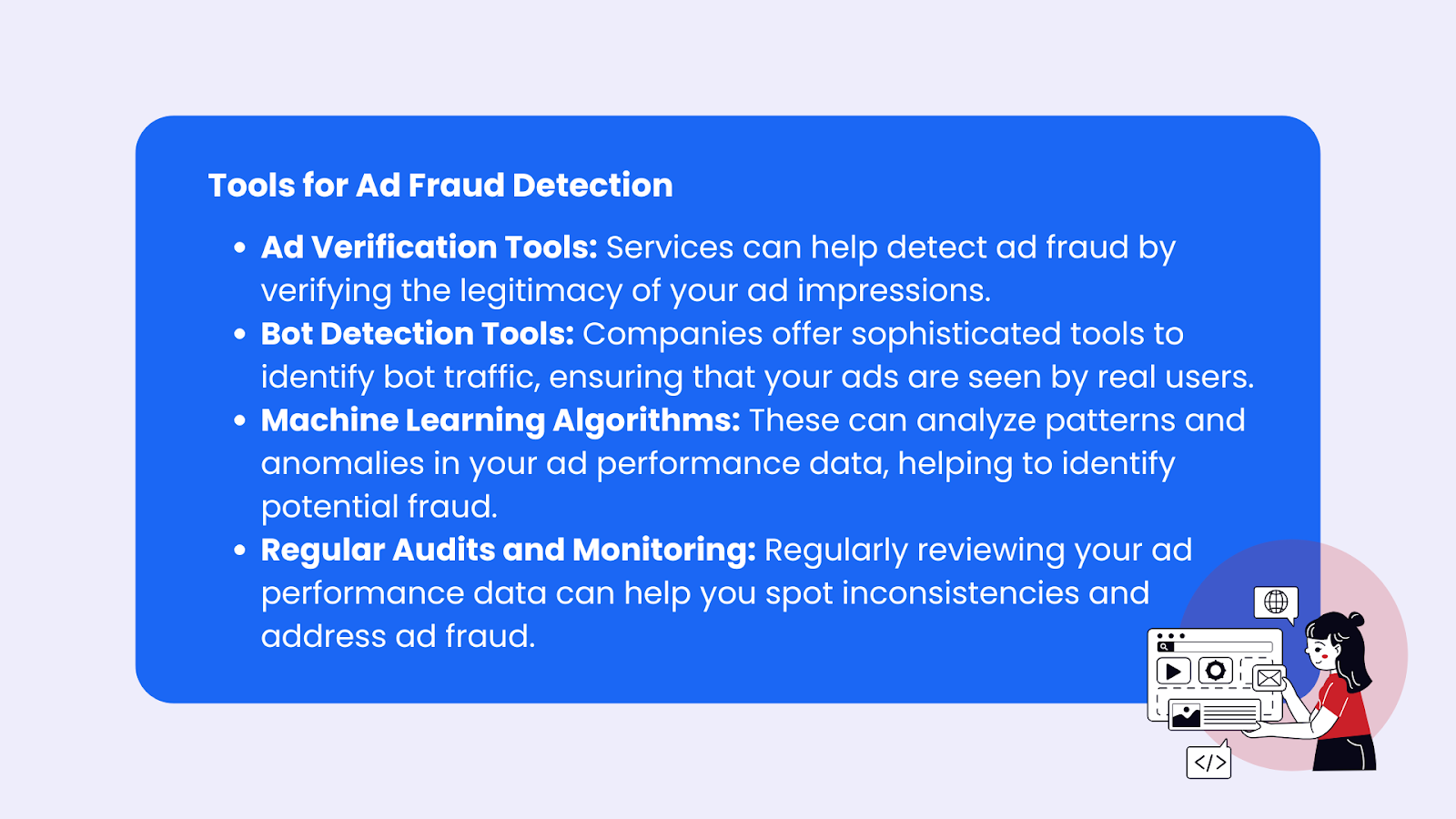
- Ad Verification Tools: Services like Integral Ad Science (IAS) and Moat can help detect and prevent ad fraud by verifying the legitimacy of your ad impressions.
- Bot Detection Tools: Companies like HUMAN offer sophisticated tools to identify and block bot traffic, ensuring that your ads are seen by real users.
- Machine Learning Algorithms: These can analyze patterns and anomalies in your ad performance data, helping to identify potential fraud.
- Regular Audits and Monitoring: Regularly reviewing your ad performance data can help you spot inconsistencies and address ad fraud before it becomes a major issue.
How to Prevent Ad Fraud: Ad Fraud Prevention Strategies
Now that we’ve scared you a little (sorry about that), let’s focus on how you can defend yourself from these fraudulent activities. Spoiler alert: ad fraud detection companies are your best friends here.
Use Ad Fraud Detection Software
Companies like DoubleVerify, Integral Ad Science (IAS), and MOAT offer ad fraud detection systems that can help you identify and block fraudulent traffic before it ruins your campaign. These systems can flag sophisticated invalid traffic (SIVT) like bot fraud, click bots, and domain spoofing.
Set Conversion Goals
By tracking post-click conversions (like app installs or purchases), you can ensure that your ad spend goes toward legitimate user interactions. It’s harder for bots and fraudulent ones to fake real user actions like these.
Monitor Traffic Sources
If you notice a suspicious spike in traffic from unusual sources or countries where you’re not actively advertising, that could be a sign of invalid traffic. Always keep an eye on your traffic data for anomalies.
Opt for Ad Networks with Strict Policies
Not all ad networks are created equal. Look for platforms that have strict fraud prevention measures in place to filter out bad actors. This way, your ads are more likely to reach your intended audience—you know, the ones who will actually buy your stuff.
What To Do If You've Been a Victim of Ad Fraud
Okay, so what happens if you’ve already fallen victim to advertising fraud? Here’s your action plan.
Review Your Campaign Data
Go over your ad campaigns with a fine-tooth comb. Look for anomalies like high ad impressions but low conversions, strange traffic patterns, or lots of fraudulent clicks. These are all red flags that you’ve been hit by fraudulent activity.
Use a VPN for Extra Security
To enhance your security even further, consider using a VPN (Virtual Private Network). A VPN encrypts your internet connection, making it harder for malicious actors to track your data or access sensitive information.
This can help protect you from hackers who may exploit vulnerabilities to carry out fraud. If you're managing ad campaigns remotely or over public Wi-Fi, using a VPN is a smart move to ensure your data stays secure and your campaigns are safe from prying eyes.
Report to Your Ad Network
Once you’ve identified suspicious activity, reach out to your ad networks. They may offer refunds for fraudulent clicks or impressions, especially if you can show evidence of the fraud.
Strengthen Your Fraud Prevention Measures
Work with an ad fraud detection company or implement stricter monitoring tools to prevent future attacks. It’s a bit like bolting the door after the horse has bolted, but better late than never.

Real-Life Examples of Ad Fraud
Let’s wrap things up with some juicy real-life examples of ad fraud. These cases will make you appreciate why ad fraud prevention is critical.
Methbot
One of the largest digital ad fraud operations in history, Methbot generated millions of dollars in fraudulent ad revenue by creating fake domains and pretending to sell ad space on them. At its height, the scam was making up to $5 million per day.
3ve
Another massive ad fraud ring, 3ve used bot farms, fake domains, and device farms to create fake ad impressions, all while masquerading as a legitimate part of the digital advertising ecosystem. It was responsible for billions of fraudulent impressions before it was taken down.
Conclusion: Stay Vigilant and Protect Your Ad Spend
Ad fraud is a significant threat to the advertising industry, but you don’t have to fall victim to it. By understanding the types of ad fraud, keeping a close eye on your traffic data, and using ad fraud detection systems, you can minimize your risk and keep your ad campaigns running smoothly.
Remember: in the world of digital ads, not everything that clicks is gold—sometimes, it’s just a click-bot out to steal your ad dollars. So stay sharp, protect your ad spend, and don’t let the fraudsters win.


Reclaim the internet that took you at your word!
Get Mysterium VPN
Frequently Asked Questions
Gintarė is a cybersecurity writer at Mysterium VPN, where she explores online privacy, VPN technology, and the latest digital threats in editorial pieces. With hands-on experience researching and writing about data protection and digital freedom, Gintarė makes complex security topics accessible and actionable.
Related Articles
.png)