Australia's Social Media Ban Is Quietly Cutting Teens Off From the News


Key Takeaways
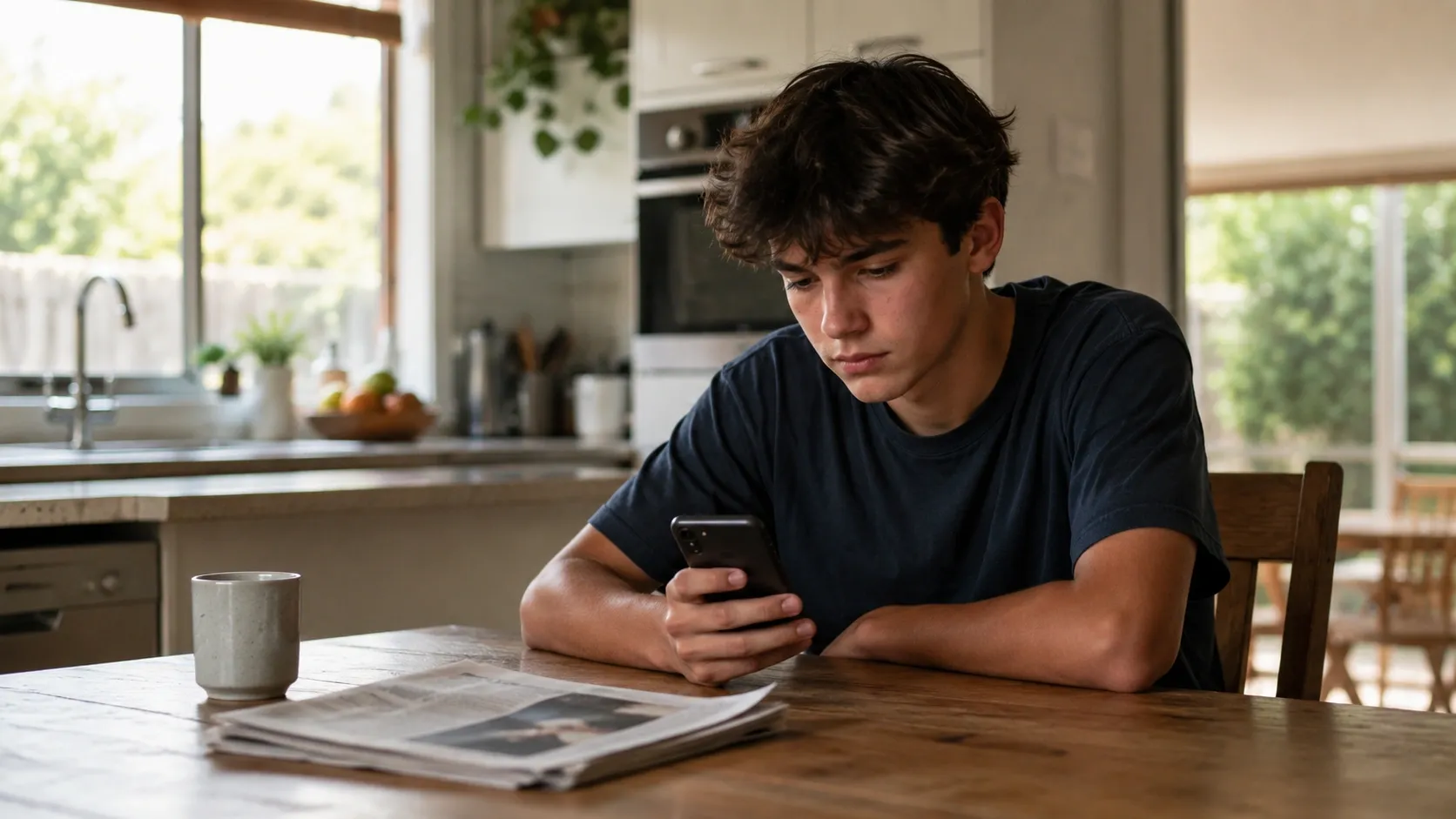
- A February 2026 survey of 1,027 Australians aged 10 to 17 found that the more impacted teens were by the social media ban, the more likely they were to report getting less news.
- Affected teens are also talking less about news and finding fewer opportunities to share their views or take civic action on the issues that matter to them.
- The University of Canberra's Digital News Report 2025 found that Instagram and TikTok, both now banned for under-16s, are the top two news platforms for 18-24-year-olds at 40% and 36%, respectively.
- Despite this, 75% of surveyed teens say news organizations have no idea what their lives are actually like, and 71% say they find it hard to find news relevant to people their age.
- Australia's civics knowledge among school students is now at its lowest point in 20 years, per a 2025 report from the Australian Curriculum, Assessment and Reporting Authority.
The Platforms That Carried Their News Are Gone
When Australia's social media ban came into effect on December 10, 2025, the government framed it as a child protection measure. And perhaps it is, depending on your definition of protection. What it has also done, according to new research published this week by academics from Queensland University of Technology and Western Sydney University, is cut teenagers off from the news in ways that were entirely predictable and are now confirmed.
The research team surveyed 1,027 young Australians aged 10 to 17 in February 2026, two months after the ban took effect. Their finding is direct: the more a young person was affected by the ban, the more likely they were to report getting less news in a way that correlates clearly with how much the ban disrupted their social media access.
This matters because social media was not incidental to how Australian teenagers consumed news. It was the primary channel. The University of Canberra's Digital News Report 2025 found that Instagram reached 40% of 18-24-year-olds as a news source, with TikTok at 36%. Both are now banned for under-16s. Take away the platform, take away the feed. The algorithm that served news alongside everything else is gone, and the teens who relied on it most are now reporting they know less about the world.
Less News, Less Civic Life
The news access problem is only part of what the research uncovered. Affected teens are also talking less about news and finding fewer opportunities to share views or take civic action. The researchers' prior work shows news engagement makes young people feel more capable of responding to issues in their communities. Pull the news, and that sense of capability goes with it.
The broader civics picture is already grim. A 2025 ACARA report based on year 6 and year 10 testing found that school students' civics knowledge is the lowest it has been since testing began 20 years ago. That was before the ban. The February 2026 data suggests the gap is not about to close.
And the researchers found something worth sitting with: 75% of surveyed teens say news organizations have no idea what their lives are actually like, and 71% say they find it difficult to find news relevant to people their age. So they were never turning to traditional outlets in the first place. Mainstream news failed to represent them, social media filled the gap, and now that gap has been reinstated by government order. What exactly were they supposed to find instead?
A Foreseeable Problem Nobody Answered For
Before the ban passed, researchers flagged the risk of teenagers losing news access as a named, documented consequence. Policymakers chose to accept it. The February data confirms they were right to worry.
Yet the ban is not even doing its primary job cleanly. A Molly Rose Foundation survey found that more than 60% of Australian teens aged 12 to 15 who had social media accounts before the ban still had access to at least one banned platform.
Australia has already extended its platform restrictions to search engines and AI chatbots, building out a broader age-verification infrastructure with its own questions about where the scope stops. The teens who bypassed the ban kept their news feeds. The teens who complied lost theirs.
This is a pattern that repeats across every blunt internet restriction: the costs land heaviest on the most obedient. Australia's broader digital restrictions were always most likely to hit the teens who relied on social media for connection and information. The February data adds news access to that list.
The government banned a delivery mechanism without building an alternative. The ABC's Behind the News program and similar initiatives exist, but they reach teenagers who are already engaged, not teenagers who stumbled onto a news story between posts on a platform they were already using.
I don't think the Australian government has a serious answer to what it replaced social media news consumption with. Because the research published this week suggests the answer is nothing, and the civics gap that was already 20 years in the making just got a little wider.


Be part of the resistance, quietly.
Get Mysterium VPN
Dominykas is a technical writer with a mission to bring you information that will help you keep your digital privacy and security protected at all times. If there's knowledge that can help keep you safe online, Dominykas will be there to cover it.
Related Articles
.png)