Eurovision Sells the Dream of a Borderless Europe and Then Geoblocks the Stream


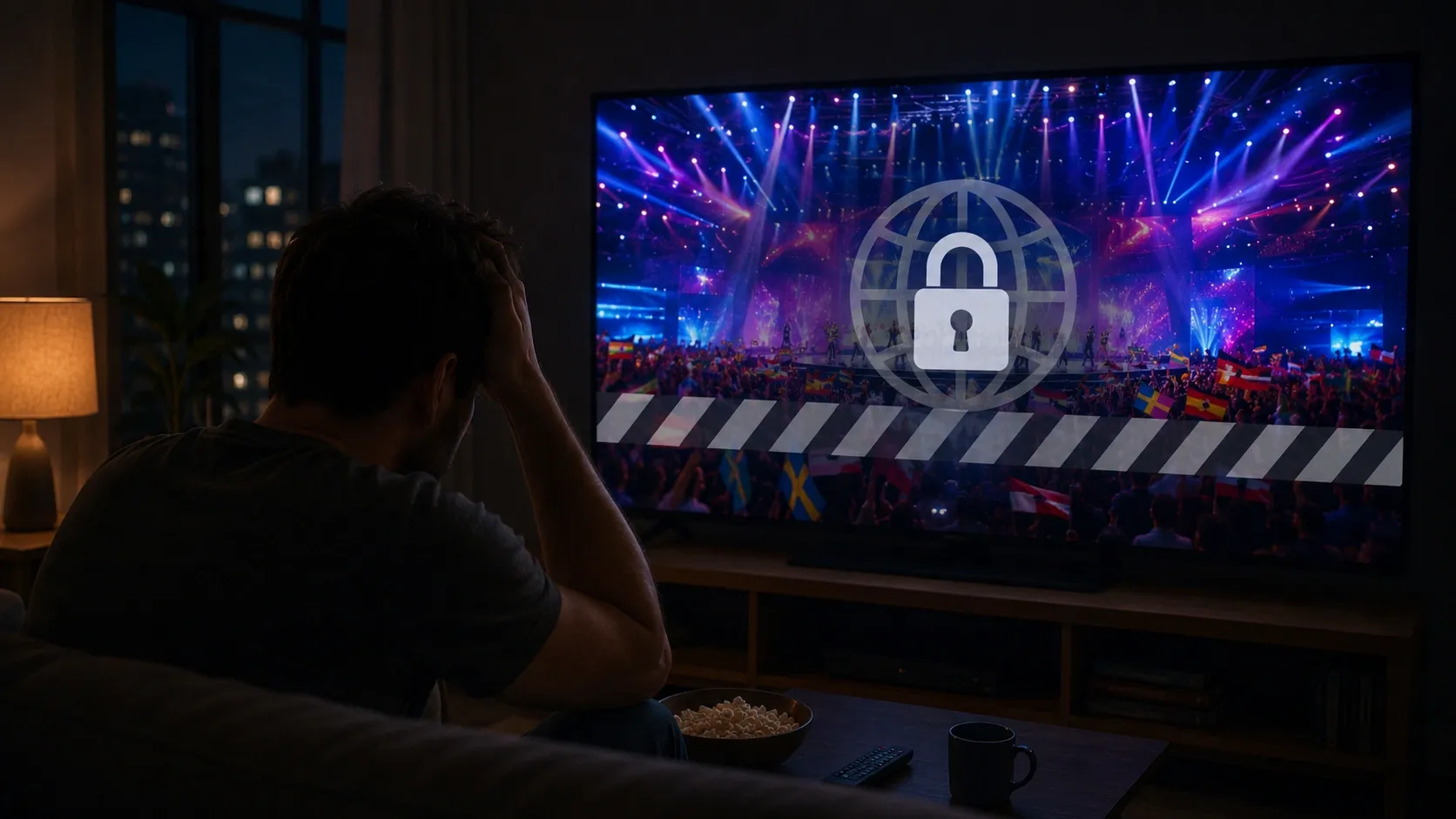
Eurovision starts tomorrow in Vienna, and the 70th edition deserves its moment. The world's biggest music contest is a genuinely fun, occasionally absurd cross-cultural spectacle with 35 countries, semi-finals on May 12 and 14, and a grand final on May 16 at the Wiener Stadthalle. Real artists, real performances, real audiences from dozens of countries sharing one stage for a week. There's a reason it's been running for 70 years.
But unfortunately, not everything about Eurovision is as borderless as it looks. The European Broadcasting Union, which organizes the contest, manages it through a tightly controlled territorial licensing system, and Eurovision 2026 arrives with the usual tangle of geoblocks, broadcaster politics, and now an active political boycott that has pulled five countries off the stage entirely.
Key Takeaways
- Eurovision 2026 runs May 12–16 at Wiener Stadthalle in Vienna, watched by an estimated 200 million people worldwide, but access depends entirely on where you live.
- The EBU licenses the contest territory-by-territory, and the official YouTube stream is geoblocked in countries with active broadcaster deals.
- Five countries withdrew from the 2026 edition over Israel's continued participation, with Ireland, Slovenia, and Spain refusing to broadcast the contest at all.
- The EBU calls Eurovision "non-political" while making explicitly political decisions about who competes, whose songs get renamed, and whose booing gets broadcast.
The Licensing Architecture Nobody Talks About
The EBU owns all broadcasting rights to Eurovision centrally and sublicenses them to national member broadcasters country by country. That model made sense in 1956, when television was an infrastructure business and broadcast signals didn't travel much further than a transmitter could throw them. In 2026, it means that access to one of the most-watched live events on the planet is still determined by which deals your national public broadcaster has signed.
The consequences are predictable. The official Eurovision YouTube stream is available, per the EBU's own broadcast rules, "unless legal restrictions apply," which is the polite way of saying it gets geoblocked wherever a territorial deal is in place. The UK, Australia, Greece, Ukraine, and the United States have all been on the blocked list at various points, with fans in those countries discovering mid-search that the official stream simply doesn't load for them.
What has this led to? Well, for 2026, the EBU struck a deal with YouTube to make the stream free in the US for the first time, alongside Peacock's paid coverage. That's a genuine improvement. But it also illustrates exactly the problem: a viewer in São Paulo or Seoul who wants to watch the contest legally has no clean answer, because whether they can depends on negotiations between Geneva and broadcasters they've never heard of. The territorial internet is the default, not the exception, and Eurovision is one of its cleaner examples.
Five Countries Out, Three Won't Even Air It
In December 2025, the EBU's general assembly voted by a large majority to proceed with Eurovision 2026 as planned, with Israel participating. Two-thirds of members opposed even holding a further vote on the question. In response, five national broadcasters withdrew: Iceland, Ireland, the Netherlands, Slovenia, and Spain. Two of them, Iceland and the Netherlands, still chose to broadcast the contest, while the other three went fully dark. Ireland won't compete and won't air it, a first since 1965. Slovenia and Spain followed suit.
More than 1,100 musicians signed an open letter under the No Music for Genocide campaign urging a boycott, citing what they called the EBU's double standard. And, well, the argument is pretty solid. In 2022, the EBU banned Russia from the contest, stating that participation would bring the competition into disrepute and damage the contest’s reputation. Yet, that same reasoning was not applied to Israel despite over two years of conflict in Gaza and sustained international pressure.
The EBU, for its part, insists that Eurovision is guided by its rules first and foremost, that music is the focus, and that politics comes in "once in a while, unfortunately." Which would be a more coherent position if the EBU hadn't spent the last two years making editorial judgments about Israeli entries, requiring a song originally called "October Rain" to be renamed "Hurricane" under pressure in 2024 while insisting the contest was apolitical throughout.
The people calling for a boycott aren't wrong to be angry. What's happening in Gaza is not a fringe concern, and treating it as an inconvenient distraction from the singing competition is its own kind of political statement. Just because the EBU refuses to say so doesn’t make it not true.
What the Platform Moderation Layer Adds
Austria's ORF, the host broadcaster for 2026, made a notable decision: no censoring of booing directed at any act, and Palestinian flags are permitted in the audience. This is a deliberate departure from the 2024 contest in Malmö and the 2025 edition in Basel, where broadcast production choices muted or minimized expressions of protest.
I want to be clear that I think ORF got this right. Transparency over management. If the audience has something to say, viewers at home should be able to hear it. The alternative, which is what we had for the past two years, is platform moderation as political performance: the impression of open competition with the dissent quietly cleaned up in post.
That same tension between managed neutrality and actual editorial control runs straight through the voting system too. Eurovision uses a split between professional jury votes and public televoting, with additional safeguards introduced after controversies over the 2025 public vote results involving Israel.
The EBU retains the ability to strip points from a country when voting appears to reflect something other than artistic merit. When audiences across Europe vote in patterns that reflect genuine political sentiment about an ongoing conflict, that's the system working exactly as audiences intend it to, not a malfunction to be corrected. You can't simultaneously insist the public vote is a legitimate expression of popular feeling and reserve the right to discard the results when they get too political for comfort.
What This Looks Like from the Outside
Eurovision is worth watching this week, genuinely. The 70th anniversary lineup has moments, the staging at Wiener Stadthalle is spectacular, and for all the structural absurdity, there's something real in seeing 35 countries perform for each other in good faith. That much, I mean sincerely.
And yet the EBU cannot keep insisting the contest exists in a politics-free zone when it bans countries on geopolitical grounds, licenses content by national territory, censors or un-censors audience reactions based on the host broadcaster's preferences, and adjusts voting rules in response to results it doesn't like. All of those are political acts. The only question is whether the EBU will eventually say so out loud.
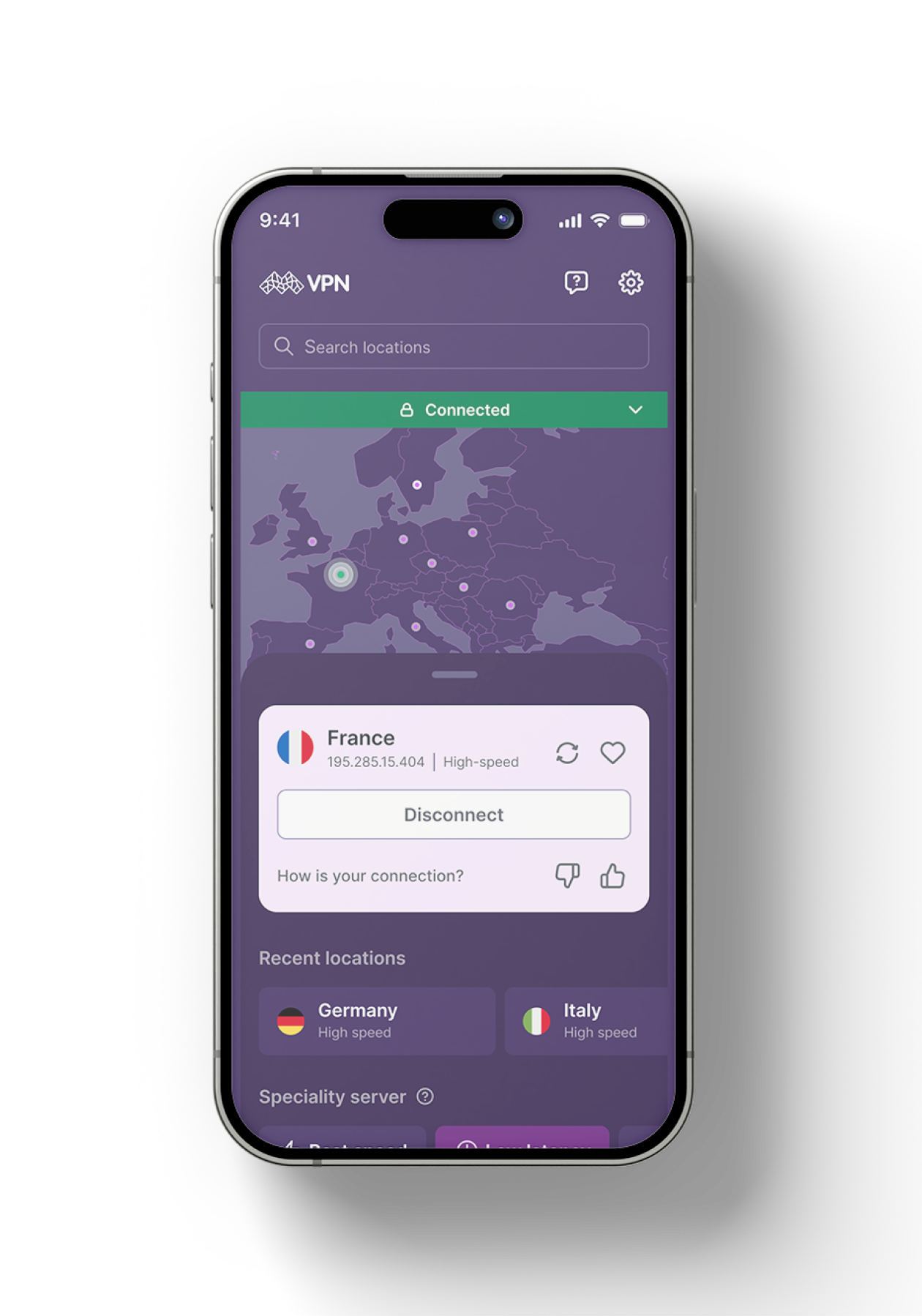
If you're watching from a country where the official stream doesn't load, or you're traveling this week and your home broadcaster's player won't work abroad, that's the licensing architecture doing exactly what it was designed to do. It was designed to protect territorial rights, not viewer access. A Virtual Private Network is often the most practical answer most viewers have, and you can get Mysterium VPN with 78% off now. Make of that what you will.
The contest that claims to celebrate a borderless Europe has always had a border control desk. This year, it's just more visible than usual. Will the EBU acknowledge that, or will we get another year of "music first" while the decisions that actually shape the contest get made quietly in Geneva?


Be part of the resistance, quietly.
Get Mysterium VPN
Dominykas is a technical writer with a mission to bring you information that will help you keep your digital privacy and security protected at all times. If there's knowledge that can help keep you safe online, Dominykas will be there to cover it.
Related Articles
.png)