ICE Spent $25M on Biometric Field Scanners Without a Competitive Bid or Oversight


Key Takeaways
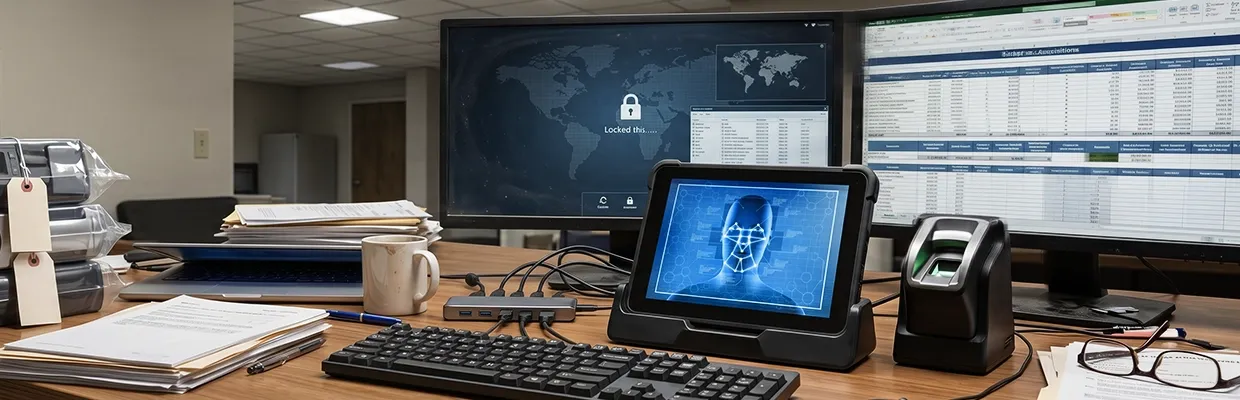
- ICE awarded a $25.1M sole-source contract to Bi2 Technologies for 1,570 biometric scanners capable of iris, fingerprint, and facial recognition.
- The devices give agents field access to Bi2's IRIS database, which contains more than 5 million booking, arrest, and incarceration records from 47 U.S. states, as well as driver's license and vehicle plate data.
- ICE justified skipping competitive bidding by claiming Bi2's capabilities are "unmatched by any competitor," building on a 200-device trial run from the prior year.
- The contract requires no independent security audits and was approved without congressional oversight.
- Neither ICE nor DHS responded to press questions about the deal.
What 1,570 Biometric Scanners Actually Mean
ICE has awarded a $25.1 million sole-source contract to biometric technology company Bi2 Technologies for 1,570 field devices capable of identifying people via iris, fingerprint, and facial recognition. The deal, reported by The Register on May 29, surfaces from a contract summary published by the Department of Homeland Security.
Each device connects agents in the field to Bi2's Inmate Recognition and Identification System, known as IRIS, which matches scanned biometrics against a database of more than five million booking, arrest, and incarceration records spanning 47 states. The same system can also pull driver's license data and vehicle plate information.
The prior Bi2 contract, worth $4.6 million and expiring in September 2025, covered only 200 devices as a trial run. With this new award, up to 1,770 of these scanners could be operational across the country by the end of May 2027. That is not incremental. That is infrastructure at scale.
Senate Democrats spent months demanding that ICE cease use of Mobile Fortify, a facial recognition app used to scan the faces of people agents encountered during operations, including bystanders and observers who were never enforcement targets. Purpose-built iris and fingerprint scanners connected to a 47-state database represent a considerably larger capability than a smartphone app, pointed at a considerably larger population than immigration suspects.
Skipping the Bidding Process, Skipping the Oversight
ICE justified the sole-source award by stating that Bi2's capabilities are "unmatched by any competitor," a claim that, naturally, no competing vendor was allowed to contest. No bids were sought, no independent security audits are required under the contract terms, and congressional oversight was not part of the process.
The agency decided to spend $25 million of public money on a national biometric identification network, determined that only one company could provide it, and structured the contract so that no external body would be required to verify either the technical claims or the security practices afterward. This is the part I find worth naming directly: that is not a procurement shortcut. That is a decision to build surveillance infrastructure while disabling the mechanisms designed to ask whether it should be built.
The same accountability-free pattern has played out with government surveillance contracts across multiple countries, and it always ends the same way: the infrastructure is in place long before anyone gets to vote on it.
What ICE Is Betting No One Will Ask
The structural bet embedded in this contract is that the public will process it as an immigration-enforcement story rather than a surveillance-infrastructure story. Iris scanners cross-referencing five million records are not immigration tools once they exist. The database is built, the devices are in the field, and the legal authority to use them against a wider population expands over time rather than contracts, which is precisely what governments that have formalized biometric law enforcement frameworks elsewhere have consistently demonstrated.
A $4.6 million trial with 200 devices becomes a $25.1 million rollout with 1,570 devices. The next contract will have an even larger number, and it will arrive with the same sole-source justification and the same lack of oversight, because nothing in the current contract structure requires anything different.
Neither ICE nor DHS responded to The Register's questions. That silence is an answer on its own. The question Congress should be asking right now is not whether this contract needs better auditing. It is why a federal agency was permitted to build a 1,770-device biometric identification network without any congressional review in the first place, and what it plans to do with it once the next expansion lands.


Be part of the resistance, quietly.
Get Mysterium VPN
Dominykas is a technical writer with a mission to bring you information that will help you keep your digital privacy and security protected at all times. If there's knowledge that can help keep you safe online, Dominykas will be there to cover it.
Related Articles
.png)