- Blog >
- News >
- Indonesia's Military Brands Its Critics as Foreign Agents, Then Follows Through With Violence
Indonesia's Military Brands Its Critics as Foreign Agents, Then Follows Through With Violence


Key Takeaways
- A new Amnesty International report documents how Indonesia's military and state-aligned actors ran coordinated disinformation campaigns branding activists and journalists as foreign agents during the first 18 months of President Prabowo Subianto's administration.
- Human rights defender Andrie Yunus was targeted by a coordinated smear campaign starting March 16, 2025, with at least 31 military-affiliated social media accounts posting the same "foreign agent" video within 48 hours, using identical hashtags.
- On March 12, 2026, Andrie was attacked with acid in Jakarta, with four officers from the Indonesian Strategic Intelligence Agency (BAIS) subsequently arrested and directly linked to the assault.
- After the attack, a second wave of coordinated disinformation accused Andrie of staging it for foreign funding, invoking a 2026 criminal law that bans receiving money from foreign entities to "overthrow the government."
When the Army's Own Social Media Accounts Label You a Foreign Agent
Amnesty International published its report "Building Up Imaginary Enemies" on May 19, 2026, documenting how Indonesia's military and state-aligned actors ran coordinated disinformation operations against civil society during the first 18 months of the Prabowo administration. The report's central case study is Andrie Yunus, deputy coordinator of KontraS, a human rights organization focused on state violence.
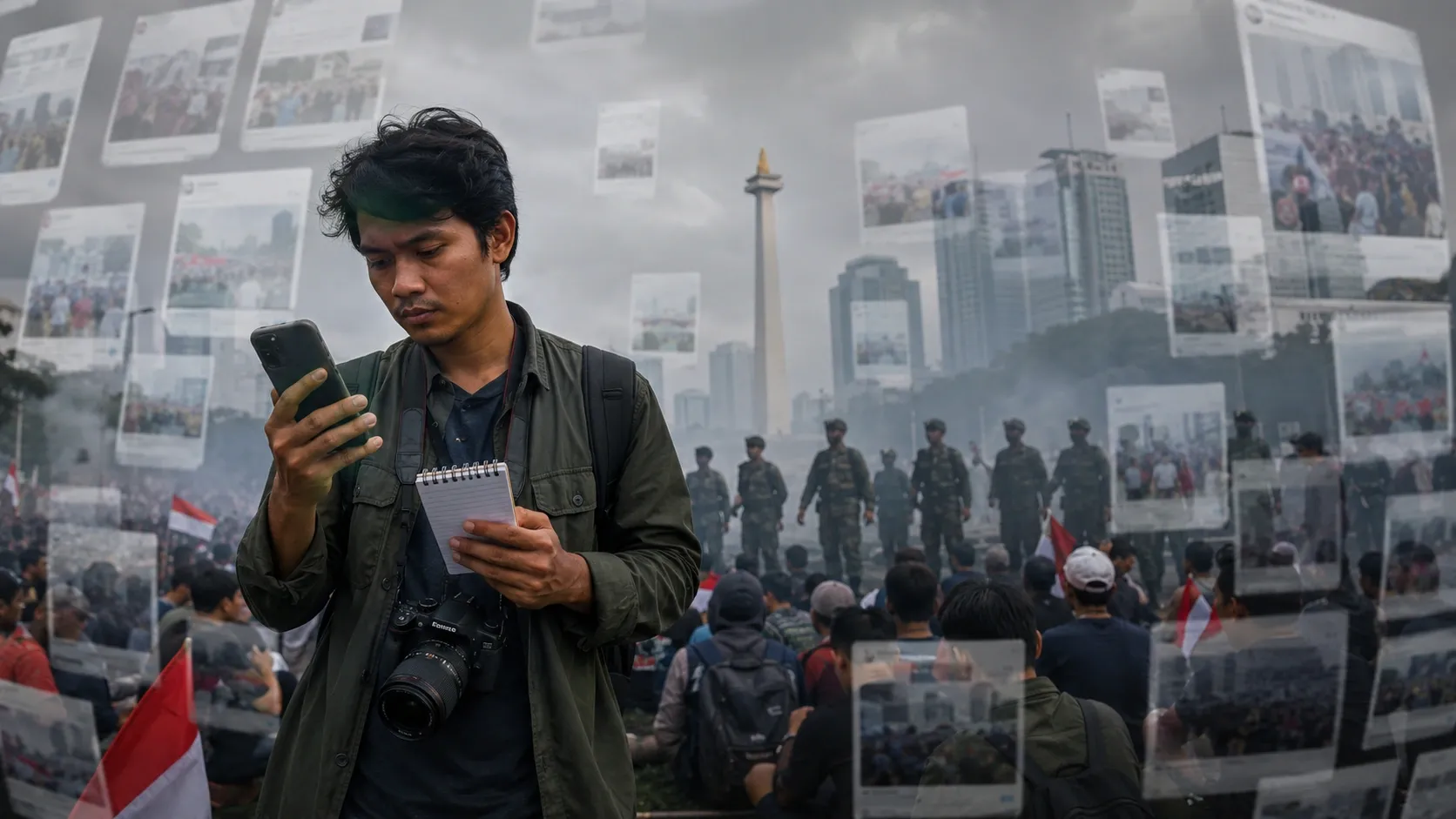
On March 15, 2025, Andrie and two fellow activists staged a peaceful protest against military law revisions that handed active-duty soldiers the right to fill civilian government positions, including at the Attorney-General's office. The next day, a video falsely portraying the protesters as foreign agents trying to weaken Indonesia's military began circulating on social media. Amnesty's metadata analysis shows the earliest dissemination came from an account affiliated with Gerindra, Prabowo's own political party.
Within 48 hours, at least 31 accounts displaying military unit insignia, names, and institutional branding posted the same video with identical hashtags. At least 135 anonymous accounts amplified it further. The Indonesian government was very clearly sending a message.
From Surveillance to Acid: How the Campaign Left the Internet
The harassment did not stay strictly online either. In the months after March 2025, Andrie reported that military officers and unidentified individuals surveilled the KontraS Jakarta office at least 22 times, regularly parking outside to photograph staff. Then, in the early hours of March 12, 2026, Andrie was attacked with acid in Jakarta, suffering serious chemical burns. Four officers from BAIS, Indonesia's military strategic intelligence agency, were arrested in the subsequent investigation.
After the attack, the disinformation operation resumed immediately. Coordinated accounts posted videos invoking Indonesia's new Criminal Code Article 195, which criminalizes receiving foreign funding to overthrow the government, and suggested Andrie had staged the attack to collect foreign money.
To draw a parallel, Hungary recently showed the same playbook in a different register, with its government charging an investigative journalist with espionage days before an election after he published reporting on Russian influence inside the Orbán administration. The label differs, but the mechanism is identical. And while the people of Hungary finally managed to turn their situation around, by far not every such story is one of success.
A Playbook Designed to Outlast Any Single Target
Andrie's case is the sharpest example in the Amnesty report, but not the only one. The Prabowo administration has used "foreign agent" framing broadly, relying on terms like "agen asing" (foreign agents), "antek asing" (foreign lackey), and "ditunggangi asing" (ridden by foreigners) to delegitimize anyone whose criticism is inconvenient
At the same time, Indonesia Gelap, a nationwide protest movement that emerged in February 2025, was hit with the same coordinated tactics, as was Tempo, one of Indonesia's most respected independent outlets, with Amnesty's annexes documenting identical-post networks targeting its journalism.
Civil society actors across Indonesia told Amnesty they are self-censoring, sources are going dark, and the cost-benefit calculation for public criticism has shifted in the military's favor. Serbia's government offered a preview of how this compounds, with its national broadcaster naming over 45 journalists as enemies of the state while physical attacks on reporters surged 367% in a single year. Indonesia is running a faster version of the same script.
Amnesty also names social media platforms as contributors, finding that Instagram, TikTok, Facebook, and YouTube failed to moderate coordinated content that violated their own standards, with recommendation algorithms amplifying it at no cost to the state.
I find it genuinely difficult to separate that from the outcome: a human rights defender attacked with acid by military intelligence officers who spent a year publicly arguing he deserved it. Whether Indonesia's parliament, regional allies, and the platforms that carried the smears treat that as a warning or a model is the only question left.


Be part of the resistance, quietly.
Get Mysterium VPN
Dominykas is a technical writer with a mission to bring you information that will help you keep your digital privacy and security protected at all times. If there's knowledge that can help keep you safe online, Dominykas will be there to cover it.
Related Articles
.png)