Maldives Sends Two Journalists to Jail Over a Documentary and a Question


Key Takeaways
- On May 12, 2026, a court in Malé sentenced Adhadhu journalist and MJA Vice President Mohamed Shahuzaan to 15 days in jail for questioning President Muizzu about the "Aisha" documentary at a press conference.
- Adhadhu journalist Leevan Ali Nasir received a 10-day sentence for reporting on the criminal court gag order prohibiting discussion of the documentary.
- The President's Office has banned all Adhadhu journalists from presidential briefings indefinitely, citing the same gag order.
- The jailings follow an April 27 police raid on Adhadhu's newsroom, equipment seizures, and travel bans on senior staff, all tied to the outlet's documentary alleging presidential misconduct.
- The CPJ and six other press freedom organizations wrote to President Muizzu on May 8 demanding an end to criminal proceedings against Adhadhu, with no response from the President's Office or the police.
A Question the President Didn't Want Asked
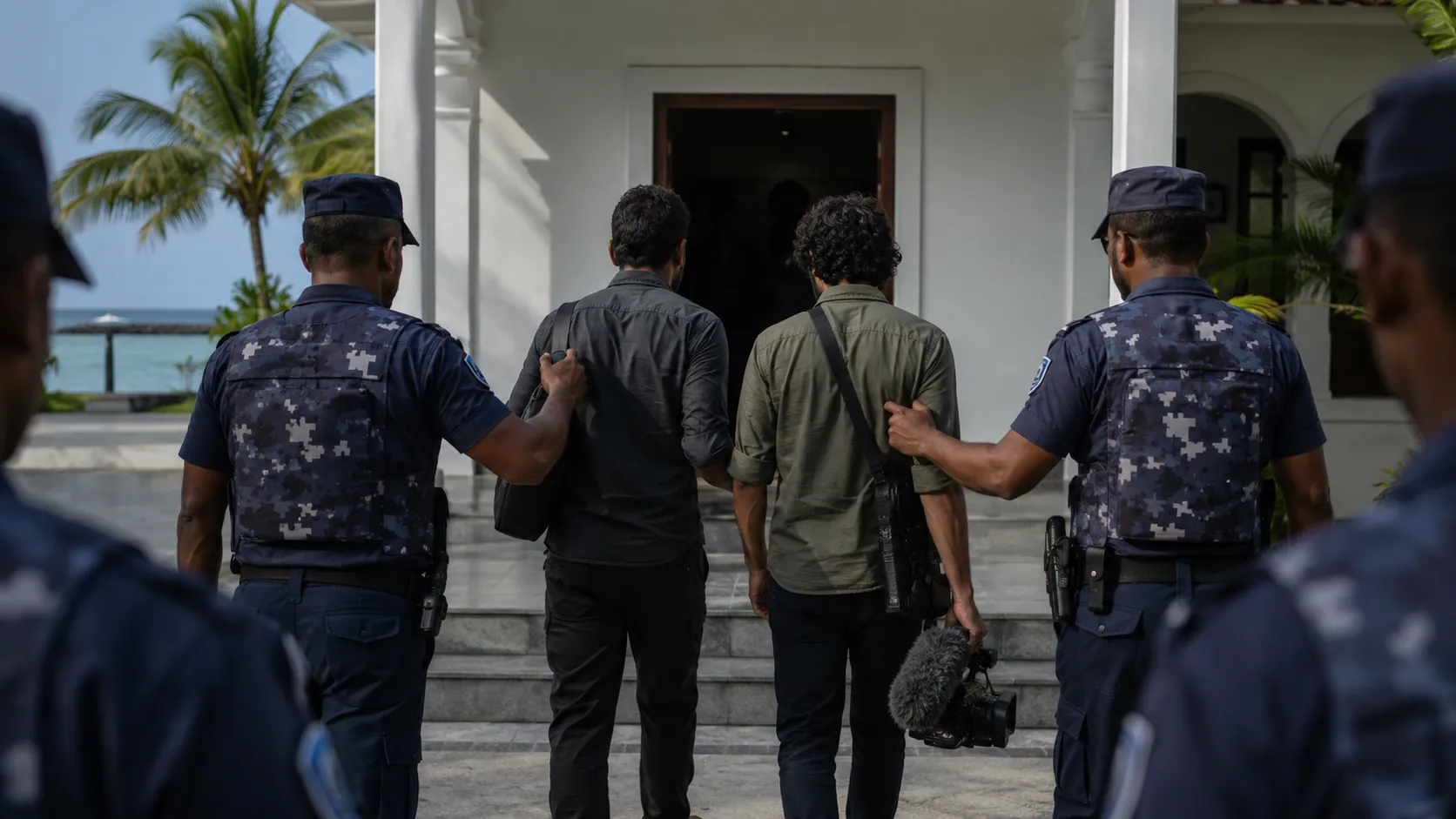
On May 11, Adhadhu journalist Mohamed Shahuzaan stood up at a presidential press briefing in Malé and asked President Mohamed Muizzu why he had made 58 calls to the former President's Office staffer at the center of the outlet's documentary "Aisha," including calls late at night and in the early hours of the morning. Muizzu refused to answer, accused Shahuzaan of violating a criminal court gag order on the documentary inside the briefing room, and ordered MNDF security personnel to remove him. "You are making a blatant lie and a false accusation against me," Muizzu told Shahuzaan. "No one will be allowed to violate a court order within this hall."
Within hours, the President's Office banned Adhadhu and every journalist representing it from all future presidential briefings indefinitely, citing the gag order and articles 40 and 44 of the Maldives Media and Broadcasting Regulation Act. The following day, a court sentenced Shahuzaan to 15 days in jail.
In a separate but closely related case, Leevan Ali Nasir received a 10-day sentence for reporting on the gag order itself, with the court ruling that covering the order's existence was a violation of it. The Maldives Journalists Association described both sentences as attacks on press freedom that would chill independent reporting across the country.
The Campaign Behind the Sentences
The jailings are the latest move in a campaign that started the moment Adhadhu released "Aisha" on March 28, a documentary featuring an anonymized interview with a former President's Office administrator who alleged a sexual relationship with Muizzu, along with accusations of abuse of power.
Muizzu called the allegations "baseless lies" and publicly called on relevant authorities to take legal action. The government reached for Section 612(a) of the Penal Code, the Qazf provision covering the false accusation of adultery under Islamic law, carrying a maximum sentence of one year and seven months and potentially 80 lashes.
On April 27, police from the Serious and Organized Crime Department raided Adhadhu's offices, seizing laptops and storage devices from journalists and staff alike despite a court warrant that authorized only search and inspection of the premises, with travel bans then imposed on CEO Hussain Fiyaz Moosa and Managing Editor Hassan Mohamed. The CPJ and six other organizations wrote to Muizzu demanding an end to criminal proceedings, with no response from the President's Office or the police.
Jailing a reporter for covering the gag order means the state has criminalized reporting on its own censorship apparatus, with each successive layer of suppression becoming its own enforceable prohibition. The Maldives dropped four places on the 2026 RSF World Press Freedom Index and now sits at 108th out of 180 countries, and the trajectory since the documentary's release has been a near-vertical drop.
What the Maldives Has Revealed About Itself
The government's own framing of this as "the rule of law" and "responsible freedom" is the tell. Minister of Homeland Security Ali Ihusaan said the police were "upholding the rule of law and the President's constitutional rights" and that "responsible freedom comes with accountability." What that actually describes is a government that spent weeks raiding a newsroom, freezing journalists' passports, and issuing a gag order and is now jailing one journalist for asking a question that order covered and a second for reporting on the order's existence.
And yet, the international pressure hasn't moved Muizzu. Seven organizations, a formal letter, a public CPJ statement, condemnation from the Maldives Journalists Association, and both journalists are still behind bars as the machinery keeps running. But the question is what happens to every other journalist in the Maldives watching this play out, and who among them will still be willing to ask a president a difficult question at a press conference when the answer might be 15 days in a cell.


Be part of the resistance, quietly.
Get Mysterium VPN
Dominykas is a technical writer with a mission to bring you information that will help you keep your digital privacy and security protected at all times. If there's knowledge that can help keep you safe online, Dominykas will be there to cover it.
Related Articles
.png)