- Blog >
- News >
- Manila Councilor Accused of Lascivious Conduct Had a Reporter Arrested for Covering It
Manila Councilor Accused of Lascivious Conduct Had a Reporter Arrested for Covering It


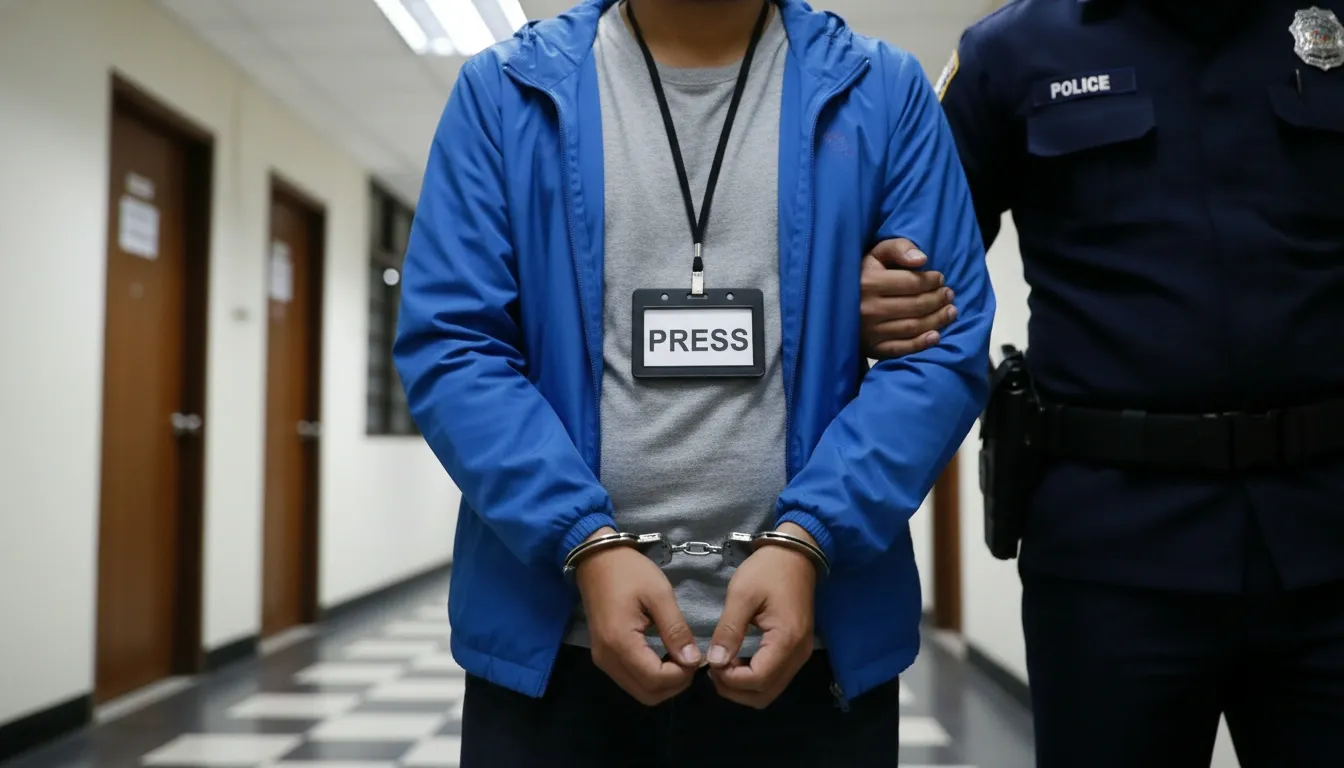
There is a particular kind of audacity required to face a court-issued arrest warrant for alleged sexual misconduct involving a minor and respond by going after the journalist who reported it. And yet, the Philippines has never been short of that audacity.
The country sits at 116th out of 180 nations on RSF's World Press Freedom Index, a ranking built on years of red-tagging activists, terrorism charges against reporters, and a legal system that has learned to treat accountability journalism as a threat to be neutralized rather than a function to be protected.
On March 11, DZRH radio broadcaster Misael "Boy" Gonzales Jr., 66, was arrested at around 10:50 am outside the Department of Justice building on Padre Faura Street in Manila.
He was charged with violating the Data Privacy Act by publishing a copy of the arrest warrant of Manila 1st District Councilor Rosalino "Jun" Ibay Jr., who is separately facing allegations of lascivious conduct involving a 17-year-old minor.
An Arrest Warrant He Wanted Everyone to Forget
The Manila Regional Trial Court Branch 4 issued Ibay's warrant in September 2025 under Republic Act No. 7610, the child abuse law, with bail set at P400,000. According to former NBI Director Jaime Santiago, Ibay, a retired police colonel, allegedly brought the 17-year-old girl to a motel in Pasay City. The family of the minor refused an alleged attempt at settlement.
Gonzales reported on this using court records, as that is quite literally his job. It also wasn’t his first time in a similar situation, as a related complaint against him under the Cybercrime Prevention Act of 2012 had already been dismissed by the court for lack of sufficient evidence, which is the legal system's way of confirming that Gonzales was reporting accurately on documented public proceedings.
Of course, none of that stopped a new warrant, this time under the Data Privacy Act, from being issued and enforced.
When "Privacy" Becomes the Powerful's Shield
The National Press Club called Gonzales' arrest a potential "chilling effect" on media rights, urging authorities to uphold constitutional press freedom guarantees and ensure that journalists can report without fear of "undue legal harassment." Yet, I’d say this goes beyond just a “chilling effect.”
The Data Privacy Act was designed to protect ordinary people from having their personal information mishandled by corporations and institutions. Applying it to shield a public official from coverage of his own judicially issued arrest warrant turns the law inside out. The person whose privacy the law is apparently now protecting is the one accused of taking a teenager to a motel. The person being prosecuted is the one who told the public about it.
Moreover, the Philippines has a documented pattern of using legal tools against the press. For example, Frenchie Mae Cumpio, a journalist who covered military abuses in Eastern Visayas, was convicted of terrorism financing in January 2026 after nearly six years in pretrial detention, on charges an RSF investigation found to be baseless. These cases are not isolated incidents. They are a method.
There is simply too much of a pattern with such cases to call them incidents. And if the Philippines also manages to successfully ban Telegram, too, things will likely only become worse.
Public Officials, Public Records, Public Interest
There is no coherent legal theory under which a court-issued arrest warrant is "private data" in the sense that publishing it constitutes a crime. Courts issue warrants precisely because they are formal, public instruments of accountability. A sitting councilor's warrant for alleged abuse of a minor is exactly the kind of information journalists exist to report.
We can see a lot of that same logic around the world. The job of the news outlets and the reporters is to inform the world about what’s happening by covering what’s happening. Yet, when that coverage inconveniences power, someone always finds a way to silence it.
If Ibay's arrest warrant is sensitive personal data requiring criminal prosecution to suppress, I want someone to explain what protection the 17-year-old in this story receives under that same law. Because from where I stand, the Data Privacy Act just handed a man accused of abusing a child a legal weapon to silence the journalist who covered it, and that is the absolute opposite of justice.


Be part of the resistance, quietly.
Get Mysterium VPN
Dominykas is a technical writer with a mission to bring you information that will help you keep your digital privacy and security protected at all times. If there's knowledge that can help keep you safe online, Dominykas will be there to cover it.
Related Articles
.png)