Pakistan Sealed Kashmir, Killed the Internet, and Called Protesters Terrorists


Key Takeaways
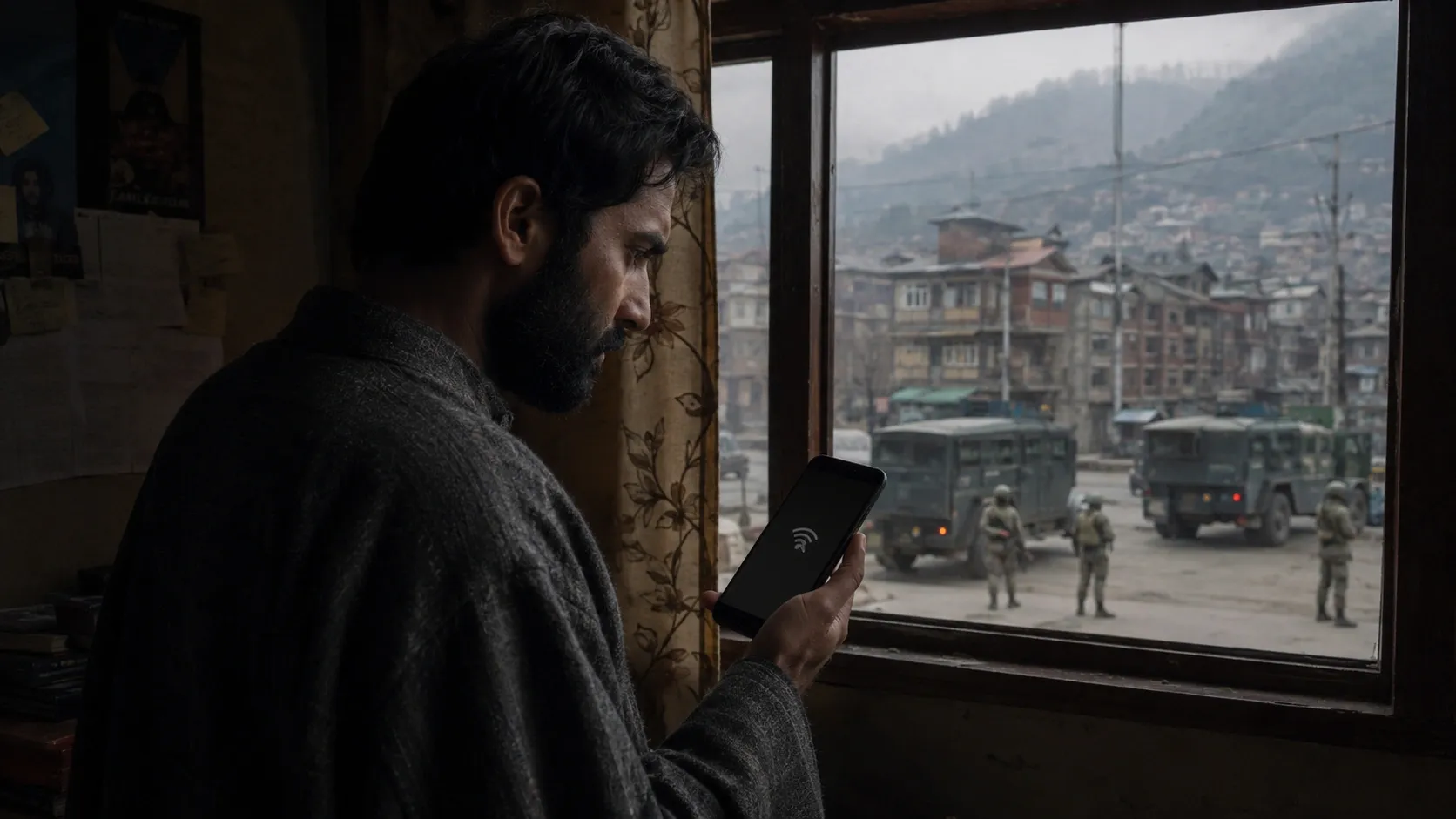
- On June 5, Pakistan-administered Jammu and Kashmir suspended all internet and mobile signals until June 12, deployed federal paramilitary forces, and issued a travel advisory telling outsiders to leave immediately.
- The AJK government branded the Jammu and Kashmir Joint Awami Action Committee (JKJAAC) a "proscribed organization" under anti-terrorism law, on the grounds that a grassroots economic rights movement is a threat to state security.
- Police arrested more than 100 people associated with the JKJAAC, raided and sealed the group's central office in Muzaffarabad, and arrested a journalist for covering them on YouTube.
- JKJAAC activist Shahzeb Habib was shot and killed by police on June 5 with no indication he posed any threat. At least 12 people total were killed in clashes in Rawalakot on June 7.
- On June 9, the JKJAAC's strike went ahead anyway: markets shut across AJK, thousands gathered to join the march, and authorities suspended internet in major cities specifically to prevent people from joining.
- Amnesty International called the terrorism designation disproportionate, unlawful, and a violation of the right to freedom of association.
A Region Sealed, A Movement Branded
Governments tend to reach for the network switch when they run out of better arguments. On June 5, the authorities in Pakistan-administered Jammu and Kashmir suspended all internet and mobile data signals across the region until June 12, deployed federal paramilitary forces, and issued a travel advisory instructing all visitors and outsiders to leave immediately. The AJK Inspector General of Police had formally requested 14,000 additional personnel to be deployed from June 7 to June 21. Activists working with the protest movement described the region as effectively "sealed."
The occasion for all of this was a planned rally on June 9 by the Jammu and Kashmir Joint Awami Action Committee, a grassroots movement advocating for the economic and political rights of people in the region. The JKJAAC's core demand was the abolition of 12 seats in the AJK legislative assembly reserved for refugees from Indian-administered Kashmir who settled in Pakistan after 1947, which the JKJAAC argues are routinely used by mainland political parties to shape regional governments. Talks with the government broke down in late May, and the group announced it would proceed with a region-wide strike.
Terrorism on Paper, Protesters on the Ground
On the same day the internet went dark, the AJK Home Department issued a notification declaring the JKJAAC a proscribed organization under the first schedule of the Azad Jammu and Kashmir Anti-Terrorism Act, 2014. The official language accused the group of being "engaged in terrorism," acting in a manner "prejudicial to peace and security," and "creating anarchy in the state by intimidating the public, promoting hatred, and creating a sense of insecurity in society." That is the formal designation of a movement whose stated demands concerned how parliamentary seats are allocated.
The arrests followed quickly. Police detained more than 100 people associated with the JKJAAC on June 6 and 7 and raided and sealed the group's central office in Muzaffarabad. Journalist Sohrab Barkat was arrested under Pakistan's Prevention of Electronic Crimes Act for allegedly "promoting" the JKJAAC through his YouTube channel. He remained in custody on physical remand.
JKJAAC activist Shahzeb Habib was shot during a police encounter on the night of June 5, with no indication he posed any imminent threat, and later died from his injuries. On June 7, people gathered outside the hospital in Rawalakot where his body had been taken. At least eight protesters and four police officers were killed in the clashes that followed.
June 9 Arrived and the Strike Went Ahead Anyway
The government's plan was to make the rally impossible. It did not work. On June 9, shops and markets closed across AJK, public transport halted, and streets in Muzaffarabad ran deserted. Hundreds gathered in Mirpur's stadium. Other rallies pushed toward Kotli and Poonch. The planned 300-kilometer-long march from Rawalakot to Muzaffarabad eventually lost momentum under the weight of the military presence, but the strike itself held across the territory.
What is worth noting is what the authorities did on June 9 to try to stop it: they suspended the internet in major cities specifically to prevent people from joining the march. Not to stop violence or to respond to any incident, but to prevent coordination. The internet shutdown, already in its fourth day by then, was extended and deepened in real time as a tool for breaking up a protest.
The Same Playbook, Running on Schedule
Unfortunately, this is not a one-off incident. In October 2025, nine people were killed, including six protesters and three police officers, during JKJAAC protests in the same region. In May 2024, three protesters and one police officer were killed during the JKJAAC's Kashmir Long March, with Amnesty documenting unlawful use of force. A previous internet shutdown during JKJAAC unrest in September-October 2025 disrupted university examinations, online businesses, and freelance workers across the region for a week.
The pattern of deploying internet shutdowns as a political lever during moments of protest is well-documented across governments far beyond this region. The global record of state-ordered shutdowns shows the same logic running in country after country. When political pressure rises, the network switch is the first tool governments reach for.
Meanwhile, the broader authoritarian logic at work here, internet access permitted for commerce but cut off at the first sign of organized dissent, is one that governments in tightly controlled information environments have been refining for years, especially when talking about Pakistan’s neighbors in Central Asia.
And, well, I find the framing here worth pausing on. Pakistan has not argued that the JKJAAC was planning violence or that its members were armed. The government's stated rationale for the terrorism designation was that the group was "creating a sense of insecurity." By that standard, any organized political opposition that makes authorities uncomfortable qualifies.
The internet shutdown, the mass arrests, the sealed office, the killed activist, and the dead protesters are not the tools of a government responding to terrorism. They belong to a government that decided it would rather not be argued with and used anti-terror law as the paperwork to make that official.
Amnesty International's Deputy Regional Director for South Asia, Isabelle Lassee, called the proscription disproportionate, unlawful, and a violation of the right to freedom of association. That is the polite version. The less polite version is that Pakistan branded civilians terrorists, cut the region off from the world, and then shot people in the streets when they showed up anyway.


Be part of the resistance, quietly.
Get Mysterium VPN
Dominykas is a technical writer with a mission to bring you information that will help you keep your digital privacy and security protected at all times. If there's knowledge that can help keep you safe online, Dominykas will be there to cover it.
Related Articles
.png)