Lifeline with a Catch: WTISD Has No Answer for Growing State-Ordered Shutdowns


Yesterday, May 17, marked World Telecommunication and Information Society Day. The ITU's 2026 theme is "digital lifelines," meaning terrestrial networks, submarine cables, satellites, and the data systems that keep economies running and people connected.
And, you know, this idea is genuinely worth a moment of recognition. The engineering that holds the global internet together is real, unglamorous, and largely invisible, and the people working on it deserve the acknowledgment. But unfortunately, not everything is sunshine and flowers once you ask who the lifeline is actually for.
The ITU brings together 194 governments and over a thousand companies in the name of global connectivity. Its 2026 campaign asks those same governments to commit to resilience, meaning networks designed to withstand disruption, recover quickly, and leave no one offline when it matters most.
Yet, the problem is that the Internet Society's Pulse tracker has recorded 940 intentional internet shutdowns since 2018, with 14 still ongoing right now and over 26,000 cumulative hours of lost access since May 2025 alone. Most of those shutdowns were ordered by governments. The very governments sitting in Geneva making resilience commitments.
Key Takeaways
- WTISD 2026 is themed around "digital lifelines" and infrastructure resilience, with 194 ITU member governments committing to stronger, more survivable networks.
- The Internet Society has tracked 940 intentional internet shutdowns since 2018, with 14 ongoing and over 26,000 hours of lost access since May 2025.
- India leads with 438 shutdowns. Sudan cut connectivity during school exam periods as recently as April 2026 on explicit government orders.
- The ITU's resilience framing addresses natural disasters, cable failures, and technical outages, with no mention of the deliberate, state-ordered disruptions that account for the majority of people losing access.
- UNESCO's ROAM-X framework explicitly includes rights-based and open internet as pillars of digital development. WTISD's engineering-first framing has no equivalent.
Resilience Against What, Exactly
The ITU's 2026 theme page describes digital resilience as the ability for networks to withstand, adapt, and recover from disruption. It lists the threats it has in mind, covering extreme weather, mega earthquakes, physical cable damage, and technical system failures. These are real. Submarine cables do get severed. Satellites do fail. Data centers do go dark in a storm.
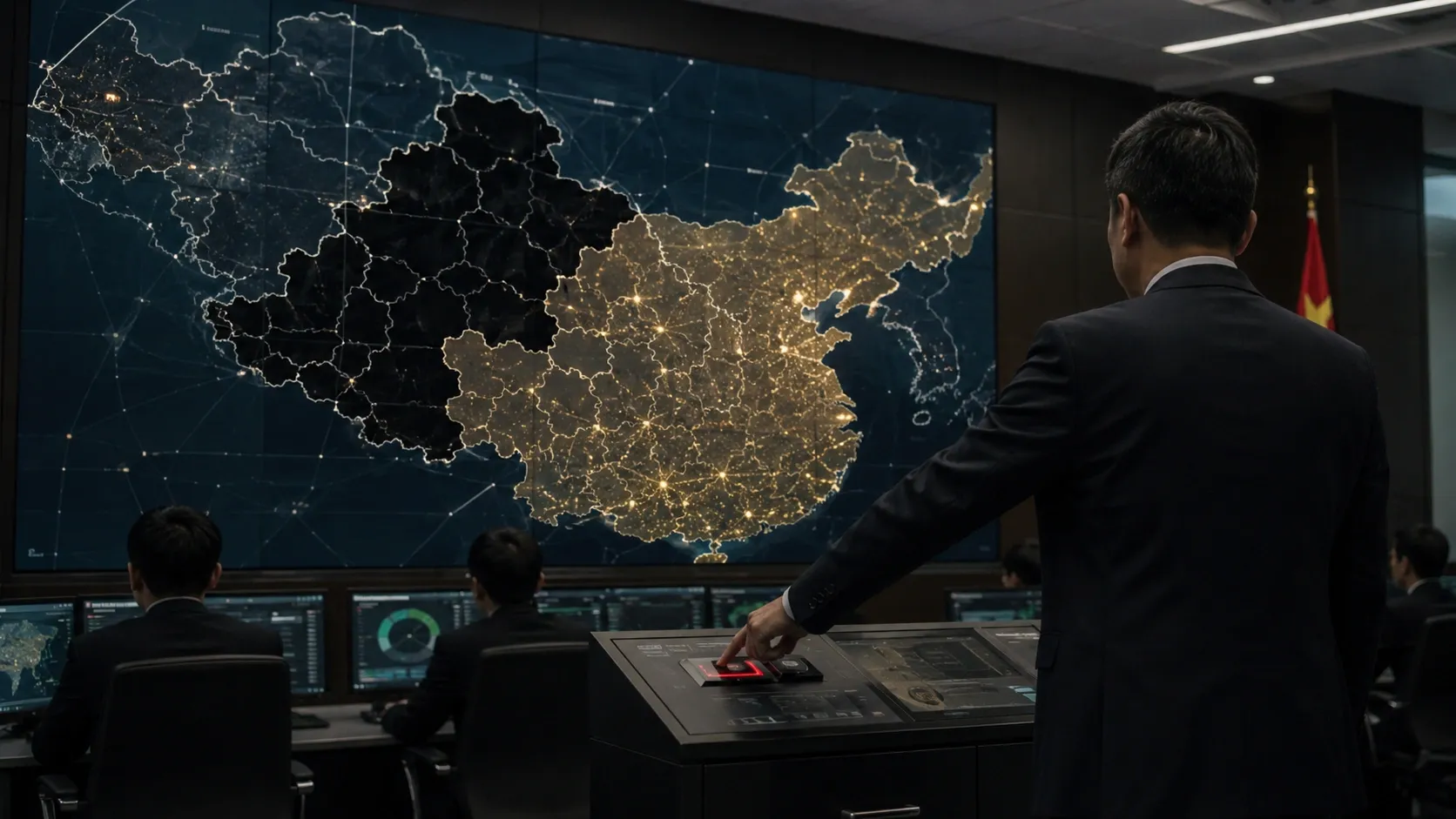
What the theme page does not mention is the other kind of disruption, the kind that requires no earthquake, no storm, and no technical fault. The kind where a government ministry issues an order to a national telecom provider, and a region goes dark within hours. That disruption is orders of magnitude more common than any natural event, and it is entirely preventable, because it is entirely deliberate.
940 Shutdowns and Counting
The Internet Society's Pulse tracker records every intentional internet disruption it can verify. The numbers are not ambiguous. India leads the global list with 438 shutdowns since 2018, more than the next five countries combined. Iraq follows with 160. Syria with 73. Sudan with 47. As recently as April 2026, Sudan's government directed MTN Sudan to cut national internet connectivity for a three-hour window every day across an exam period, a practice the provider confirmed publicly. Fourteen shutdowns are ongoing right now as of this writing.
What this pattern reveals is a policy problem. As we have seen with Meghalaya cutting internet access across six districts after election violence in March 2026, the reflex is consistent: when political pressure rises, the first instrument governments reach for is the network switch. The justification shifts from public safety to exam integrity to social media misinformation, but the mechanism is always the same. A government order travels down to an ISP, and a population loses access.
The economic cost is not abstract. The Internet Society estimates that even a single day of shutdown can cost an economy hundreds of thousands to millions of dollars depending on the country. Across all countries that experienced shutdowns in the past twelve months, the combined estimated GDP loss sits at nearly $250 million. That figure does not include the cost to journalists who could not file, medical workers who lost remote access to records, or families who could not reach relatives during a crisis.
And of course, then there is Iran, which sits in a category of its own. The country has been under a continuous national internet shutdown since February 2026, following US and Israeli strikes, making it the longest unbroken state-ordered blackout on record. Businesses have reported devastating losses, the Tehran Stock Exchange has shed hundreds of thousands of points, and the only people with reliable access are state officials and state media. Everyone else is left to rely on Starlink terminals smuggled across the border by underground networks, at personal risk and enormous cost. That is the reality the ITU's resilience campaign does not name.
The ITU's Uncomfortable Membership Problem
The ITU is a treaty organization. Its membership are governments. And that structural fact produces a specific kind of political silence, the kind where an institution identifies a problem that its own members are causing and quietly finds something else to talk about.
UNESCO has been less evasive. Its Internet Universality framework measures national internet environments against the ROAM-X principles: Rights-based, Open, Accessible to all, and Multistakeholder in governance. UNESCO issued a formal statement on internet shutdowns in January 2026, framing them as a rights violation rather than a technical anomaly.
The framework asks governments to account for rights and openness as structural requirements, not optional add-ons to infrastructure investment. WTISD's framing asks governments to invest in better cables. The gap between those two requests is not subtle.
In other words, the lifeline metaphor only holds if the threat is external. When states treat networks as an administrative lever, toggling access during elections, protests, or school exams, no amount of cable redundancy solves the problem, because the cable is not the issue.
What Genuine Resilience Would Actually Require
Resilience designed to withstand earthquakes but not government orders is not resilience. The network-level mechanics of state control are already well understood, with throttling, blocking, and full shutdowns being technically trivial for any government with authority over national ISPs, which is most of them. The infrastructure that WTISD celebrates as a lifeline is, for millions of people, the same infrastructure that gets switched off when their government decides information flow is inconvenient.
The confrontational question WTISD should be answering on May 17 every year is not how to make networks survive storms. It is how to make them resistant to the governments that fund the ITU's own operations. Of course, that question does not appear anywhere in the 2026 theme materials, which is likely an answer in itself.
So, happy World Telecommunication and Information Society Day. The lifeline is real. The catch is who holds the switch.


Be part of the resistance, quietly.
Get Mysterium VPN
Dominykas is a technical writer with a mission to bring you information that will help you keep your digital privacy and security protected at all times. If there's knowledge that can help keep you safe online, Dominykas will be there to cover it.
Related Articles
.png)