Russia Detained 20 Protesters for Demanding Telegram and the Internet Back


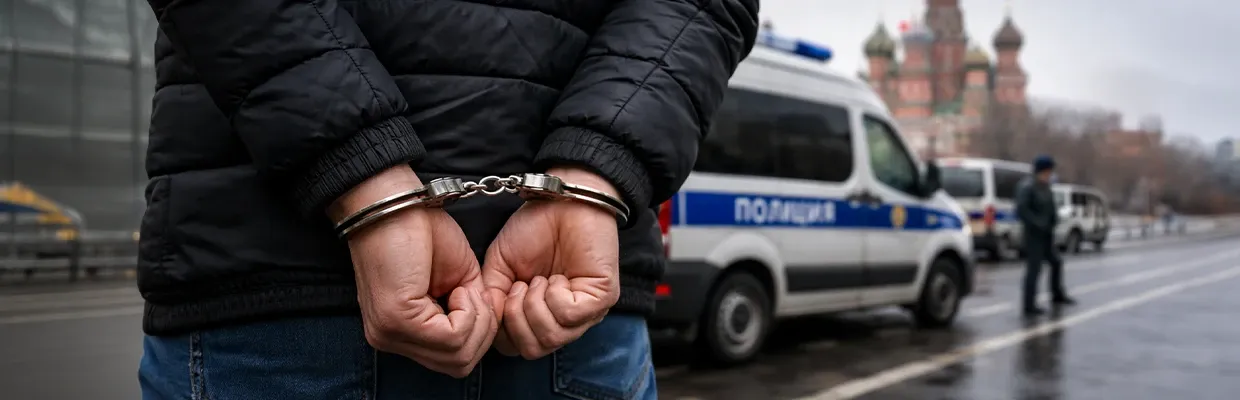
The Kremlin has shown us that it has a reliable two-step response to public pushback on its censorship moves. First, reject every permit application on whatever pretext is available, whether that's a tree inspection, a snow removal schedule, or COVID restrictions that technically never expired. Then, when people show up anyway, call them an unauthorized mob and send in the riot police.
Of course, none of that stopped the people from showing up. On March 29, 2026, rallies against the Telegram ban and broader internet restrictions took place across multiple cities, organized in part by an activist movement called Scarlet Swan that had already seen at least 25 permit applications rejected on those exact contrived grounds.
OVD-Info, the human rights monitoring project, tracked exactly 20 detentions across the protests. In Moscow alone, at least 12 people were detained at Bolotnaya Square, including human rights activist Aleksandr Podrabinek. At least two of those arrested were minors. In Murmansk, authorities jammed mobile signals ahead of the rally entirely.
A Regime That Can't Even Trust Its Own Replacement App
The Kremlin's official position is that Russians should migrate to MAX, the state-backed messenger being promoted as the domestic Telegram alternative. Mikhail Oseevsky, head of Rostelecom, told Russian state propagandists that "WhatsApp is dead, Telegram will die in the coming days, MAX is growing, and everything is fine."
The enthusiasm is telling, and so is the context. Russian officials are reportedly too scared to use MAX themselves, given that the Federal Security Service has full surveillance access to everything on it. They want the public on a platform they won't touch.
Telegram developers, for their part, have made clear that the block is more theater than wall. The app bypasses restrictions by masking its own traffic, and a Telegram developer noted that fully blocking it would require shutting down the entire Russian internet.
Of course, with Russia building its own intranet, this is not impossible. The block is already connected to the blackout drills run across Moscow in the weeks before the ban went live. And while it has proven leaky enough that millions of Russians are still accessing Telegram over the networks it supposedly can't traverse, chances are they’ll keep trying until they succeed.
The "Comeback" Nobody Should Believe
A member of Russia's so-called Human Rights Council told TASS that there is a "high probability" Telegram will resume normal operations in Russia, saying that Durov's team may reach an agreement on conditions covering extremist content and channels deemed a threat to national security.
But the thing is, we’ve seen this before. Russia banned Telegram in 2018, spent two years failing to actually block it, and quietly lifted the ban in 2020 without Telegram having meaningfully complied with anything.
The difference now is the infrastructure sitting behind the block. The TSPU hardware deployed across every Russian telecom operator's network, the 80 billion rubles already invested, and the FSB family connections running the companies supplying those systems all guarantee that Russia isn't going to let Telegram back without something real in return this time, because unlike 2020, there is now actual money and security apparatus prestige riding on the outcome.
If Durov agrees to those conditions, what Russia gets is a compliant Telegram that hands over content on demand. Sure, the app would technically be accessible again. And yet, that would really be just a restructuring of the surveillance architecture to include one more channel, not restoration of internet freedom
Twenty people got arrested for asking their government for a free internet on March 29, in a country whose constitution explicitly bans censorship. The Kremlin isn't going to resolve that contradiction by letting Telegram back in. It's going to keep arresting people until the contradiction stops being visible, one detained human rights activist at a time.


Be part of the resistance, quietly.
Get Mysterium VPN
Dominykas is a technical writer with a mission to bring you information that will help you keep your digital privacy and security protected at all times. If there's knowledge that can help keep you safe online, Dominykas will be there to cover it.
Related Articles
.png)