Slovenia Plans a Ban for Under-15s


Key Takeaways
- Slovenia's Deputy Prime Minister Matej Arcon announced government backing for draft legislation banning social media access for anyone under 15, specifically naming TikTok, Snapchat, and Instagram.
- The Education Ministry initiated the effort, with the Ministry of Digital Transformation now also involved; specific enforcement details (age verification method, timeline) have not yet been announced.
- Slovenia joins a growing list of countries moving on similar measures, including Australia (implemented in December, under-16 ban), Spain (announced ban for under-16s), and France (planning implementation in September for under-15s).
- Stated rationale across these countries is consistent: concerns about platform-driven addiction, mental health impacts, cyberbullying, and exposure to harmful content among minors.
Ever since the end of last year, social media platforms have been under fire, with region after region popping out new restrictions nearly every day. Well, yesterday, Slovenia became the latest European country to join in on this campaign.
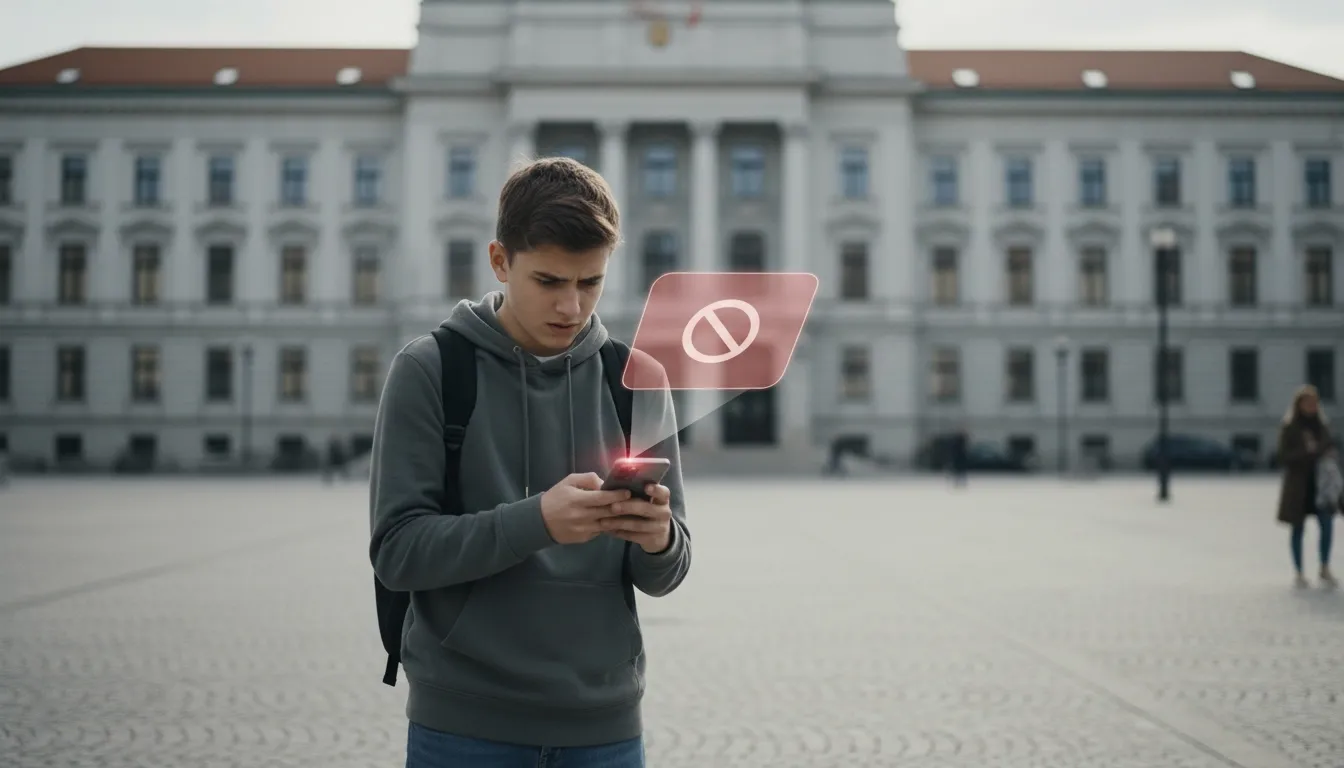
On Thursday, Deputy Prime Minister Matej Arcon announced the government's backing for draft legislation that'll ban social media access for anyone under 15. It's yet another domino falling in what's turning into a continental pushback against letting teenagers navigate platforms built to keep them hooked while neglecting objectively better ways of achieving this goal and sacrificing everyone's privacy instead.
What Slovenia is Announcing
The whole thing was kicked off by the country's Education Ministry, with experts from education and digital tech now being pulled in to actually write the law. Arcon told reporters after the government session that protecting kids from social media has been a hot topic globally for months, and Slovenia wants to show they're taking it seriously.
The ban would target platforms where people share content and interact, specifically naming TikTok, Snapchat, and Instagram. Arcon said the government's basing this move on the "experience of other countries," which is a polite way of saying they're simply doing what everyone else is.
Slovenia has got about 2 million people total, so we're not talking about a massive user base here. But the Ministry of Digital Transformation is getting involved alongside education officials, which suggests they're thinking seriously about how to actually enforce this thing. Though honestly, details on enforcement are pretty thin right now.
How Slovenia Plans to Do This
The government endorsed a framework for drafting the legislation, but we don't have specifics yet on how age verification would work or when this would actually take effect. They're focusing on regulating social networks where user-generated content gets shared, which makes sense given that's where the addictive algorithms live.
What we don't know is whether Slovenia will require platforms to use facial recognition, government IDs, or some other method to verify ages. That's been the sticky part for every country attempting this, seeing as you can't enforce an age limit without some way to check ages, and pretty much every verification method comes with serious privacy concerns.
The timeline's unclear too. Arcon's announcement came after a government session, so this is official government policy now, but turning policy into actual enforceable law takes time. Given how fast Spain and Greece moved on their proposals this week, Slovenia could follow quickly, but that's speculation.
Why Slovenia's Joining the Movement
This is part of a bigger pattern. Just this week, Spain announced plans to ban social media for under-16s, and France is already aiming to implement the same in September for under-15s. Before that, Australia became the first country to actually implement an under-16 ban back in December. The momentum's clearly building.
The reasoning's consistent across countries: mental health concerns, platforms designed to be addictive, cyberbullying, and exposure to harmful content. Governments are basically saying these apps are engineered by teams of PhDs to maximize engagement, and kids don't stand a chance against algorithms built specifically to keep eyeballs glued to screens.
Now, there’s hardly anyone denying this or saying that this isn’t an issue and it shouldn’t be addressed. However, the problem comes from every country following that same half-baked recipe that doesn’t account for some seriously important things and is likely to actually result in more harm than good. Everyone is jumping straight at it just to leave the consequences for later, instead of, you know, actually attempting to prevent them.
Restricting access doesn't change how these platforms are built and operated in the first place. The addictive design remains, while the kids will undoubtedly find workarounds and will continue using these platforms with zero parental controls or age-appropriate filters.
Slovenia says they care about protecting kids from addictive social media. Whether the law they draft actually accomplishes that without creating surveillance infrastructure in the process remains to be seen. The details matter a lot more than the announcement.


Be part of the resistance, quietly.
Get Mysterium VPN
Dominykas is a technical writer with a mission to bring you information that will help you keep your digital privacy and security protected at all times. If there's knowledge that can help keep you safe online, Dominykas will be there to cover it.
Related Articles
.png)