UK MPs Reject a Blanket Social Media Ban for Under-16s in Favor of Consultation


Governments worldwide have been reaching for the same lever when it comes to children and social media: ban it, or at least make it look like you're banning it. But while the concern driving that impulse is real enough, the gap between passing a law and actually protecting anyone has been growing wider with every attempt, and the UK just had a front-row seat to that tension.
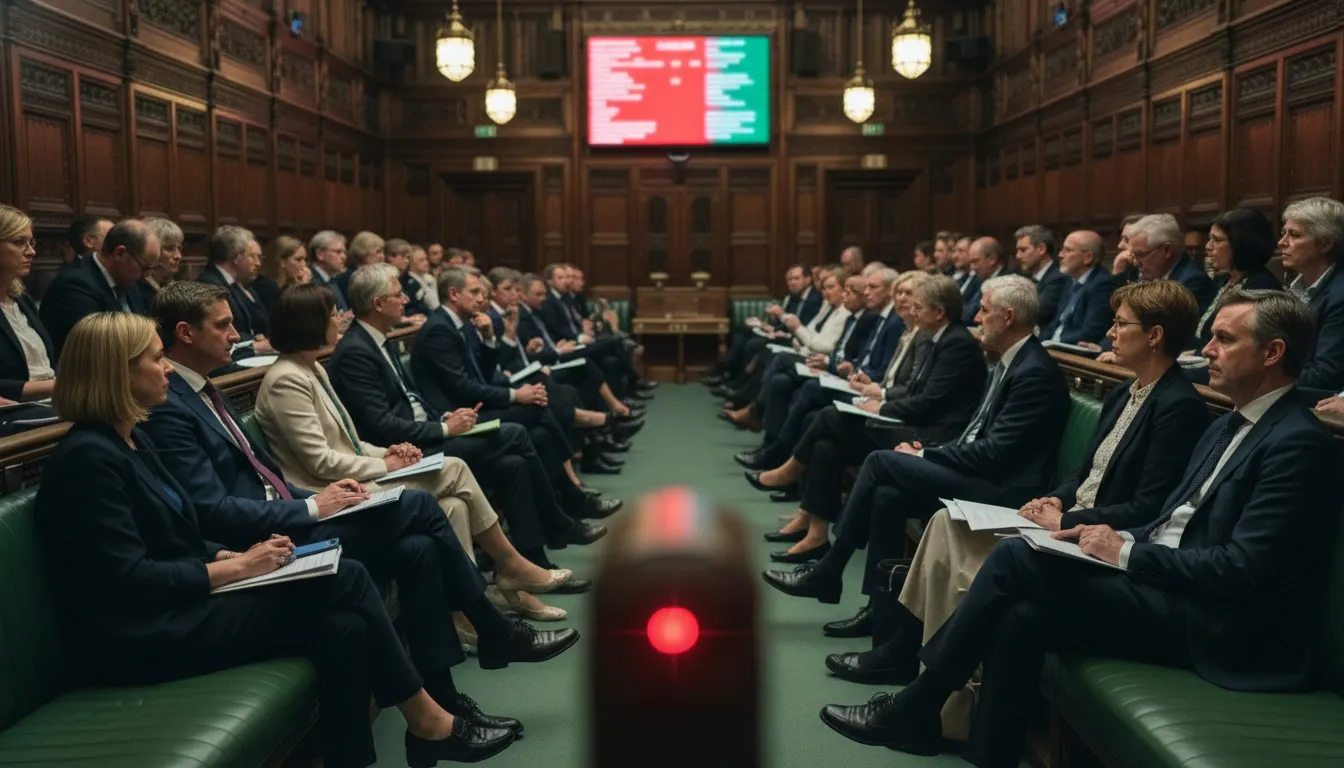
On March 9, the House of Commons voted 307 to 173 to reject a Lords amendment to the Children's Wellbeing and Schools Bill that would have imposed a default social media block for under-16s within 12 months of the bill becoming law. In its place, MPs backed a government alternative giving Science Secretary Liz Kendall powers to restrict or ban children's access to social media and chatbots by age, limit addictive features, and restrict children's VPN use, all contingent on a consultation that opened March 2, 2026.
A 307 to 173 Vote With a Lot of Asterisks
The situation is more complicated than the headline suggests.
Lord Nash's amendment, which originated in the House of Lords and drew support from campaigners including actor Hugh Grant, was explicitly modeled on Australia's under-16 social media ban. Supporters argued that parents are in "an impossible position" against platforms engineered to keep children hooked and that the evidence of harm is overwhelming.
The Commons disagreed with the mechanism, not necessarily the goal. Education Committee chairwoman Helen Hayes, who backed the government's position, said she supports robust measures, including raising the age of digital consent and banning some social media apps for under-16s in schools. Her argument was that the differences of opinion between stakeholders are significant enough to warrant consultation before legislating at scale.
107 Labour MPs abstained rather than vote either way. One, John McDonnell, broke ranks entirely and voted with the Lords amendment.
Lord Nash described the outcome as "deeply disappointing" and made clear he intends to revive the amendment when the bill returns to the upper chamber. The bill is not law yet, and this vote does not settle the question.
Blanket Bans Have a Track Record Now
Just like what we were saying for months, and what hundreds of scientists have been trying to tell us as well, the NSPCC warned that a blanket ban could drive teenagers toward less regulated corners of the internet. This is not theoretical, because when children lose access to mainstream platforms without any real alternative support structure, they end up migrating to the next available space, only they don’t care how safe or regulated it is.
But despite the disappointment that Lord Nash was so vocal about, his amendment gave no reliable answer to that problem. A 12-month implementation deadline with no specified age-verification infrastructure attached is not a safety plan.
The government's consultation is at least asking the right questions: whether platforms should carry a minimum age, whether addictive features like autoplay and infinite scroll should be switched off for minors, and what raising the age of digital consent would actually require. These are harder problems to solve than passing an amendment, and, unlike a straight-up ban, they are also the problems that would make an actual difference if solved properly.
For context on what the alternative trajectory looks like, Australia's age verification regime has since expanded well beyond social media to cover search engines, AI chatbots, and app stores. Yet, the enforcement keeps stumbling at nearly every step, and the amount of good they actually do is negligible.
The Consultation Is Not a Free Pass
Lord Nash is not going down quietly. The bill goes back to the Lords, and the amendment could return in a form the Commons finds harder to reject. The government is on a clock, and the consultation cannot function as indefinite cover for a government that does not want to commit to anything enforceable.
I think the MPs who rejected Lord Nash's amendment made the defensible call given what was on the table. A blunt 12-month ban with no enforcement architecture and no plan for the children it would push to darker platforms was not ready, to say the least. The government's own amendment, which includes powers to restrict children's VPN use, shows that even the cautious approach is not without its own implications and is all too imperfect to proceed with.
For now, everyone is waiting for an answer that actually holds up. Will the consultation actually deliver this time around, or will it just push back the inevitable, bringing us back to that same half-baked proposal? I guess we’ll find out in the next episode.


Be part of the resistance, quietly.
Get Mysterium VPN
Dominykas is a technical writer with a mission to bring you information that will help you keep your digital privacy and security protected at all times. If there's knowledge that can help keep you safe online, Dominykas will be there to cover it.
Related Articles
.png)