The Internet Was Their Safe Space. Now It's Being Taken Away


Key Takeaways
- Governments across Russia, Uganda, Tanzania, Egypt, and Hungary have passed or expanded laws that criminalize LGBTQ+ content online, with penalties ranging from fines to imprisonment.
- Social media platforms consistently remove LGBTQ+ content at higher rates than equivalent straight content, while homophobic material frequently goes unchallenged.
- Age verification laws, framed as child protection, function as identity registries that force people to abandon anonymity in order to access lawful content, putting the most vulnerable users at risk.
- The tools that once made the internet a refuge (anonymous browsing, open forums, pseudonymous accounts) are being dismantled by a combination of legislation, platform policy changes, and expanding cybercrime laws.
June always arrives with color and noise. Parades, joy, corporate rainbow logos, and, for those of us who care about this stuff, a familiar mix of hope and frustration. But underneath the celebration is a trend that doesn't get enough attention: the slow, deliberate erosion of the digital spaces that LGBTQ+ people have depended on for decades.
The Tab You Close Quickly
When I was young and lost, I watched a lot of LGBTQ+ content online. Tyler Oakley, Daniel Howell, Phil Lester, Dodie Clark, Connor Franta, Lilly Singh, and countless others were safe spaces for which I will be eternally grateful. I did that carefully, without logging into any account, clearing my browsing history, and keeping it quiet.
The worst thing that could happen to me if I got caught was a difficult conversation with my parents. That was scary enough. But it was a risk I could take.
Imagine doing that in Russia, Uganda, or Iran. Imagine that watching a YouTube video about or by a queer person, or visiting a support forum, could get you fired, arrested, or worse. Imagine that simply reading about your own community required your real name. That isn’t a hypothetical. That’s daily life for millions of people.
What the Internet Once Promised
The early internet was liberating for queer people and other marginalized communities. It let them find each other across geography, across isolation, across family structures that often excluded them. I still remember scrolling through Twitter the day the United States Supreme Court legalized same-sex marriage back in 2015, and it felt like the sun started shining a little brighter. Queer joy was everywhere, and it was beautiful. It was all contained on my phone, of course, but it was there nonetheless.
It has been widely documented that the internet is a core tool for LGBTQ+ communities to organize, share health information, build networks, and express political demands. For people living in places hostile to their existence, it was often the only place they ever felt less alone. The key ingredient was anonymity. You didn’t have to come out to read about coming out. You didn’t have to identify yourself to find a community. You could simply look, listen, and decide, at your own pace, on your own terms.
Sadly, all of this is going away thanks to the ever-growing global restrictions on the internet.
A Global Step Back
The Electronic Frontier Foundation (EFF) has been tracking this for years, and the picture is grim. Censorship of LGBTQ+ websites and online content is rising globally. Digital spaces that once felt like safe havens are, for many people, no longer so. This takes multiple forms, but it’s everywhere.
In Russia, a 2013 law banning “non-traditional sexual relations” was expanded in 2022 to apply to all ages. It now prohibits any mention or depiction of LGBTQ+ relationships in advertising, books, media, films, and online platforms. Just a few weeks ago, a Russian woman was literally sentenced to 18 months in a labor camp for writing gay K-pop fanfiction.
In Uganda, the 2023 Anti-Homosexuality Act introduced capital punishment for certain acts and imposed a 20-year prison sentence for anyone convicted of "promoting homosexuality," which includes publishing LGBTQ+ content.
In Egypt, security forces use social media and dating apps, including Grindr, to track and arrest people. Same-sex relations aren’t explicitly illegal there, but police use morality provisions and cybercrime laws to pursue prosecutions.
The Platform Problem
Even in countries where governments aren’t actively limiting LGBTQ+ speech, social media platforms are doing it for them. EDRi has documented a consistent pattern: LGBTQ+ accounts, posts, and advertisements are removed at higher rates than comparable heterosexual content, while homophobic and transphobic content stays up, often explained as free speech (oddly enough, the same doesn’t apply for queer content).
The platforms are also moving in a more hostile direction without any government pressure. I remember when Tumblr banned adult content in 2018; it disproportionately gutted LGBTQ+ creatives. When Facebook introduced real-name policies, it hurt transgender users: those who used their chosen names online and their deadnames in person found themselves between a rock and a hard place.
Age Verification: Friend or Foe?
One of the more insidious current trends is the push for age verification on social media and other online platforms. It’s framed as child protection. It functions as a registry. To verify that you’re old enough to view LGBTQ+ content, you have to prove who you are.
Experts maintain that age verification doesn’t just limit access for minors. It forces adults to abandon their anonymity to access lawful content, and creates data collection risks that are dangerous for people in hostile countries.
When the US Supreme Court allowed states to impose age verification requirements in 2025, critics argued it was harmful to free speech and a threat to personal privacy. The EFF called it a direct blow to free speech and a threat to anyone who relies on anonymous browsing for safety. When you require identity verification to access LGBTQ+ content, you’re not protecting children. You’re outing people.
What’s Actually at Stake
I keep coming back to that browser tab. I closed it every time my parents came into the room. My biggest risk was parental disappointment. For someone in Moscow, Kampala, or even certain counties in the southern United States, the risk is violence, imprisonment, or death. The anonymity I took for granted was never guaranteed, but now it’s actively being stripped away.
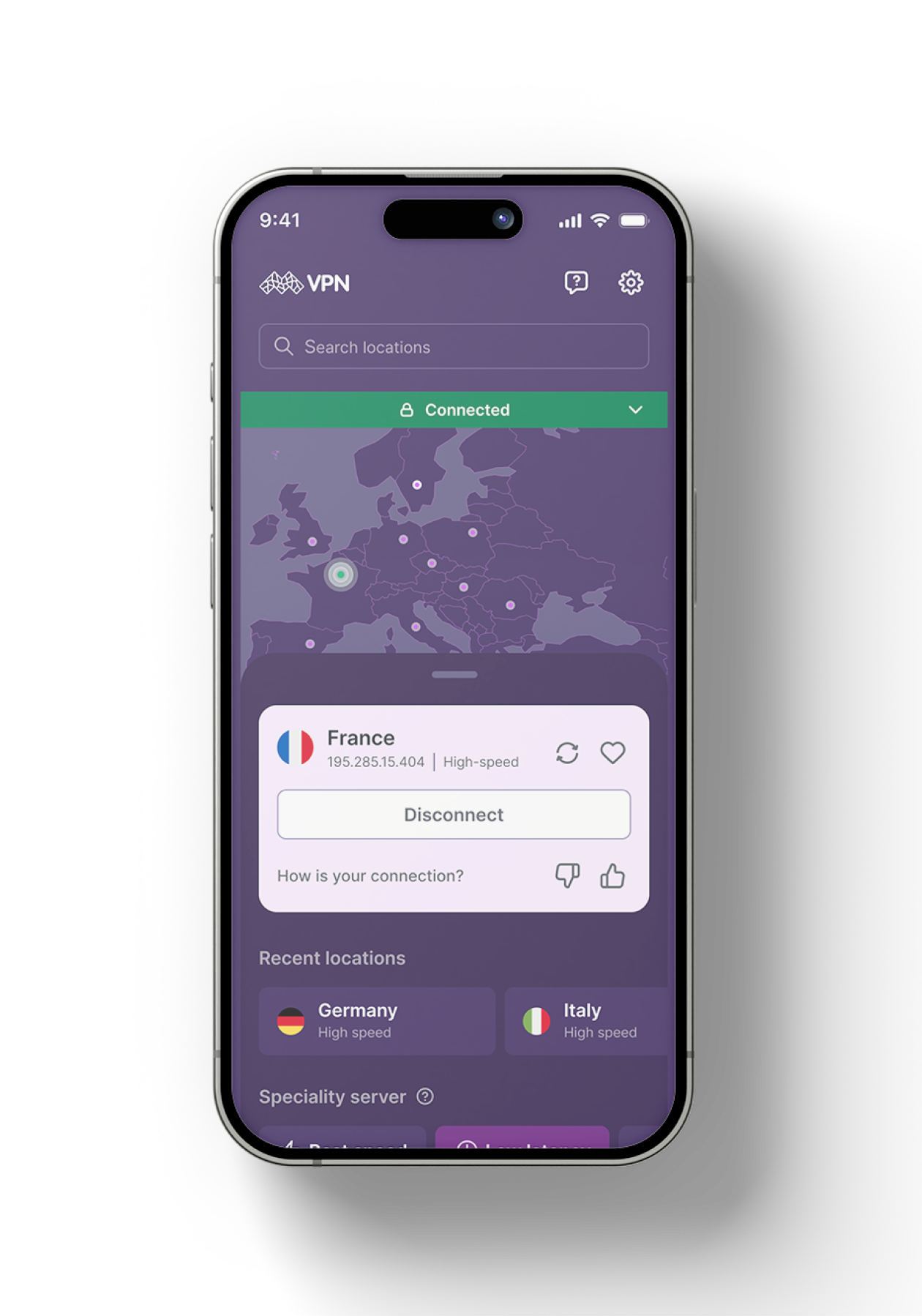
The EFF offers practical guidance for protecting digital identities: using VPNs to bypass censorship, using privacy-focused browsers, not using your real name or location information whenever possible, hiding your faces in protest photos, and backing up content before governments shut down access. These aren’t paranoid precautions. For many LGBTQ+ people around the world, they’re survival tools.
Pride month is a good time to think about joy, community, and hard-won rights. It’s also a time to reckon with what’s being taken from people who never had many rights to begin with. The internet was never perfect, but for a queer teenager, it was often the only safe space available. Governments and platforms are closing that space.


Be part of the resistance, quietly.
Get Mysterium VPN
Gintarė is a cybersecurity writer at Mysterium VPN, where she explores online privacy, VPN technology, and the latest digital threats in editorial pieces. With hands-on experience researching and writing about data protection and digital freedom, Gintarė makes complex security topics accessible and actionable.
Related Articles
.png)