- Blog >
- Does ExpressVPN Have Residential IPs? Everything You Need to Know in 2026
Does ExpressVPN Have Residential IPs? Everything You Need to Know in 2026



Key Takeaways
- ExpressVPN doesn't currently offer true residential IP addresses; it provides shared IPs and a paid dedicated IP option.
- A dedicated IP is used only by you, but it can still come from datacenter infrastructure and be identified as VPN-related.
- Residential IPs originate from consumer ISP networks, so they generally resemble regular household traffic more closely.
- Mysterium VPN offers residential IPs across multiple countries for users who need more natural-looking connections and fewer IP-based restrictions.
No, as of May 2026, ExpressVPN doesn’t appear to offer true residential IPs. They offer standard, shared IPs to all of their users, with the option of a dedicated IP add-on for an extra charge.
Many people confuse the differences between different IP types, thinking the names are interchangeable. They’re not. And that confusion is exactly why this question keeps popping up. Let’s break it down in plain English.
What ExpressVPN Actually Offers
ExpressVPN sticks to a fairly standard VPN model, with a couple of extras layered on top. When you get a subscription, you get shared datacenter IP addresses. That means multiple users are connected through the same IP at the same time. These IPs are great for privacy, since your activity blends in with the other people using the same IP.
They also offer a dedicated IP add-on from a fixed location. Also called a static IP, this is a paid additional feature that gives you an IP address that’s only assigned to you. No sharing. Basically, for as long as your subscription and add-on are active, every time you connect to ExpressVPN, you’ll receive the same IP address in the same location.
This is helpful if you’re looking for privacy and a stable online identity. However, if you need to connect from a few different locations every once in a while, a dedicated IP (and thus, dedicated location) won’t cut it. Dedicated IPs are also known for their tendency to get blocked, especially when compared to true residential IPs. Let’s get into it.
What Is a Residential IP?
A residential IP is a type of IP address that’s part of regular consumer networks and belongs to real people, so their usage patterns resemble typical browsing behavior. This is why residential IPs are less likely to trigger blocks than datacenter IPs.
Residential IP vs Dedicated IP vs Shared IP
This is where things usually get mixed up, so let’s make it crystal clear.
Shared IP Address
A shared IP is used by multiple VPN users at the same time. This is the default setup for most VPN services, including ExpressVPN. Because traffic from many users is mixed together:
- It improves the anonymity of every single user;
- It makes it harder to trace your individual activity back to you;
- It increases the likelihood of CAPTCHA, rate limits, or temporary blocks.
From a technical perspective, shared IPs are typically hosted in datacenters and are known to belong to VPN providers. Many websites actively monitor and flag this type of traffic, leading to errors like your Netflix not working when you use a VPN to access a foreign content library.
Dedicated IP Address
A dedicated IP is assigned to a single person, and it stays the same every time you connect to the VPN as long as your subscription is active. Key characteristics include:
- Only one user has access to the IP;
- The IP doesn’t change between connections (static behavior);
- Fewer login challenges compared to shared IPs;
- You only get a single location per dedicated IP.
However, in most cases, including ExpressVPN, dedicated IPs are still issued from datacenter infrastructure. That means:
- They’re not linked to an ISP;
- They’re not tied to a real household connection;
- They can still be identified as VPN-related by advanced detection systems.
So, while a dedicated IP improves consistency and reduces friction, it doesn’t fundamentally change how the IP is classified by websites.
Residential IP Address
A residential IP is assigned by an ISP like Verizon, Comcast Xfinity, or AT&T to a real user like you at a physical address, usually, your house. Key characteristics of this IP type include:
- Tied to a real household or mobile connection;
- Registered under ISP-owned IP ranges;
- Behaves like standard consumer internet traffic.
Because of this, even websites with modern detection systems are less likely to flag or restrict it. Basically, if you use a residential IP, you’ll enjoy better access to platforms that block VPN and/or datacenter IPs, like streaming services.
Why ExpressVPN’s Dedicated IP Isn’t the Same as a Residential IP
The key difference comes down to IP origin and network classification. ExpressVPN offers a Dedicated IP feature. This gives you a static IP address that only you use, which improves session consistency and reduces repeated verification checks like CAPTCHA. From a user perspective, it feels more stable than a shared IP.
However, these dedicated IPs come from datacenter infrastructure, not from ISP networks. That distinction matters.
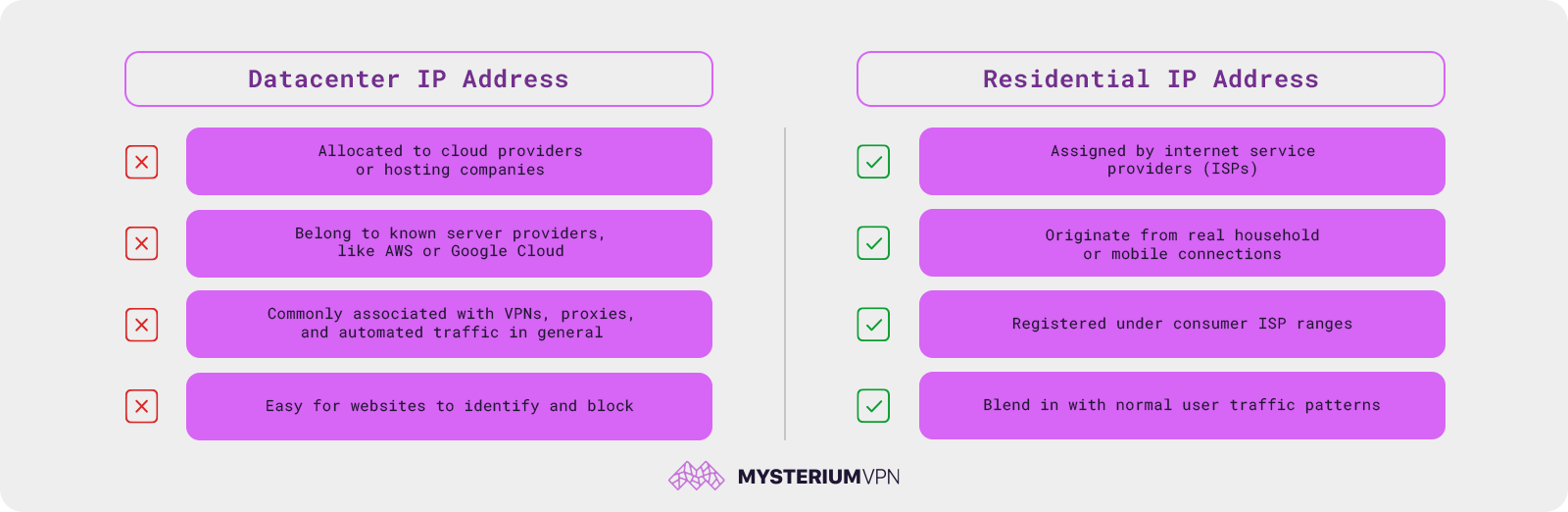
This means that a dedicated datacenter IP can still be flagged as non-residential, while a residential IP is inherently trusted more because of its ISP classification
ExpressVPN accurately presents its dedicated IP feature, emphasizing privacy and consistency. So, the main difference isn’t quality or usefulness. It’s the infrastructure type. And for some people, a dedicated IP is exactly what they need.
But if you’re looking for more anonymity and more stable access to your favorite websites, you should consider a residential VPN, like those offered by yours truly, Mysterium VPN.
Why Choose Residential IPs From Mysterium VPN?
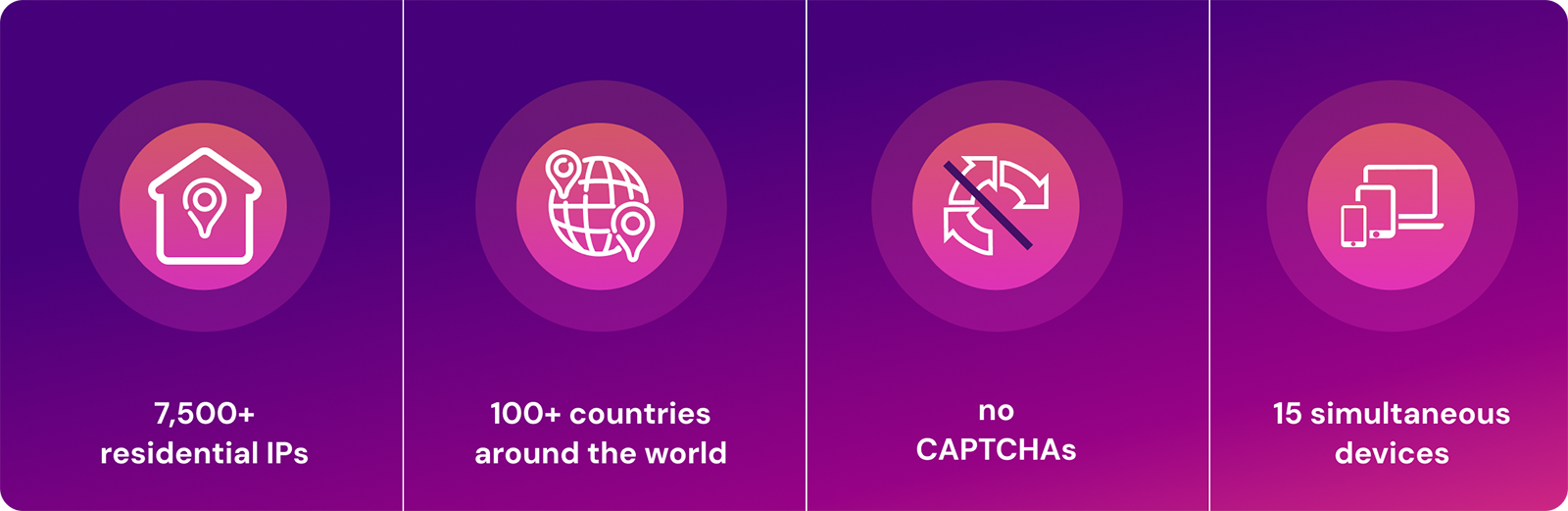
If you want to forget VPN-related issues (like Netflix error code E106) and remain completely anonymous while browsing online, you need a residential IP address. And you’re in luck, because we offer over 7,500 of them from 100+ countries for a seamless experience, no matter where you are.
Coming from real people and their houses, our residential IPs are super useful if you want smoother access to platforms like streaming websites, if you’re sick of proving you’re not a robot to open any and all websites, and you want more natural-looking traffic patterns globally.
Experience true privacy and stable connections like you’ve never seen before with Mysterium VPN, now for 78% off for a limited time!
When a Real Residential IP Matters
Not everyone needs a residential IP for regular browsing. But when you do, you really do. For example, they’re incredibly useful when:
- Accessing websites that are super sensitive to datacenter IPs, like streaming platforms;
- Reducing IP-based friction or blocks;
- Browsing with a more authentic-looking IP footprint;
- Location-specific online access needs, like when you’re abroad but need to access home services, such as a bank or news sites;
- Users who specifically searched for residential IPs rather than just “VPN IP.”
If you searched specifically for “residential IP,” chances are you recognized yourself in the bullet points above. That’s where a VPN provider with residential IPs, like our very own Mysterium VPN, starts to make more sense than a traditional VPN provider like ExpressVPN.
Verdict: Does ExpressVPN Have Residential IPs?
No, ExpressVPN doesn’t currently offer true residential IPs. Instead, they offer standard shared IPs and a paid dedicated IP add-on, which gives you a single fixed IP address from a location of your choice for a stable digital identity.
If you’re looking for a true residential IP, look no further than Mysterium VPN – our pool of 7,500+ residential IPs from 100+ countries around the world will ensure your browsing experience is smooth, safe, and headache-free.
Try Mysterium VPN today and discover the benefits of a true residential IP for 78% off your subscription, wherever you are!


Reclaim the internet that took you at your word!
Get Mysterium VPN
Frequently Asked Questions
Gintarė is a cybersecurity writer at Mysterium VPN, where she explores online privacy, VPN technology, and the latest digital threats in editorial pieces. With hands-on experience researching and writing about data protection and digital freedom, Gintarė makes complex security topics accessible and actionable.