AJK's Blackout Blew Past Its Deadline and the Internet Still Is Not Back


Key Takeaways
- Pakistan's internet shutdown in Azad Jammu and Kashmir began on June 5 and was officially scheduled to end on June 12, but as of June 15 services remain suspended, putting the region on day 10 with no restoration in sight.
- Students are traveling to neighboring Khyber Pakhtunkhwa just to submit documents online, while freelancers and businesses absorb losses from a shutdown that now has no stated end date.
- Pakistan's state broadcaster published a report on June 12 claiming life was "normal" and residents had rejected protest calls, while the ISP's own public status page showed the internet uplink still suspended under government directive.
- The pattern mirrors the structural logic of Iran's 2026 internet blackout, which lasted 87 days: politically motivated, extended past announced windows, and paired with official accounts that described a reality no one on the ground recognized.
The Deadline Came and Went Like It Was Never There
Internet shutdowns tend to have stated windows. They also tend to outlive them. Darkcloud ISP, a fixed-line provider across Azad Jammu and Kashmir, published a service notice on June 5 stating that all fixed-line data services had been suspended "on the direction of the Competent Authority" with an expected restoration time of June 12 at 23:30 PKT.
Unsurprisingly, that date has passed. As of June 15, the ISP's status page still shows the internet uplink listed as "Suspended," the countdown replaced by blank dashes, and no new end date anywhere on the page.
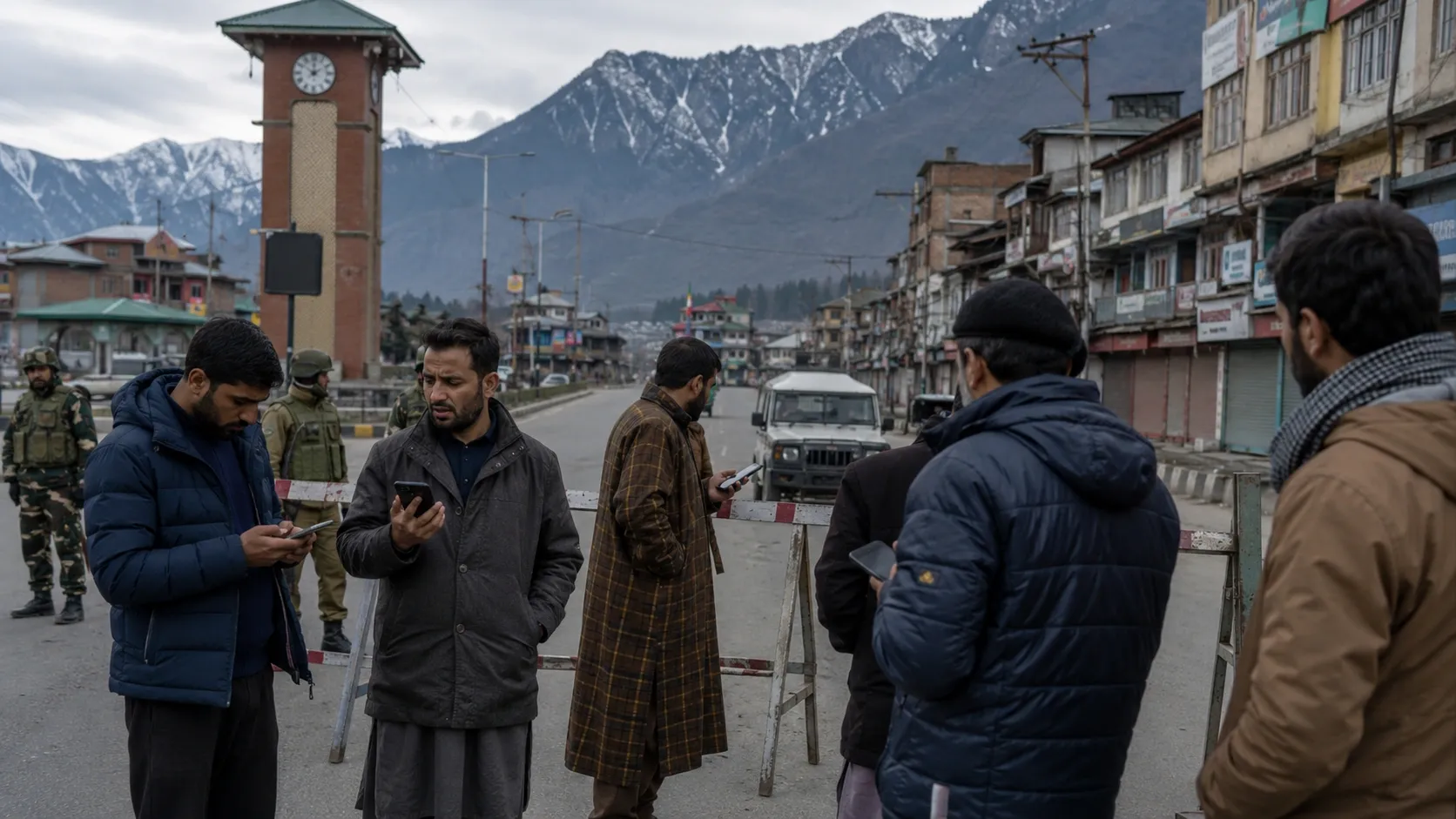
That gap is now 72 hours old and growing. Students from Muzaffarabad have been traveling to Garhi Habibullah in neighboring Khyber Pakhtunkhwa to submit documents they cannot file from home. Freelancers have been offline for 10 consecutive days. The shutdown, framed as a week-long measure, is now open-ended with no official acknowledgment that the deadline was missed.
State Media Says Everything Is Fine. The ISP Disagrees
On June 12, the same day the shutdown was supposed to end, Radio Pakistan published a report declaring normal life was continuing across AJK. The report described educational and business activities running as usual, traffic flowing smoothly, and residents having "completely rejected the alleged malicious intentions and agenda of unrest" associated with what it called the "banned" Joint Awami Action Committee. The picture was calm normalcy, uninterrupted.
Yet, it doesn’t take long to find a lot of contradicting information. The protests happened, the people did join, casualties and arrests were not avoided, and, as per the local ISP, the internet is still down despite the deadline being a few days past. Really a completely different picture than the one offered by the government channels.
The June 12 date cited in the provider's official communique as the end of the disruption came and went without restoration and without any updated government statement explaining why.
The Longer This Runs, the More Familiar It Looks
The comparison to Iran is not a perfect one, and yet, it’s very difficult not to compare. Iran's 2026 blackout ran for 87 days before ending in late May, covering roughly 90 million people and becoming the longest state-imposed national blackout ever recorded. What that looked like while it was active, the smuggled Starlink terminals, the casualties, the arrests, and the parallel internet for government officials are documented from that period.
AJK is a region, not a country, and this shutdown will likely not reach 87 days. And yet the structural logic is identical. A politically motivated connectivity cut, extended past its announced window with no explanation, paired with official communications describing a situation no one on the ground recognizes. Governments that want to control the information environment around a moment of dissent cut connectivity, let the official narrative fill the void, and report that everything went smoothly. The scale here is different, but at its core, the strategy is all the same.
And, well, when Radio Pakistan declares on the exact day the blackout was supposed to end that normal life is continuing and people have rejected the protest call, while the ISP's own page shows a suspended uplink with no new deadline and we have plenty of reports contradicting the government’s reporting, the situation becomes quite clear. The internet will most likely come back. But the more unsettling question is what the government is waiting for before it decides the region has been quiet enough.
If you are in AJK or anywhere else where the government treats connectivity as something it can revoke and quietly slip past its own deadline on, a VPN will not fix a full blackout. But when partial access returns, it is the difference between the internet you want and the one the state has approved. So get Mysterium VPN with 78% off, which runs on a decentralized network of residential IPs, making it much harder to detect and block than conventional VPN traffic and giving you the edge you need to protect your internet freedom.


Be part of the resistance, quietly.
Get Mysterium VPN
Dominykas is a technical writer with a mission to bring you information that will help you keep your digital privacy and security protected at all times. If there's knowledge that can help keep you safe online, Dominykas will be there to cover it.
Related Articles
.png)