Communication Blackouts Are Humanitarian Threats

Key Takeaways
- Conflict-related internet shutdowns hit their highest recorded total in 2025 — 125 shutdowns across 14 countries, making up 40% of all documented shutdowns that year.
- A UN humanitarian official confirmed during the DRC's January 2025 blackout that without restored internet access, the humanitarian response was "severely hindered and intervention capacities greatly reduced."
- The International Criminal Court formally recognized in December 2025 that internet shutdowns can directly facilitate or contribute to international crimes.
- When a government or armed group cuts telecommunications in a conflict zone, they're not only silencing dissent — they're targeting the infrastructure that keeps people alive.
Today is World Humanitarian Day, observed every August 19th to honor the aid workers and civilians who survive — and those who don't — in crisis zones around the world. The date marks the 2003 bombing of the UN headquarters in Baghdad, which killed 22 humanitarian workers.
It's a day built around one question: what does it actually take for people to survive in a disaster, a war, a displacement? Increasingly, part of the answer is a functioning internet connection — and increasingly, that connection is being deliberately cut.
Aid Runs on Digital Infrastructure
The image of humanitarian work is trucks crossing borders, tents going up, people distributing supplies. The reality is that coordinating all of it runs on digital communications.
Aid organizations use internet-connected systems to locate people in need, communicate between field teams, coordinate with medical facilities, verify identities for cash transfers, and document what they're witnessing for accountability. Cut the signal, and you don't just slow down the response. You can stop it.
Humanitarian workers who can't reach each other operate blind in environments where the wrong location can be fatal. Civilians who can't access information about where aid is available, where it's safe to move, or how to contact emergency services are left to make life-or-death decisions without the information that could change the outcome.
According to Access Now's Internet Shutdowns in 2025 Annual Report, published in March 2026, conflict was the leading trigger of shutdowns globally for the third consecutive year. There were 125 conflict-related shutdowns across 14 countries — the highest total ever recorded, accounting for 40% of all shutdowns documented that year.
What the DRC and Myanmar Shutdowns Show
On January 23, 2025, as M23 forces advanced on Goma in the Democratic Republic of the Congo, authorities shut down internet access across North Kivu during an escalation that left hundreds dead and thousands injured.
A UN humanitarian official stated that without full restoration of internet access, "the humanitarian response remains severely hindered and intervention capacities greatly reduced." That's not a digital rights organization making the argument — it's the people on the ground trying to deliver aid.
In Myanmar, where the military junta has imposed at least 95 internet shutdowns since seizing power, the Access Now report documents that in March 2025, ongoing shutdowns severely hampered rescue efforts following an earthquake — the strongest in the country's history — that affected at least 67 townships and killed more than 2,000 people.
An activist quoted in the report was direct about what that means in practice: when an emergency happens, and the internet goes down, someone has to travel on a motorbike along dangerous roads to ask for help. By the time help comes, it can already be too late.
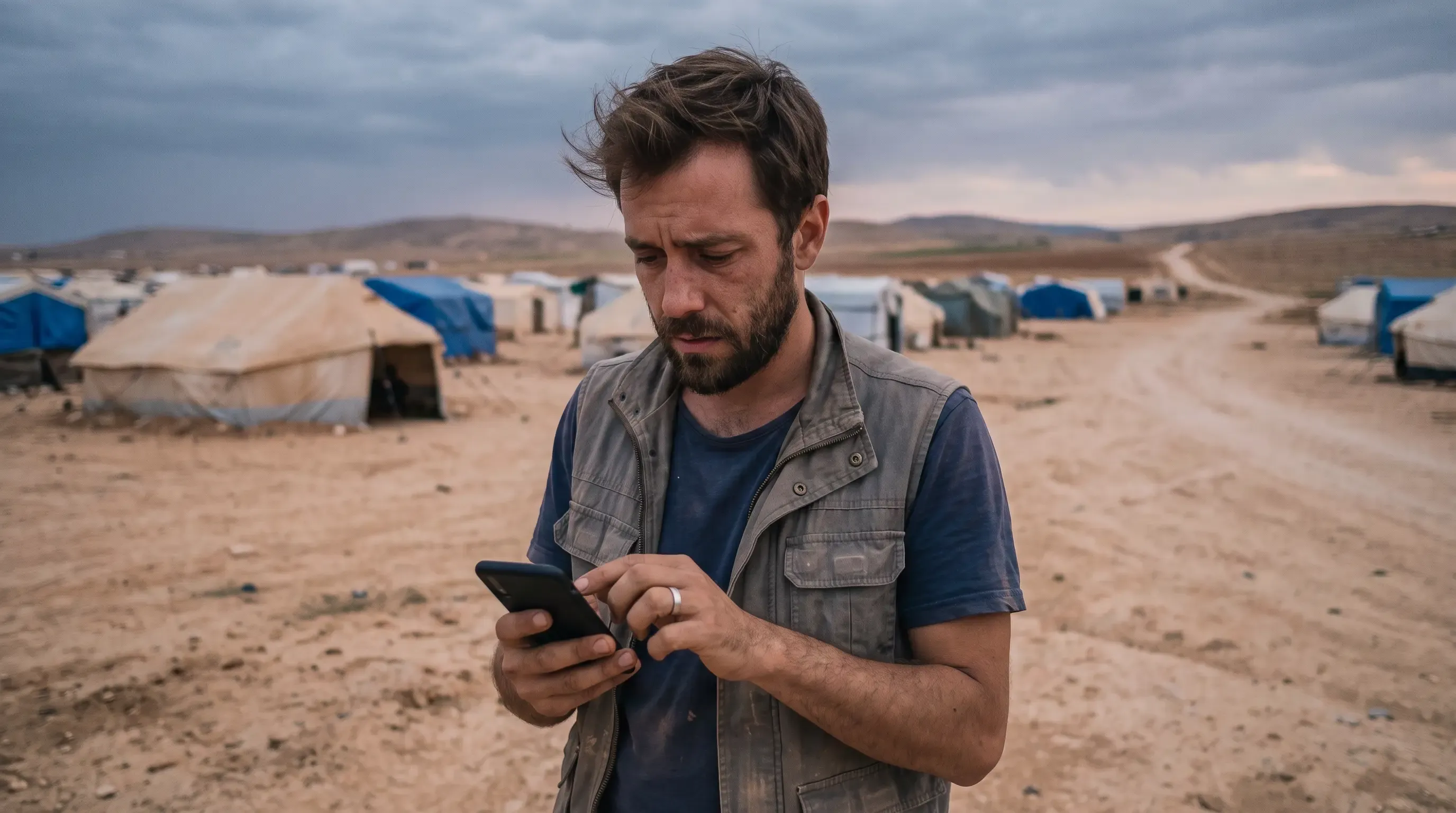
And in Chad, when authorities shut down Starlink access for refugee camps in the Abu Tanqi and Maji settlements, they cut the only available internet service those camps had. The shutdown didn't just inconvenience people. It blocked communication and disrupted the delivery of humanitarian aid to people who had nowhere else to go.
International Law Is Starting to Catch Up
In December 2025, the International Criminal Court formally acknowledged the link between internet shutdowns and crimes against humanity, after sustained advocacy by Access Now and civil society partners.
The ICC's position is that shutdowns can directly facilitate or contribute to international crimes — by enabling perpetrators to conceal violence, preventing documentation of atrocities, and cutting civilian populations off from aid and information during active conflict.
The ICRC's Global Advisory Board on digital threats during conflict was established to address exactly this shift: digital infrastructure is increasingly weaponized in armed conflict, and international humanitarian law needs to respond. The ICRC's argument is that telecommunications infrastructure should be treated as civilian infrastructure protected under IHL — meaning deliberate attacks on it carry legal consequences.
The ICC recognition doesn't stop shutdowns from happening. But naming them as potentially criminal changes the conversation. How internet shutdowns are used to control civilian populations during conflict and suppress evidence of what's happening is documented across dozens of country cases. Assigning legal weight to that documentation is how accountability begins.
What World Humanitarian Day Has to Say
World Humanitarian Day was created to honor people who move toward crises rather than away from them. Those people now depend on digital infrastructure to do their work — and that infrastructure is being treated as a legitimate military and political target.
I think there's a specific argument that belongs in today's observance: communication access in conflict zones is a humanitarian protection issue, not just a digital rights one. Treating an internet shutdown during active conflict as a political event underestimates what it does in practice.
A blackout during a siege isn't only censorship. It's a decision to leave people without the information and coordination they need to survive.
Online freedom isn't an abstraction when aid workers can't reach each other across a zone of active fighting, or when civilians can't find out where it's safe to go, or when a refugee camp loses the only communication link it had. World Humanitarian Day asks us to see what people in crisis actually need. Today, that list includes a signal.


Be part of the resistance, quietly.
Gintarė is a cybersecurity writer at Mysterium VPN, where she explores online privacy, VPN technology, and the latest digital threats in editorial pieces. With hands-on experience researching and writing about data protection and digital freedom, Gintarė makes complex security topics accessible and actionable.