Your LG TV Could Still Be Listening With the Screen Off


Key Takeaways
- A Gamers Nexus and Level1Techs investigation found LG OLED TVs, including current G5 models, recording microphone audio and storing it locally while the screen appeared to be off, uploading it once reconnected to the internet.
- The same TVs actively scanned local networks for other devices, including phones and smartwatches, and collected Wi-Fi signal data and geolocation information.
- Researchers also found remote code execution vulnerabilities in webOS, meaning a compromised TV could become a foothold for surveillance inside the home.
- LG has told outlets it does not "collect, record, or store ambient conversations," a claim the investigation's own findings directly contradict.
- Researchers recommend disconnecting LG TVs from the internet entirely, using an external streaming device, and isolating any remaining connection on a guest network.
LG builds its televisions to be judged on picture quality, yet this investigation shows the actual product being sold is something far less visible than a bright panel, and the company's own executives describe it in the plainest terms available to them.
The TV That Never Actually Turns Off
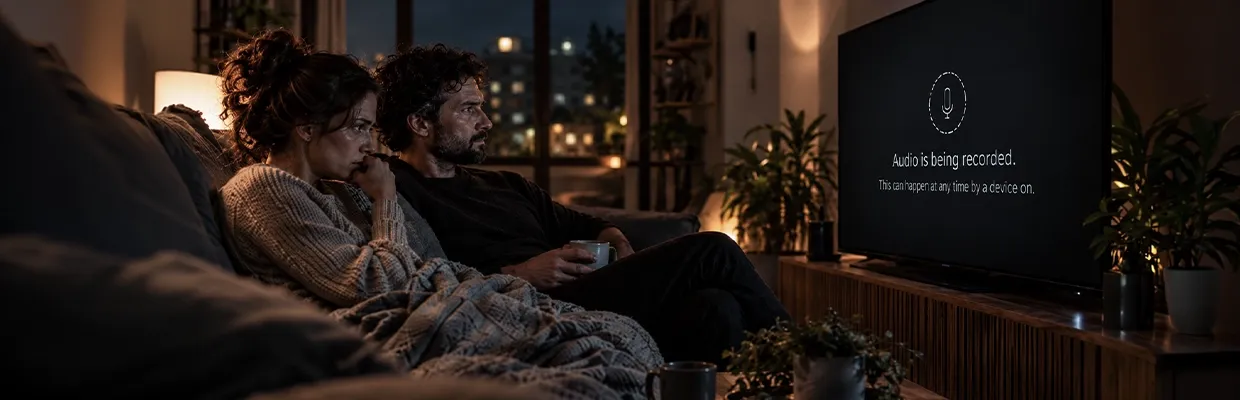
Researchers working with Gamers Nexus and Level1Techs put current LG OLED televisions, including the G5, through packet-level testing and found the built-in microphone capturing clear audio while the screen appeared dark in standby mode, with voice input logged in plain text.
When the TV was disconnected from Ethernet, it kept recording and storing that audio locally instead of stopping, uploading the backlog automatically once the connection returned. The offline period was never actually a privacy pause, just a delay.
The plaintext logs included test phrases such as "LG my social security number is..." and mentions of credit card information, captured and stored in memory exactly as spoken, with no filtering for what counted as a command versus a private conversation.
The same TVs actively scanned the local network for other hardware, including phones, smartwatches, and other LG devices, while also collecting Wi-Fi signal strength, channel data, and location details that together sketch a fairly precise picture of where the television sits.
LG Owns the Glass, and It Knows It
None of this is accidental. It runs on automatic content recognition, the system that fingerprints whatever crosses the screen, HDMI input included, so LG can identify what is being watched regardless of which app or device is playing it.
LG Ad Solutions president Serge Matta summed up the business model during a clip included in the investigation, saying flatly, "We own the glass. We own the TV." His colleague Julian Zilberbrand went further, stating that LG knows who is in the household, which devices are present, and how to extend an ad campaign onto a viewer's phone.
That reach is not small. LG's advertising arm claims access to 216 million smart TVs worldwide and more than 360 million connected devices in the US alone, fed by a system whose entire pitch to advertisers is that the television is only the entry point.
A device sold to play movies has quietly become a household surveillance hub, and the marketing materials say so out loud.
A Security Hole Big Enough to Walk Through
Alongside the data collection, researchers found remote code execution vulnerabilities in webOS, LG's smart TV operating system, currently working through responsible disclosure with no public evidence yet of active exploitation.
But a working exploit would hand an attacker a device with a live microphone, a network connection, and in some setups a connected webcam, one that usually gets far less security scrutiny than a phone or laptop, making it a genuinely appealing foothold into a home network.
LG has previously told reporters that its TVs "do not collect, record, or store ambient conversations," insisting voice features are optional and user-activated. The investigation's own recordings, pulled from a TV in standby with no active command given, say otherwise.
What's Next
LG had not responded at the time these reports were published, its own kind of answer when the claims on the table include recording a living room while the screen is black.
Researchers laid out the fix, and it's not subtle. Disconnect the TV from Ethernet, forget the saved Wi-Fi network, and route everything through an external streaming device instead. Keep any remaining smart features on a separate guest network so the TV can't freely talk to the phones and laptops on it.
A VPN app on your phone won't touch what an LG TV records and stores locally, since that happens before any traffic leaves the living room. But the TV still has to phone home to upload what it collected, and a router-level VPN catches that traffic on the way out, covering a device that can't run a VPN app of its own. With Mysterium, that traffic exits through a residential IP with no central logs, making it harder for LG to stitch location and identity onto everything else it's already collecting.


Be part of the resistance, quietly.
Get Mysterium VPN
Milda is a privacy writer with a mission to bring you practical, trustworthy information that helps you protect your digital privacy and security. From online safety and data protection to the latest privacy trends and threats.
Related Articles
.png)