UK Facial Recognition Moves From Wanted Criminals to Visa Overstayers in Crowds

Key Takeaways
The Home Office is preparing to deploy live facial recognition at transport hubs and large public events to find visa overstayers, people subject to removal, and those re-entering the UK unlawfully.
The project has moved into a "formal delivery phase" after three trials at Holyhead port between November 2025 and February 2026, which targeted people with deportation orders or immigration-related warrants.
Home Secretary Shabana Mahmood has doubled the immigration enforcement budget and grown its workforce by 60%, as part of what the government calls the biggest enforcement crackdown in British history.
On November 4, 2026, the government proposed new rules limiting police facial recognition and requiring bias testing. The UK's biometrics commissioner, William Webster, says immigration use falls outside his remit and that he was not consulted.
From Wanted Criminals to Anyone Who Overstayed a Visa
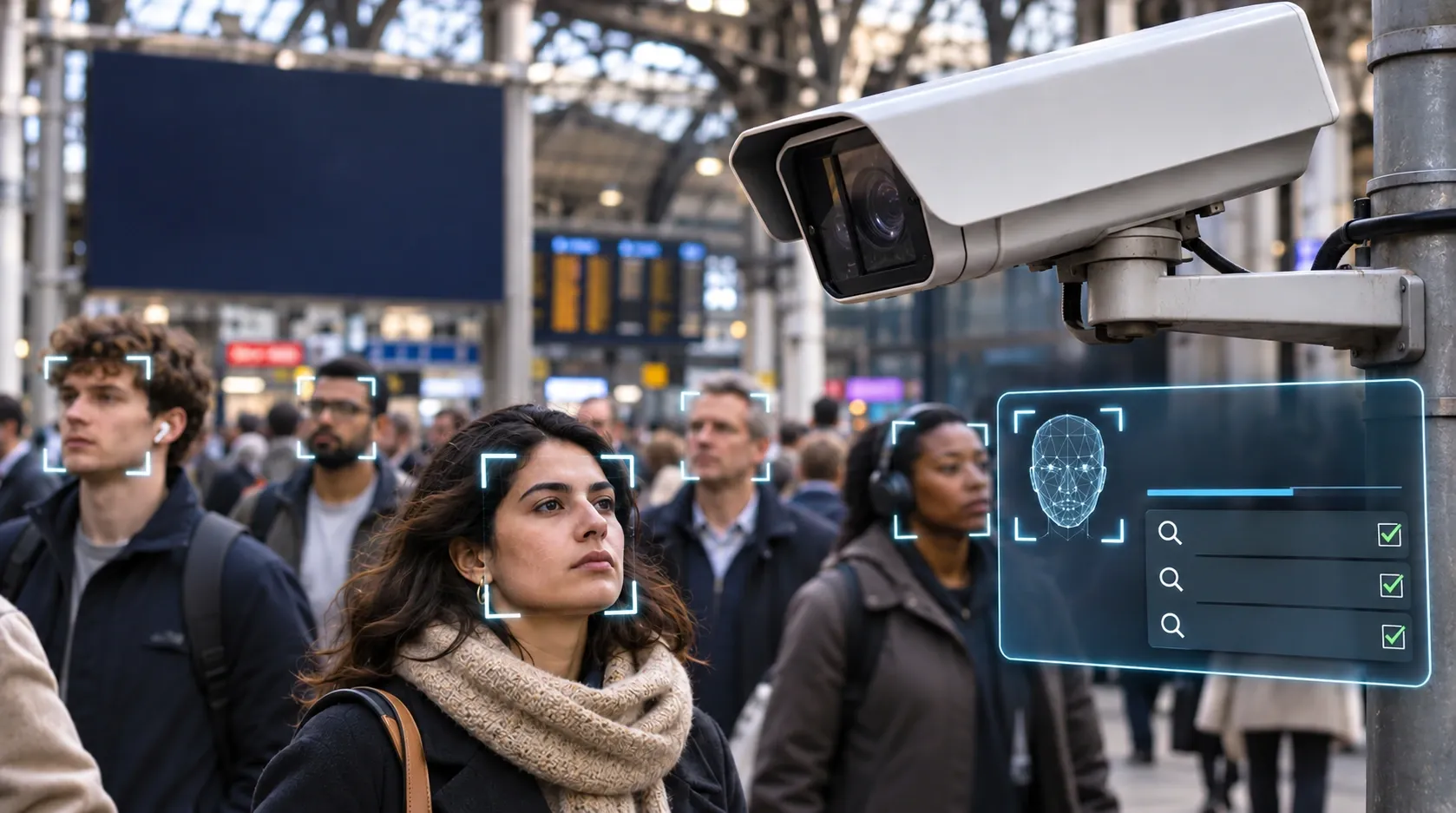
Britain is preparing to point live facial recognition cameras at transport hubs and packed public events to find people who have overstayed their visas. The technology scans every face that passes a camera and checks it against a watchlist in real time, so thousands of people who have done nothing wrong get scanned right along with the handful being searched for.
According to Home Office policy documents, the project has moved into a "formal delivery phase" after three trials at Holyhead port in north Wales between November 2025 and February 2026. Those trials only looked for people with deportation orders or immigration-related warrants, but the new policy widens the watchlist to civil breaches like overstaying a visa or failing to meet immigration conditions.
The documents allow cameras to be used proactively at transport hubs and at events expected to draw large crowds, with anyone under 18 kept off watchlists. They list locations with "heightened community sensitivity" as higher-risk deployments, and when asked what that phrase actually covers, the Home Office refused to comment. Naturally, the department that wants to scan crowds can't say which crowds.
Home Secretary Shabana Mahmood has doubled the immigration enforcement budget and grown its workforce by 60%, aiming for tens of thousands more raids, arrests, and deportations in what the government proudly calls the biggest enforcement crackdown in British history. A camera that never blinks is a very convenient way to hit targets like that.
Strict Rules for Police, a Blank Check for Immigration
On November 4, 2026, the government published its response to its consultation on facial recognition, promising a dedicated statutory framework, testing for accuracy and bias, and a single oversight body with enforcement powers. Every one of those safeguards is still a proposal, with none of it being law yet.
Calls for a single framework for biometric policing have been sold as clarity since the start of the year, with the catch being that one flexible rulebook can absorb whatever tool comes next without Parliament debating it again.
Immigration enforcement gets even less than that. The Home Office names the Biometrics and Surveillance Camera Commissioner as an external check, but William Webster, who holds that role, said he was never consulted on the policy and that immigration use falls outside his remit.
In other words, police get a promise of rules, while immigration enforcement gets the cameras and a watchdog who has already said this isn't his job. I think that should be named for what it is, a blank check handed to the part of the state with the least patience for due process.
The Home Office's track record doesn't help its case either. Earlier this year, it emerged that the department kept using an AI facial-age estimation tool even after knowing it had misidentified migrant children as adults.
Now picture that same department running live matches across a busy station concourse, where every false hit means a real person stopped, questioned, and asked to prove they belong, with campaigners warning that misidentification lands hardest on people of color. Good luck explaining to the commuter who missed their train that the algorithm was just having a bad day.
Every Face in the Crowd Is on Trial
Big Brother Watch called the plans what they are, mass surveillance, while John Hannam questioned the system's fairness for people who cover their faces.
Labour MPs, on the other hand, praised the safety gains while warning about bias risks, which is a strange position to hold about a tool whose bias problems are already on the record inside the same department.
Meanwhile, the US has already shown where this road leads, with ICE spending $25 million on biometric field scanners without oversight to identify people on the street. Britain is now building its own version, only with fixed cameras at stations instead of handheld devices.
A camera that scans everyone to catch a civil rule-breaker treats every person walking through a station as a suspect until the software says otherwise. And, well, I absolutely can't see how that is proportionate for a visa overstay, a civil breach the Home Office admits it currently chases through repeated visits to homes and workplaces.
And yet, the government wants credit for safeguards that apply only to police, exist only on paper, and leave the one regulator it named saying the job isn't his.
Mahmood gets a headline count of raids and removals to wave around, while everyone else pays with their faces every time they catch a train, starting with the people the technology misreads most. If the Home Office is so sure this is fair, it can publish the accuracy results from Holyhead and define "heightened community sensitivity" before a single camera goes up at a station, and I wouldn't hold my breath waiting for either.


Be part of the resistance, quietly.
Milda is a privacy writer with a mission to bring you practical, trustworthy information that helps you protect your digital privacy and security. From online safety and data protection to the latest privacy trends and threats.
Related Articles