When Romance Becomes Resistance: Hausa Women Writers and Digital Censorship

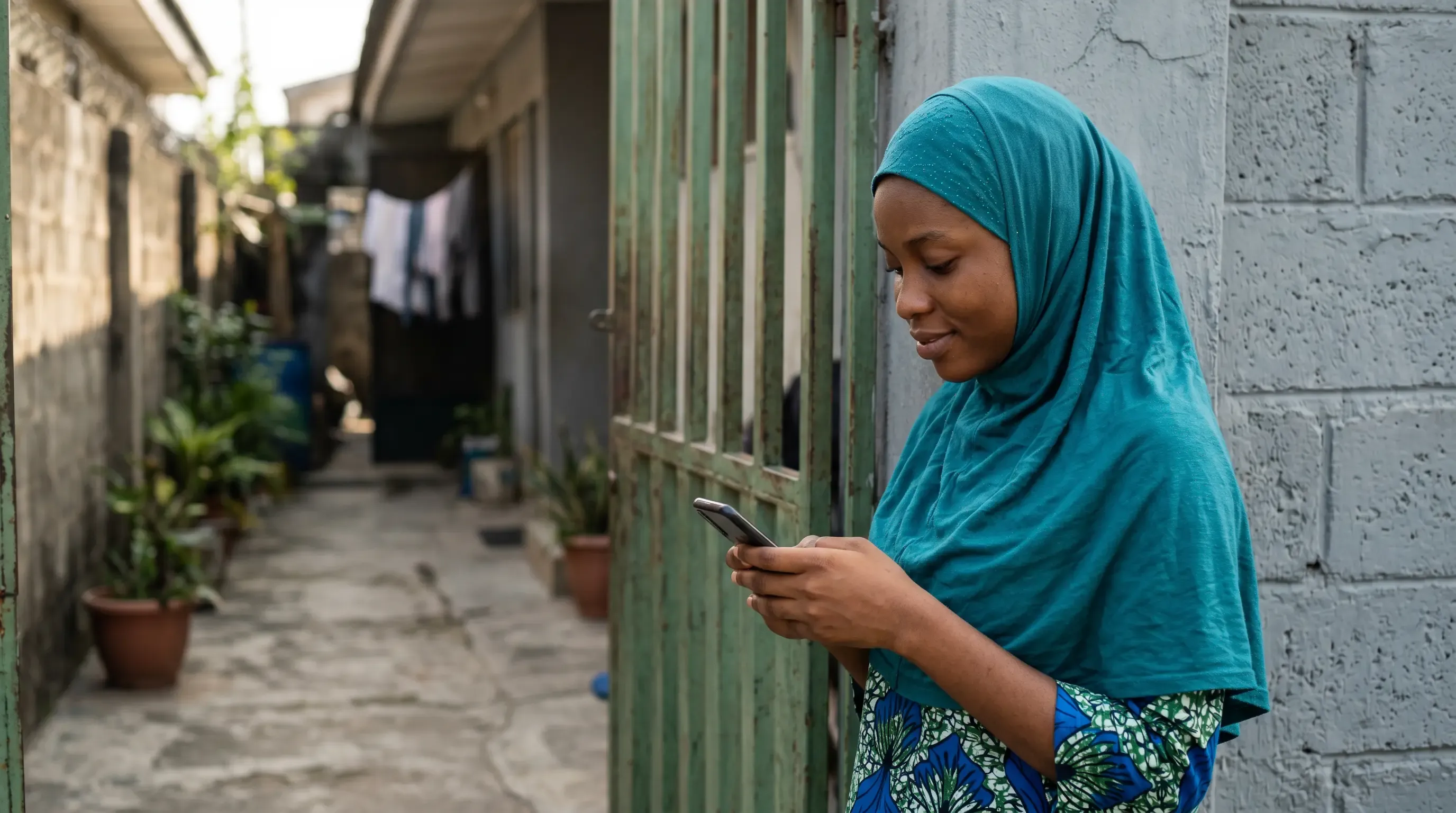
Here's a sentence that sounds like progress: women in northern Nigeria are freely writing and sharing erotic fiction online. Here's the part that sucks: they're forced to do so anonymously, in private WhatsApp groups, under pseudonyms, in a region where being identified as the author could mean family pressure, community rejection, or much worse.
That's not freedom of speech. That's censorship dodged with extra steps. I want to talk about what's actually happening in Kano, because I think it tells us something important; not just about Nigeria, but about why a free and open internet matters for everyone, everywhere, no matter if you read spicy romance novels or not.
Key Takeaways
- Hausa women writers in northern Nigeria moved banned romance fiction from burned books to private WhatsApp groups, using the internet to bypass censorship and keep their stories alive.
- Online anonymity isn’t just convenient for these writers; it’s protection from religious policing, social backlash, and potential prosecution under strict morality laws.
- Expanding internet regulations like age verification laws could destroy that protection by forcing users to attach real identities to online activity.
- The story shows why internet freedom matters globally: when governments control anonymity and access online, marginalized voices are often the first to disappear.
Some Context
Kano is the second-largest city in Nigeria. It’s also the heart of Northern Nigerian literature, best known for the popular romance fiction genre Littattafan Soyayya, often also called Kano Market Literature, which thrived in the region from the 1980s through 2015.
It was written exclusively in the Hausa language by women and for women, and self-produced to cost as little as possible, often as multiple books to cut production costs. This fiction genre was extremely popular with young people, especially women. The themes were diverse, centering on romantic plotlines.
The popularity of such literature among youth social spaces in northern Nigeria created loads of concerns within the public, especially given Kano’s Islamicate culture, which feared the moral temptations of the stories. Sex is immoral, didn’t you hear?
The constant censorship of these books by authorities led to a steep drop in the production of fiction over the years. Starting from the mid-2010s, however, people realized how easily accessible the internet and social media can be. This sparked the reincarnation of the genre in online spaces, free from censorship.
Nowadays, many Nigerian women are using privacy-focused messaging apps like WhatsApp not only to write spicy love stories out of reach of religious and government censors who still focus on physical books, but also to make money to support themselves.
This way, these women are making money through their creativity and fighting the region’s strict censorship and religious limitations at the same time. That is, on the condition of a free internet for all. Because if the free internet goes away, the brave authors’ income and their voices do too.
Morality Policy
It’s no secret that most religions, including Islam, aren’t too keen on public discussions of anything even remotely sexual. Or that supportive of women’s equality and their freedom, either. In Sharia law, which is implemented in 12 states in Nigeria, including Kano, simple things like music, homosexuality, and even those plastic mannequins from clothing stores have been targeted as inappropriate in one way or another.
So, it’s no surprise that in Nigeria, the local Hisbah, a religious police created to promote Islamic virtue and discourage vice, is running wild in trying to control anyone and everything they can get their hands on. This, naturally, includes literature, especially the sexy kind. Islamic censors in the region required all writers to officially register their work with the Hisbah, ensuring a certain level of obedience. Imagine being Sarah J. Maas, working on the next book in the steamy ACOTAR series, and then being asked to turn down the steam. Sucks, doesn’t it?
But that’s how things work in the region. Either you get in line, or you risk getting in trouble. In 2007 and 2009, Kano state officials even organized public bonfires of romance novels, including local as well as imported titles, declaring them a threat to Islamic values. Not to mention the prosecution, reputational damage, and family pressure put on those who dare to write about what matters to them.
PEN International (a worldwide association of writers focusing on freedom of expression and literary advocacy), alongside PEN Nigeria, has released statements expressing anxieties around how the country treats its creatives, who often face government censorship, harassment, and violence.
The message of the statement is clear – allow filmmakers, writers, and journalists alike to express their ideas freely, without censorship, free of fear of being arrested, imprisoned, or intimidated. Ironically enough, no website addresses linking to the statement on the association’s website are functional.
Underground Writing
Given all of that, the shift to writing not-safe-for-work stories online, under pseudonyms, fake emails, and using end-to-end encrypted messaging apps with private chat groups really isn’t all that surprising.
Fauziyya Tasiu Umar is an example of a popular Nigerian author, going by Oum Hairan online. She talked with the New York Times about how she built a real, paying audience of women on WhatsApp. These readers follow her Hausa-language erotica chapter by chapter, look forward to the next part, and engage in exactly the kind of literary community the Kano market tradition always produced.
But here’s the thing. Oum Hairan is an exception to the rule. Her writing is popular enough, and her platform is big enough for her to dare to speak publicly. She was already targeted by Hisbah, and managed to walk away safe and sound. But countless other women, both writers and readers alike, still hide in the shadows, while they still exist because they may not.
You Should Care
This isn’t just a Nigerian problem. And it’s not just a problem for women who write romance fiction under false names in encrypted group chats. Right now, countries across Africa and Asia are watching what places like Australia, the UK, and the EU have been doing with internet regulation and taking notes.
Kenya introduced a bill in 2025 requiring age verification for social media services, including Facebook and WhatsApp. Indonesia banned social media for children under 16 in March 2026, becoming the first country in Southeast Asia to do so. Malaysia mandated age verification for all social media platforms starting January 2026. Zimbabwe is considering a social media ban for anyone under 18. Gabon temporarily blocked social media entirely in February 2026 over loosely defined concerns.
The laws vary. The direction doesn’t. And here’s what all of this means for someone like Oum Hairan, or any of the hundreds of women writing fiction in private WhatsApp groups across northern Nigeria.
Age verification generally requires platforms to collect sensitive data from every user, often through tools like ID checks, biometric scans, or other dubious methods, before granting access to certain content or services. The anonymity that has long allowed people to seek support, explore new ideas, and build community online is threatened by these laws.
Anonymity isn’t optional for these women. It’s the whole point. The pseudonym is what makes the writing possible in the first place. If WhatsApp were pushed to verify the real identities of users before granting access, these women would be forced to sacrifice their anonymity simply to access lawful speech.
A woman writing romance fiction in Kano would have to attach her legal name to her account. Her family could find her. The Hisbah could find her. The censorship board, which has already promised to prosecute people for distributing unapproved content, could find her. And they may not be as lucky as Oum Hairan.
The women who currently write in safety would have to choose: stop writing, or be exposed.
Right to Be Heard
Freedom of expression was never supposed to come with an asterisk. It wasn’t supposed to mean “you can write what you want, as long as no one knows it’s you.” It also wasn’t supposed to mean “you can read what you want, as long as you pay per chapter in a private group and hope no one screenshots it.”
The women writing these stories in WhatsApp groups today are doing what writers and journalists have always done when the official channels weren’t safe: they built their own. That’s resourceful. It’s also a workaround for a problem that shouldn’t exist in the first place.
A free internet, one where people can write, read, and communicate without governments deciding what’s acceptable and who’s allowed to stay anonymous, isn’t a technical feature. It’s a basic human right. And it matters as much in Kano as it does in London, or Ohio, or Jakarta, or Warsaw.
The physical books may not have survived the bonfire. But the stories found WhatsApp. And a day may come when WhatsApp isn’t safe either. That’s why fighting for an open internet, for everyone, everywhere, matters now, not later.


Be part of the resistance, quietly.
Get Mysterium VPN
Gintarė is a cybersecurity writer at Mysterium VPN, where she explores online privacy, VPN technology, and the latest digital threats in editorial pieces. With hands-on experience researching and writing about data protection and digital freedom, Gintarė makes complex security topics accessible and actionable.
Related Articles
.png)