
End-to-end encryption
Mysterium VPN creates a secure, encrypted tunnel between your device and the network, preventing anyone from monitoring your traffic. Learn more about how VPN encryption works.

Most VPNs rent datacenter servers and call it privacy. We took what we learned from building a decentralized network and removed the trade-offs by:

When you use a traditional VPN, your traffic is routed through centralized servers to hide your IP address and location. Here’s how Mysterium VPN changed the game.
Mysterium VPN creates a secure, encrypted tunnel between your device and the network, preventing anyone from monitoring your traffic. Learn more about how VPN encryption works.

Your traffic is routed through the Mysterium Network and assigned a residential IP address from a node runner in our network.
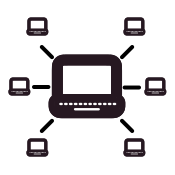
There's no central server to be seized, subpoenaed, or shut down. Our VPN infrastructure spans tens of thousands of nodes worldwide.
After building the world’s first decentralized VPN back in 2019, we saw both the promise and the limitations of existing VPN models. We set out to build something better. Here’s how we did it:
Mysterium VPN is the result of years of hard work and a passionate team of industry experts.


We built the first decentralized VPN in 2019, learned where that model broke, and rebuilt around what actually works in daily use rather than in theory.

We treat open internet access as a human right, not a premium feature. Everything in the product follows from that, including the parts that cost us more to run.

11,000+ IPs, 100+ countries, state-level choice in the US. We give you context and options. What you do with them is up to you.

Our 7,500+ residential IPs come from independent node operators who explicitly agreed to take part. Using Mysterium VPN never makes your own device part of the network.

Our app code is public, and we're a member of the VPN Trust Initiative. Privacy claims should be checkable, not taken on blind faith.

Detection methods change, restrictions spread, rules get rewritten. We track it and keep the network working, so your internet stays usable without you having to actively follow any of it.
Standard VPNs and pure dVPNs have real trade-offs. Mysterium VPN captures the best parts of both.
| Feature | Standard VPN | Pure dVPN | Mysterium VPN |
| IP address type | Datacenter IP | Residential IP | Both available |
| Detection risk | High | Low | Low |
| Speed & stability | High | Inconsistent | High |
| Streaming stability | High | Inconsistent | High |
| UI & usability | Polished | Basic | Polished |
| Customer support | Yes | Limited | Yes |
| Central control | Yes | No | No |
| Privacy level | Provider-dependant | High | High |
“No-logs” is one of the most overused claims in the VPN industry. In reality, every VPN collects some level of technical data to function. So instead of vague promises, let’s break down what “no-logs” actually means in practice.
🟠 Payment records
🟠 Account creation timestamps
🟠 Error & crash reports
🟠 Aggregated bandwidth statistics
This type of data is necessary to operate a service. Anyone claiming they collect nothing at all isn’t being fully transparent.
All VPN providers retain some operational data; it’s a technical and often legal necessity. The real question is whether that data can be used to identify you or reconstruct your activity.
🟢 Websites and content you access
🟢 Your real IP
🟢 Session duration or connection times
🟢 DNS queries or browsing patterns
Our system is designed to prevent any correlation between who you are and what you do online.
Mysterium VPN is designed so that your account and payment data are handled separately from your network activity. This makes it structurally impossible to connect your identity with your usage. Not just unlikely, but intentionally prevented by design.
Our IPs aren’t a rented space in a data center somewhere far away. It’s a real internet connection shared by an actual person who believes in an open internet.


Thousands of like-minded people around the world running the MystNodes software on their at-home devices.


Our open-source decentralized network acts as a bridge between node runners and you, our VPN users.


Your internet traffic exits through a residential IP in the country you choose, making it fast, clean, and indistinguishable from real local users.
Using Mysterium VPN doesn’t make your device part of the network, and your IP address is never made public.
All traditional VPNs share the same weakness. Over the last few years, streaming services and websites have evolved to quickly identify and block the datacenter IPs that reliably access their content.
That’s because datacenter IPs are well-documented, easy to classify, and regularly blocked by websites that enforce geo-restrictions or anti-bot measures. Here's the breakdown of a residential VPN vs. a datacenter VPN that impacts your browsing:
Experience the freedom of residential IPs today!
Mysterium VPN wouldn’t exist without our dedicated community of node runners who, like us, believe that internet freedom should be accessible for everyone, everywhere. If you want to join us in the fight for internet freedom, become a node runner today!
COUNTRIES WITH ACTIVE NODES

ACTIVE NODE RUNNERS

THE YEAR WE LAUNCHED THE FIRST DVPN
No, Mysterium VPN doesn’t use or share your IP address while you're using it. Our residential IPs are provided by independent node operators who have explicitly agreed to participate.
No. We use a decentralized infrastructure for residential IPs, and also offer datacenter IPs, so we’re not a P2P VPN. By combining centralized and decentralized systems, you get the best of both.
Yes, you can buy Mysterium VPN with cryptocurrency and subscribe to our service without relying on traditional payment methods like credit or debit cards, which are also accepted.
The ultimate digital shield, now at a fraction of the cost.

Get 85% OFF on a 2-year plan!