Australia Toughens Its Social Media Ban After the Evidence Confirmed It Failed


Key Takeaways
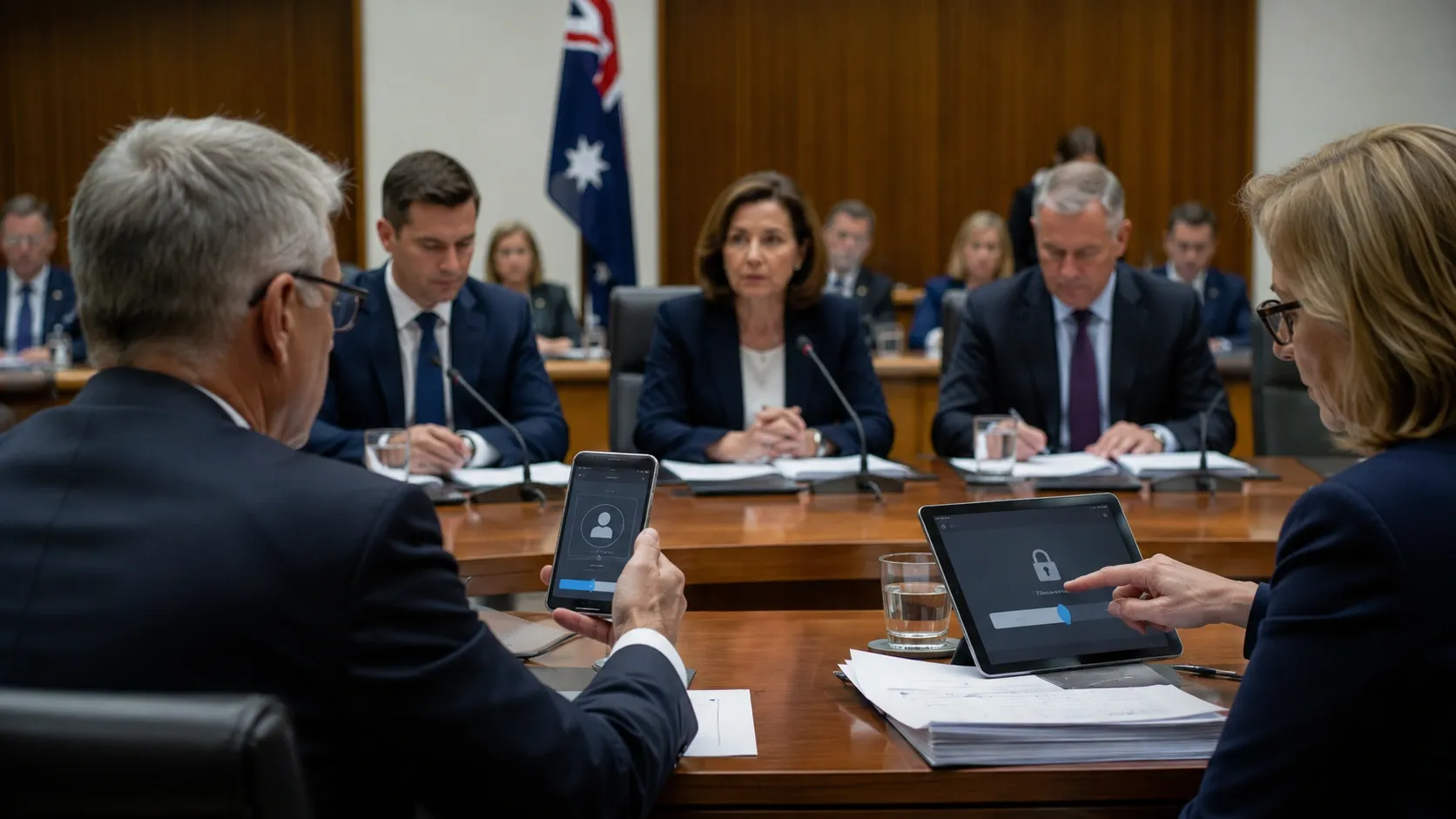
- On June 26, 2026, Prime Minister Anthony Albanese confirmed that tougher social media enforcement laws are a government priority, following eSafety Commissioner Julie Inman Grant's admission that current legislation has only "very thin scaffolding" and that she lacks "potent powers" to act.
- A peer-reviewed BMJ study published the same day found no statistically significant reduction in daily social media use among under-16s in the three months since the ban took effect, with over 85% of participants still accessing restricted platforms.
- Despite the eSafety Commissioner's March 2026 compliance report flagging Facebook, Instagram, Snapchat, TikTok, and YouTube for significant compliance failures, no fines have been issued against any platform.
The Law That Was Already Failing Before Anyone Admitted It
When a government announces it will toughen a law the same day peer-reviewed evidence confirms that law has failed, one of two things is true. Either it didn't read the study, or it did and chose to respond with more of the same. In this story, the timing is too precise for the first option.
Australia's Social Media Minimum Age Act came into effect on December 10, 2025, requiring platforms including Instagram, Facebook, TikTok, Snapchat, YouTube, Twitch, Kick, and X to block under-16s from signing up, with fines of up to AUD$49.5 million for non-compliance. Not a single fine has been issued.
Earlier this month, eSafety Commissioner Julie Inman Grant described the legislation to The Sydney Morning Herald as having only "very thin scaffolding," saying she doesn't have "potent powers." The government had previously promised regulators would "throw the book" at non-compliant platforms. So far, the book remains on the shelf.
What 408 Teenagers and a p-Value of 0.60 Actually Tell You
Researchers from the University of Newcastle tracked 408 Australian adolescents before and three months after the ban took effect, using a regression discontinuity design to measure whether the law produced any meaningful change in daily use. The result, published in the BMJ on June 24, 2026, was a p-value of 0.60 or higher across every primary outcome, which in plain language means the ban had no statistically significant effect on anything.
More than 85% of participants under 16 were still accessing restricted platforms at follow-up, most via their own accounts. Between 15% and 19% used a fake account, 9% to 29% borrowed someone else's, and 6% to 11% used a private browser. The government had celebrated 4.7 million under-16 accounts removed or restricted by mid-January as proof the law was working. But to their surprise, it turns out that account deletion does not equal behavioral change, and a determined teenager with a fake birthdate already knew that.
Doubling Down on Infrastructure That Collects Data and Stops Nothing
Albanese's response on June 26, 2026, was to announce that stronger laws are a priority, focusing on empowering the eSafety Commission and stress-testing the legislation against potential legal challenges from platforms. Also on the agenda is a "digital duty of care" framework that would shift regulation from reactive content takedowns to proactive risk management covering algorithmic systems and platform design.
The circumvention pattern in Australia is already confirmed. The age-verification mechanisms governments keep converging on, from selfies to photo ID to facial age estimation, are identity data collection systems, and the BMJ data shows they don't stop teenagers, they just give teenagers more chances to correct their declared age upward and regain access.
Meanwhile, the teens who did comply with the ban lost their primary news and civic information channel, with research from Queensland University of Technology confirming affected teens report getting less news and engaging less with civic life.
Albanese isn't wrong that platforms with documented compliance failures should face fines. But tougher enforcement of age-verification infrastructure doesn't fix a circumvention problem teenagers solved in the first week. It does, however, allow Big Tech to continue doing whatever it wants while simultaneously building out a more robust data collection system on the side. And, well, when you can’t trust your government to protect your digital privacy, there’s little surprise people take it into their own hands turn to VPNs (and you can get Mysterium VPN with 78% off right now).
A Stronger Ban on Something That Doesn't Work Is Still Something That Doesn't Work
Albanese noted that 16 other countries have followed Australia's social media ban as a model, framing this as something to be proud of. It's the part I find most troubling, given the BMJ study is the first peer-reviewed confirmation that the model produces no measurable behavioral change.
The platforms that were supposed to comply are waiting to see whether the fines materialize, and they've been waiting six months. The age-verification systems being built out under this law will keep collecting identity data whether or not they stop a single teenager from opening an account, and the government knows this because its own regulator said the compliance architecture is too thin to do the job. A tougher version of thin scaffolding is still scaffolding, and the only people reliably stopped by it are the ones who were never the problem.


Be part of the resistance, quietly.
Get Mysterium VPN
Dominykas is a technical writer with a mission to bring you information that will help you keep your digital privacy and security protected at all times. If there's knowledge that can help keep you safe online, Dominykas will be there to cover it.
Related Articles
.png)