China Is Censoring Memories of the Zhengzhou Floods


Key Takeaways
- Chinese authorities are actively censoring online reflections and memorial content marking the fifth anniversary of the deadly 2021 Zhengzhou floods, in which hundreds of people died including passengers trapped in a flooded subway tunnel.
- The censorship targets not just political criticism but grief itself — personal accounts, commemorations, and any content that contradicts the state's narrative of effective disaster response.
- The Zhengzhou floods became a symbol of government failures in early warning, emergency response, and public communication. Suppressing anniversary content suppresses accountability for those failures.
- This is part of China's broader pattern of using content filtering to control collective memory, removing the ability of citizens to publicly process, remember, or learn from shared national tragedies.
Five years ago, the city of Zhengzhou in central China was hit by catastrophic flooding. Hundreds of people died. Among the most documented tragedies: passengers trapped in a flooded subway tunnel, unable to escape, sending final messages to family members while water rose around them.
The disaster became a symbol of failures in early warning systems, emergency response coordination, and the flow of accurate information to the public during a crisis.
This week, on the fifth anniversary, Chinese authorities are censoring online reflections, memorials, and discussions of the floods, according to reporting by China Digital Times. Memorial content is being removed. Personal accounts are being suppressed. The anniversary itself is being made unspeakable in the online spaces where Chinese citizens might otherwise mark it together.
The translation of one censored piece, shared by China Digital Times, captured something worth quoting directly: "Sometimes forgetting is as terrible as the disaster." That line is now itself an act of resistance; the kind of thing that gets taken down.
What It Means to Censor a Disaster
There's a particular cruelty to censoring a natural disaster's memory. People who lost family members can't publicly grieve. Communities that survived can't process what happened. Citizens who want to ask what went wrong — with the warnings, the response, the information that was and wasn't shared in real time — can't have that conversation in public. The state's version of events, which emphasizes effective response and resilience, becomes the only version that circulates domestically.
This is what information control during a crisis is actually for. We've written about China escalating surveillance and censorship amid the current floods and economic unrest — and the Zhengzhou anniversary censorship illustrates where that logic leads over time. The infrastructure built to suppress dissent during an emergency doesn't disappear when the emergency ends. It gets used to suppress memory of the emergency, and then memory of the suppression.
The Zhengzhou floods produced real accountability questions: about the subway operator's decisions, about municipal government warnings, about the flow of accurate information to people in danger.
Those questions were partially visible in the immediate aftermath, when the scale of the disaster made full suppression difficult. Five years on, with the acute crisis gone and the surveillance infrastructure intact, the space for those questions has been systematically closed.
Controlling Memory Is Controlling the Future
I think about the Zhengzhou anniversary censorship as a data point in an argument about what censorship is ultimately for. It's not primarily about stopping political dissent, though it does that. It's about controlling the informational environment in which a population makes sense of its own history — what happened, who was responsible, what should be different next time.
A government that can erase disaster memory can also erase the lessons disasters teach. It can maintain a public narrative of competence and resilience without being tested against the reality of what occurred. And it can ensure that the people who survived, who lost someone, who remember what the state's communications looked like in real time, can't compare notes publicly with each other.
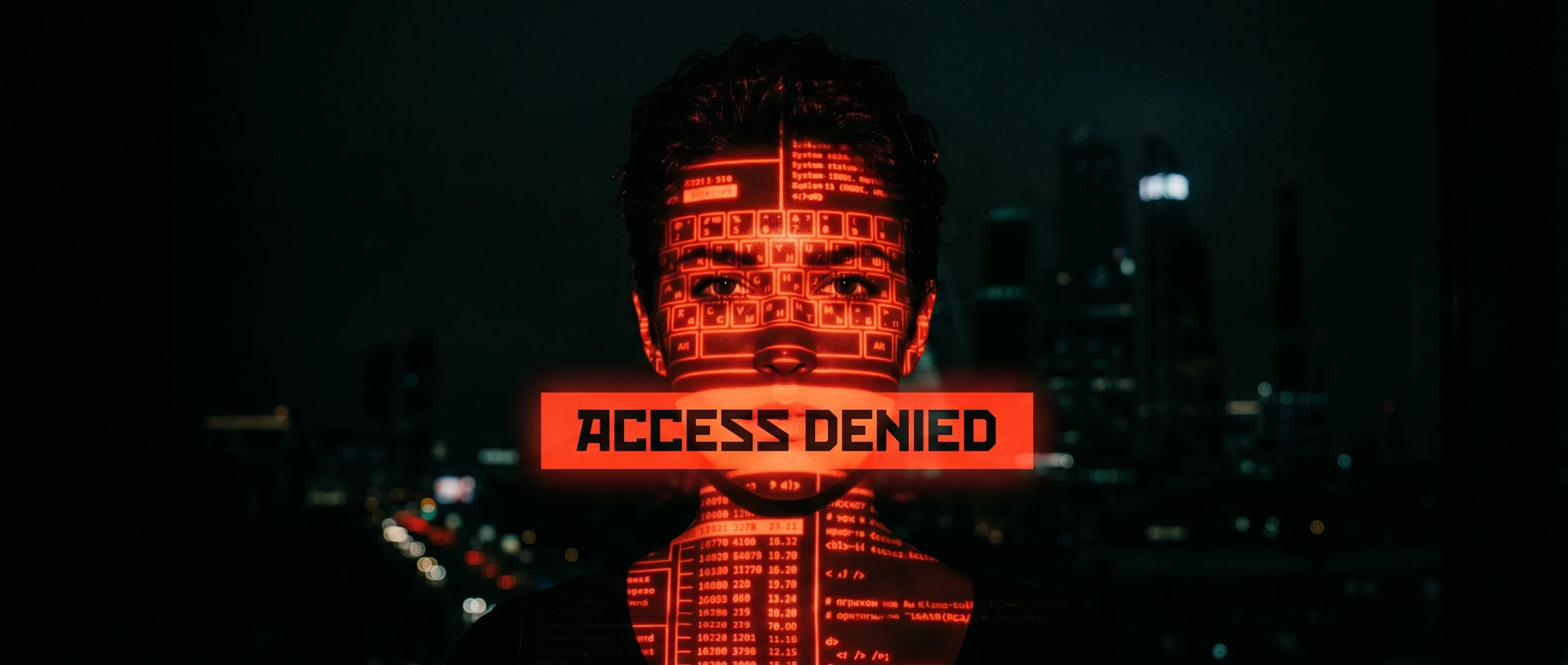
Access denied isn't only a message you see on a blocked website. It's what happens when an entire society is prevented from acknowledging, together, that something terrible happened and that the people responsible for preventing it could have done more.
That's a form of censorship that goes deeper than any single news story — and it's one that the tools of a controlled internet make uniquely easy to enforce.


Be part of the resistance, quietly.
Get Mysterium VPN
Gintarė is a cybersecurity writer at Mysterium VPN, where she explores online privacy, VPN technology, and the latest digital threats in editorial pieces. With hands-on experience researching and writing about data protection and digital freedom, Gintarė makes complex security topics accessible and actionable.
Related Articles
.png)