China Tightens Surveillance Amid Unrest


Key Takeaways
- China is tightening its digital surveillance and censorship infrastructure in direct response to floods, economic distress, and labor unrest, driving public dissent online.
- The escalation is strategic: periods of social instability are being used to justify expanding state control over information flows, with dissenting voices on economic conditions and disaster response targeted for suppression.
- This isn't a new playbook, but the scale and timing of the current expansion signal a qualitative shift in how authoritarian governments use crises to entrench surveillance infrastructure permanently.
- The precedent being set matters well beyond China – authoritarian governments globally are watching how a large, technologically sophisticated state responds to domestic instability with digital control.
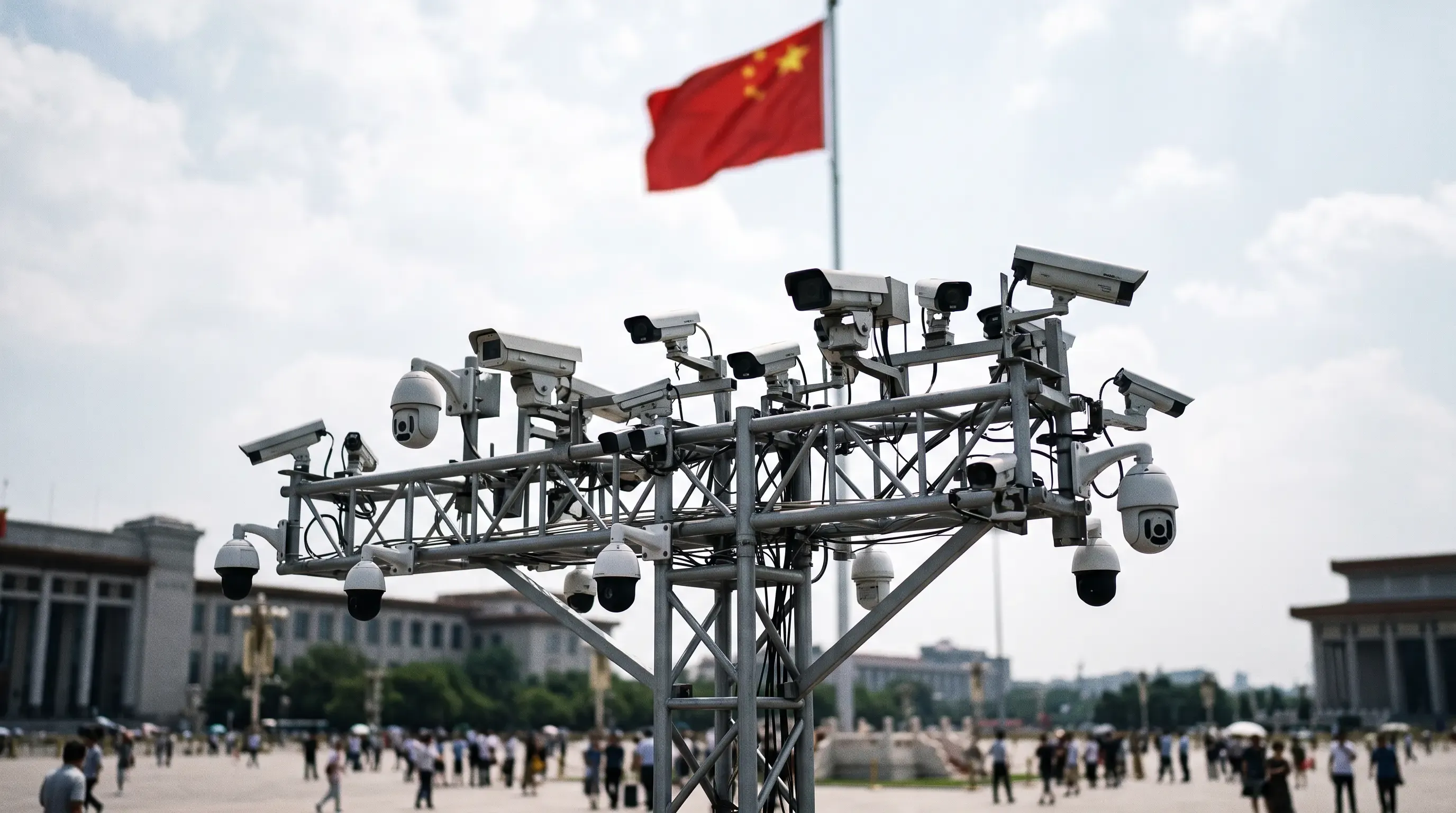
China is escalating digital surveillance and censorship in response to a convergence of domestic pressures: major flooding, economic distress, and growing labor unrest that has driven a surge in public dissent online, according to reports online. The tightening isn’t incidental. State authorities are actively expanding content monitoring and suppression infrastructure during a period when citizens have the most reason to speak, and the most to lose from being silenced.
The specific triggers matter. Flood-affected communities attempting to share information about disaster conditions and government response are having content removed. Workers organizing or discussing economic grievances are being monitored and suppressed. The infrastructure being deployed isn't new — China's layered censorship system, which combines blacklists, real-time monitoring, and extensive ISP-level controls, has been in development for decades. What's new is the intensity and the explicit framing of social instability as justification for its expansion.
I want to be direct about what this strategy represents. Using a natural disaster or economic crisis to tighten information controls is not a defensive measure. It is a way of ensuring that the state's account of events — of the floods, of the economy, of labor conditions — becomes the only account that circulates domestically. People trying to understand what is happening in their own country, in their own communities, are being systematically cut off from the information they need to make sense of it.
Surveillance Built During Crises Doesn’t Get Dismantled After
There’s a consistent pattern in how authoritarian governments expand surveillance infrastructure: the expansion happens during a crisis, justified by the emergency, and the infrastructure remains after the emergency ends. China's response to the 2022 COVID lockdowns produced monitoring and control tools that outlasted the pandemic. The wartime internet restrictions Russia introduced after the 2022 invasion of Ukraine became the new baseline of Russian internet control.
The current expansion in China is likely to follow the same trajectory. Infrastructure built to suppress labor unrest during an economic downturn doesn't come with an off switch. The monitoring systems deployed to control flood-related dissent will still be running when the floods recede. Each crisis becomes a ratchet; the controls tighten, and they don't fully loosen again.
This is the dynamic that makes state-controlled internet infrastructure so dangerous as a long-term proposition. It is never deployed for the crisis alone. It is deployed for the crisis and kept for everything that follows.
The Global Precedent Being Set Right Now
I think about China's surveillance escalation not just as a story about what is happening to people inside China (though that’s the most immediate and serious dimension of it) but as a data point in a global argument about what governments are permitted to do with digital infrastructure during periods of social stress.
Authoritarian governments worldwide are watching how a large, technologically sophisticated state responds to floods, economic discontent, and labor organizing. They do so with expanded monitoring, tighter content controls, and a narrative that frames censorship as stability. If that response succeeds (if the dissent is suppressed, if the narrative holds, if the infrastructure beds in without meaningful international consequence), then it becomes a template. Not just for China's next crisis, but for governments elsewhere that are facing their own moments of social stress and looking for models.
A free internet is incompatible with a state that treats its own citizens' access to information as a threat to be managed. That principle doesn't only apply when the government doing the managing is one we already disagree with. It applies every time a crisis is used to justify permanent infrastructure for control.


Be part of the resistance, quietly.
Get Mysterium VPN

Gintarė is a cybersecurity writer at Mysterium VPN, where she explores online privacy, VPN technology, and the latest digital threats in editorial pieces. With hands-on experience researching and writing about data protection and digital freedom, Gintarė makes complex security topics accessible and actionable.
Related Articles
.png)