Why Governments Keep Reaching for the Kill Switch


Key Takeaways
- Access Now and the #KeepItOn coalition documented 313 internet shutdowns across 52 countries in 2025 — the highest total on record, with not a single day passing without at least one disruption somewhere.
- Conflict was the leading trigger, accounting for 40% of all shutdowns, but governments also reached for the kill switch during protests, elections, and — in six countries — during school exams.
- The pattern points to something more concerning than individual incidents: governments are normalizing the shutdown as a standard policy response, not an emergency one.
- The same infrastructure built for a "necessary" shutdown gets used again, for a smaller provocation, with less justification each time.
Internet shutdowns have a branding problem. The term sounds technical, almost administrative, like a scheduled maintenance window or a planned upgrade.
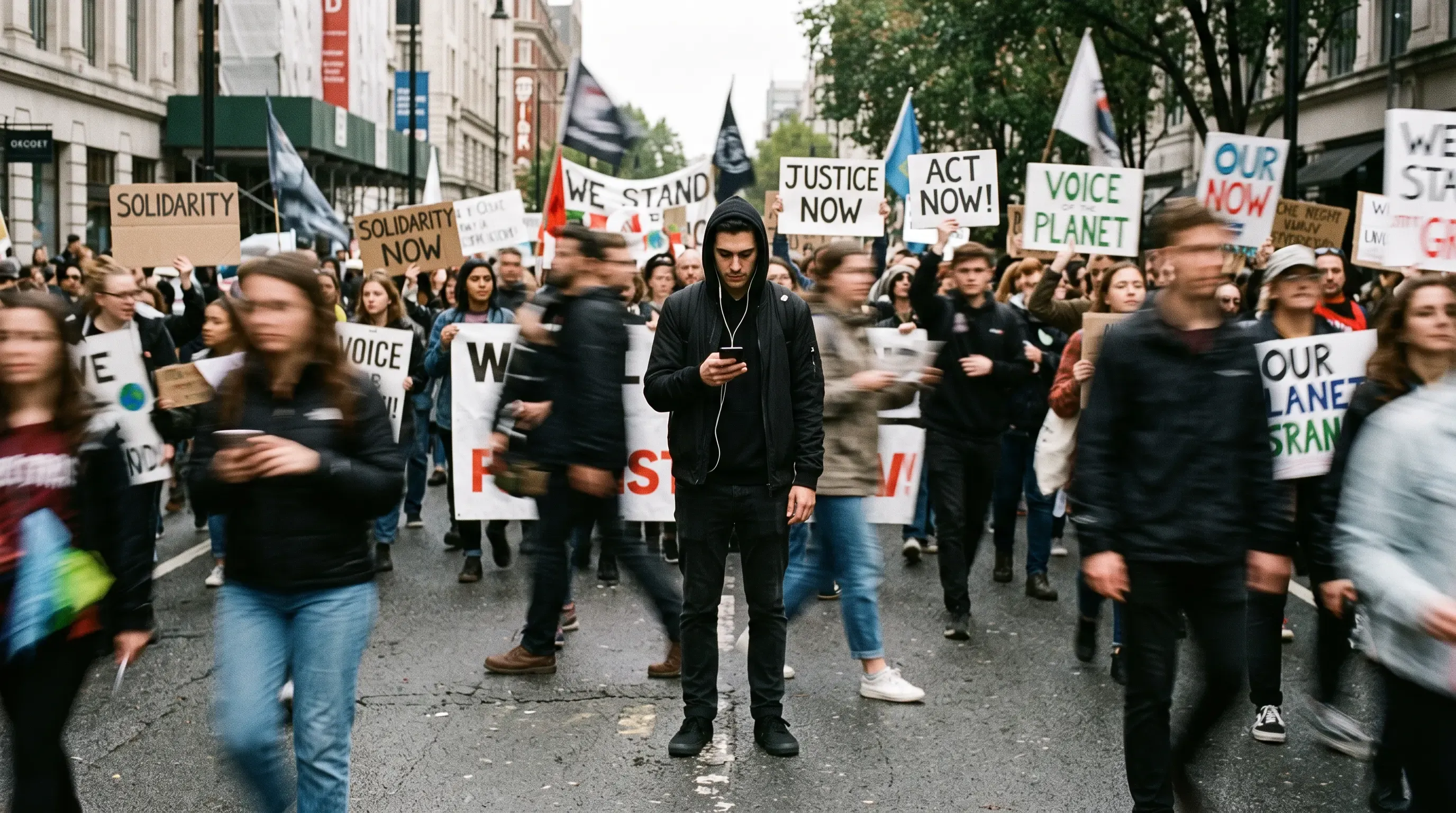
What it actually describes is a government decision to cut communications for an entire population, sometimes a city, sometimes a region, sometimes an entire country, in order to control what people can say, see, and do.
It's becoming one of the most frequently used tools in political governance, with a growing track record in democracies as well as authoritarian states.
What an Internet Shutdown Actually Is
A shutdown isn't always a single switch that turns everything off. The term covers a range of deliberately degraded communications.
There are full network blackouts, which cut all connectivity. There are targeted platform blocks that make specific apps like WhatsApp or Signal unreachable while leaving others up. There are mobile data cuts that disable cellular internet while fixed-line connections stay on.
There's throttling, which leaves the network technically "available" but too slow to actually use. And increasingly, there's the targeting of satellite internet services like Starlink for people in conflict zones who've been relying on them precisely because the terrestrial network is already destroyed or compromised.
All of these are deliberately imposed by governments or armed actors ordering ISPs, regulators, or their own technical infrastructure to restrict connectivity. All of them have the same functional goal: controlling the flow of information at a moment when the government has decided that's worth doing.
According to Access Now and the #KeepItOn coalition's 2025 annual report on internet shutdowns, published in March 2026, the year 2025 was the worst on record: 313 documented shutdowns across 52 countries, with not a single day passing without at least one disruption somewhere in the world. Since the coalition began tracking in 2016, people in 100 countries have now experienced at least one shutdown.
Why the Number Keeps Going Up
The growth isn't happening because governments are suddenly more willing to do terrible things. It's happening because the kill switch is getting easier to use.
The first time a government shuts down the internet, there's genuine friction. Telecoms have to be given orders. Legal frameworks have to be invoked or invented. The government has to decide it's willing to absorb the international condemnation that follows. That process has a cost.
By the fifth time, the friction is mostly gone. The legal infrastructure exists. The orders are pre-written. The ISPs know the process. The international condemnation is predictable enough that governments have already calculated the tradeoff and decided it's acceptable.
This is the pattern of normalization, and it's clearly visible in the data: countries that appear on the offender list one year are disproportionately likely to appear again the next.
The range of justifications has also expanded, which is itself a warning sign. Conflict and protests are the classic triggers — situations where the government's interest in controlling information is at least internally legible, even if the decision is illegitimate.
But in 2025, six countries in the Middle East, North Africa, and East Africa cut internet access during national school exams, citing prevention of cheating as the rationale. Iraq alone imposed six separate shutdown instances during exam periods that year.
Cutting connectivity for millions of people so that some students can't share test answers is what a normalized kill switch looks like at the mundane end of the scale.
What a Shutdown Looks Like From the Inside
For anyone who hasn't lived through one, here's the practical picture. Something important is happening — a protest, a military operation, an election — and the network goes silent, not because something failed, but because someone ordered it to.
Journalists can't file. Aid organizations lose contact with field teams. Families in diaspora can't reach relatives in the affected area. Small businesses lose transactions, and larger ones face operational failures. Emergency services that run on digital coordination lose response capacity. People who've been using apps for banking, transport, or medical services suddenly can't.
For the people in conflict zones who feature in the 2025 data, the stakes move beyond inconvenient to life-threatening. The report documents testimony from a Myanmar activist describing exactly this: when communication drops in a conflict area, someone has to travel physically on rough roads to ask for help, and by the time they return, it can already be too late.
I think that specific description — the thing that replaces the internet when the internet is cut — does more to convey what a shutdown costs than any statistic.
The report also documents 70 shutdowns in 2025 that coincided with what it classifies as grave human rights abuses: murder, torture, apparent war crimes. The shutdown doesn't cause those abuses. But it prevents documentation, disrupts coordination for accountability, and makes it much easier for perpetrators to act without witnesses. That's part of its function.
The Kill Switch Isn't a Fact of Life
I want to be precise about what the normalization of internet shutdowns actually means. It doesn't mean governments are suddenly worse in some absolute sense. It means that a tool which once required significant political courage to deploy has become one that governments across a wide range of political systems are treating as a routine option.
Myanmar led the world with 95 shutdowns in 2025. India, a democracy, documented 65. Pakistan, 20. Russia, 19. Tanzania alone imposed 8 in a single year, up from 1 in 2020. The problem isn't geographic. It's systemic.
Online freedom is a fundamental right, not a feature that governments grant and revoke at will. The right to communicate privately, to access information, to coordinate with others — these are prerequisites for journalism, political organizing, economic participation, and emergency response.
A world where governments regularly cut those rights for populations, with international consequences too mild to matter, is a world where the internet belongs to whoever controls the switch.
OONI Explorer, which maps verified censorship and network interference in real time and how election-period blackouts affect democratic participation and civilian safety, represents two sides of the same response: measurement and accountability. What gets named, documented, and publicly attributed is harder to repeat without consequence. That's not a complete solution. But it's where the fight to keep the internet on actually starts.


Be part of the resistance, quietly.
Gintarė is a cybersecurity writer at Mysterium VPN, where she explores online privacy, VPN technology, and the latest digital threats in editorial pieces. With hands-on experience researching and writing about data protection and digital freedom, Gintarė makes complex security topics accessible and actionable.