Iraq Banned Telegram to Silence Armed Groups, and VPN Downloads Already Spiked


Key Takeaways
- Iraq's federal government blocked Telegram starting around April 3, citing its use by armed factions to coordinate drone-related activity.
- The blackout hit major cities (Baghdad, Basra, Najaf, Saladin, Kirkuk, and Diyala) while the Kurdistan region remained unaffected.
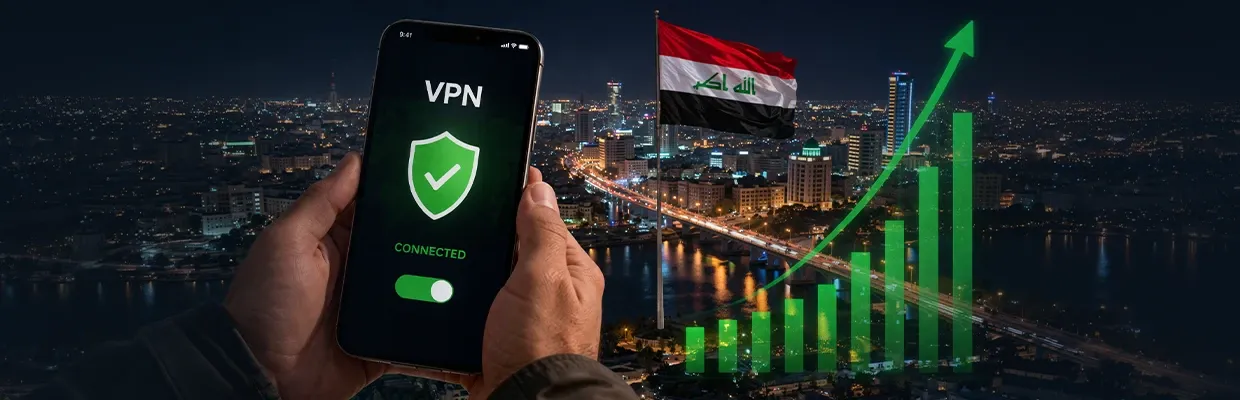
- VPN sign-ups in Iraq spiked 1,200% following the ban, with usage continuing to climb as of April 7.
- Many of the most-downloaded free VPNs in Iraq are linked to Chinese-owned entities with opaque ownership or monetize user data, making the rush to bypass the ban its own security problem.
The Ban That Admitted It Wouldn't Work
Iraq's federal government blocked Telegram across major cities beginning around April 3, 2026, citing the platform's use by armed groups to coordinate operations and drone-related activity. The blackout hit Baghdad, Basra, Najaf, Saladin, Kirkuk, and Diyala simultaneously, while the Kurdistan region was spared.
According to a government source cited by Shafaq News, the block followed coordination with security and intelligence agencies and was specifically aimed at disrupting armed factions' communications, including drone-related activity. That same source confirmed that channels linked to these groups remain accessible via VPN. So the stated target of the ban bypassed it immediately, and the cost landed entirely on ordinary Iraqi civilians who had no say in any of it.
There was no public announcement and no explanation, yet the people in six provinces lost access simultaneously, and the Kurdistan region kept its connection. VPN sign-ups in Iraq surged 1,200% in response, with usage still climbing days later.
1,200% and Climbing
The surge was first reported on April 7, noting that usage in Iraq had reached an all-time high and was still rising. The 1,200% spike in sign-ups dates to approximately April 3, when the ban took effect. Google Trends data confirms a sharp uptick in searches for "VPN" originating from Iraq in the same window.
This is the predictable outcome of every platform ban. Governments block access, and citizens route around it. It happened in Russia when authorities pushed the Telegram ban in Russia, and similar stuff has been seen happening in Brazil, Uganda, and Egypt. The governments doing the blocking know this, yet they proceed anyway, because the goal was never really to stop the armed groups.
What Nobody in Baghdad Is Warning Citizens About
The VPN surge is expected. What follows it is the problem nobody in Baghdad is talking about.
Security experts note that many of the most-downloaded free VPNs in Iraq are linked to entities based in China, often with deliberately obscured ownership, or to providers that sell user data to third parties. App stores flood with these options whenever a ban creates sudden demand, and users under pressure rarely have time to audit what they're installing.
Our own research into what's really inside free VPNs found that 17 of 18 popular free Android VPN apps contained embedded tracking libraries, several connected to Chinese or Russian infrastructure, and some requesting permissions with no relation to VPN functionality, including camera, microphone, contacts, and call logs.
In other words, Baghdad blocked Telegram to protect Iraqis from bad actors, while the ban really pushed many of them toward apps run by exactly that kind of entity. Of course, the government remains unbothered by that and has said nothing about it.
A Security Measure That Secured Nothing
Iraq isn't new to this. Platform blocks have appeared before, and the pattern is identical every time, with a security justification, a civilian population absorbing the cost, and a stated target that routes around the restriction without difficulty.
The armed groups are on VPNs now. Civilians are downloading apps that may compromise their data more thoroughly than any messaging platform ever did. And the Iraqi government gets to point to a decision it made and call it action. The people who built it know it, the armed groups know it, and the only ones left pretending otherwise are the ones who issued the order. But sure, let’s call it a security measure and be done with it.


Be part of the resistance, quietly.
Get Mysterium VPN
Dominykas is a technical writer with a mission to bring you information that will help you keep your digital privacy and security protected at all times. If there's knowledge that can help keep you safe online, Dominykas will be there to cover it.
Related Articles
.png)