Online Safety Was Not Built for Everyone


Key Takeaways
- Online harassment, algorithmic suppression, and platform safety failures don't affect all users equally. Race, gender, and geography determine whose experience the internet was designed around.
- Women and girls of African descent face documented gendered and racialized targeting online, simultaneously, from harassment campaigns to AI systems that fail to recognize or protect them.
- The data on online abuse against this group is itself a gap. What isn't measured doesn't get addressed.
- Platform safety isn’t a neutral technical problem. It reflects whose concerns were centered on design and whose were treated as edge cases.
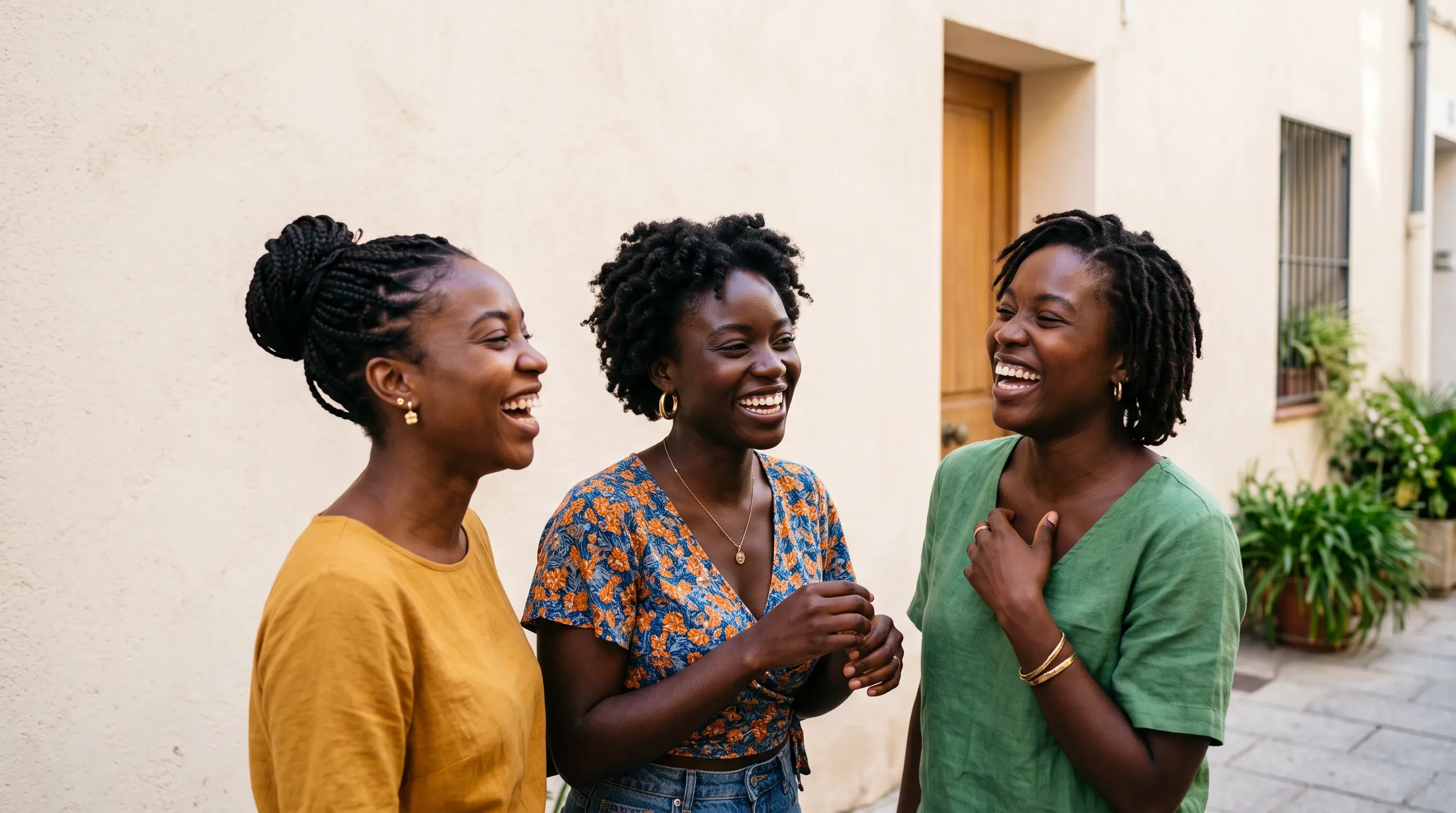
Tomorrow is the International Day for Women and Girls of African Descent, recognized by the United Nations as a moment to acknowledge the compounded and intersecting forms of discrimination this group faces.
The day was established through a UN General Assembly resolution with an explicit call for renewed global action on racism, racial discrimination, and related intolerance as they specifically affect women and girls of African descent. The online world sits inside that call.
The internet is frequently described as a democratizing force, a space where anyone can speak, reach an audience, and participate in public life. That description is accurate for some people and measurably less accurate for others. The gap between those two experiences is not random. It follows existing patterns of inequality, and in many cases, the systems the internet runs on have reinforced rather than corrected it.
The Algorithm’s Idea of Normal
One of the quietest ways inequality operates online is through what platforms decide to amplify, recommend, and make visible. Algorithms designed to maximize engagement reflect the data they were trained on, and that data has historically over-represented certain kinds of users, languages, and experiences. The result is a set of systems that treat a particular user profile as the default and route everything else around it.
Facial recognition tools have shown that error rates are not distributed evenly across the population. People with darker skin, and women with darker skin in particular, are consistently misidentified at higher rates than lighter-skinned men. When these systems are used in hiring decisions, access control, or law enforcement contexts, those errors disproportionately affect people already facing the most discrimination elsewhere.
Content moderation shows a related pattern, with language used in Black digital communities more likely to be incorrectly flagged as violating platform guidelines than equivalent content in other registers. The practical effect for a woman of African descent building a public presence online: automated systems are more likely to suppress her content while leaving the harassment directed at her in place.
The Specific Texture of Online Violence
UN Women's research on how AI is exacerbating technology-facilitated violence against women and girls documents how AI tools have begun accelerating forms of abuse: non-consensual intimate imagery, deepfake audio, and coordinated harassment campaigns that exploit algorithmic amplification to reach their targets at scale.
Women and girls of African descent navigate this territory at the intersection of gendered and racialized targeting at once. The abuse is not generic. It combines racial slurs with gendered insults, draws on stereotypes that are specific to that intersection, and can arrive from multiple directions simultaneously. For women working as journalists, advocates, or public commentators, this compounds into a structural barrier.
The CPJ's Right to Report campaign on digital threats to journalists covers the surveillance, prosecution, and targeting that press workers face globally. Women journalists covering politics, race, or conflict describe harassment campaigns designed specifically to remove them from public platforms, erode their credibility, and make continuing their work prohibitive. The intended outcome is silence, and it often works.
The Data Gap That Keeps Online Abuse Invisible
The UN identifies something important: critical gaps in the data on online abuse against women and girls of African descent mean their experiences are poorly measured and, as a result, poorly addressed. What doesn't get counted doesn't make it into policy. What doesn't make it into policy doesn't get resourced. What doesn't get resourced doesn't get fixed.
This isn’t incidental. It reflects the same hierarchy that shapes which communities' safety concerns are centered in platform design. When a group's experience of online harm is systematically underrepresented in the data that informs policy, the predictable outcome is that prevention and response efforts are built around other people's experiences. The gap isn’t just a measurement problem. It’s a decision about whose reality counts as the baseline.
The Connection Between Visibility and Safety
I keep returning to how these two problems reinforce each other. Who gets amplified and who gets protected aren’t separate questions. They both reflect choices about whose experience the platform was designed around, and they both shape who can sustain a public presence over time.
A woman who faces coordinated harassment every time she posts, whose content is suppressed by automated systems calibrated poorly for her, and whose abuse reports are deprioritized by infrastructure not built with her in mind, isn’t working with the same internet as someone for whom the defaults happen to work. Formal equality of access, the fact that anyone can create an account, does not resolve that.
The UN resolution establishing this day calls explicitly for combating negative racial and gender stereotypes in media and protecting community defenders from violence and suppression. Both of those demands apply directly to the digital space.
Genuine freedom of expression online requires not just the technical ability to post, but an environment where the costs of participating are not disproportionately concentrated on particular groups by design. That is a values question and a technical one. The means exist. What has been missing is the sustained political will to treat unequal safety as unacceptable rather than as a known limitation.


Be part of the resistance, quietly.
Get Mysterium VPN
Gintarė is a cybersecurity writer at Mysterium VPN, where she explores online privacy, VPN technology, and the latest digital threats in editorial pieces. With hands-on experience researching and writing about data protection and digital freedom, Gintarė makes complex security topics accessible and actionable.
Related Articles
.png)