The UK's Online Safety Consultation Closed and the Decisions Start Now


Key Takeaways
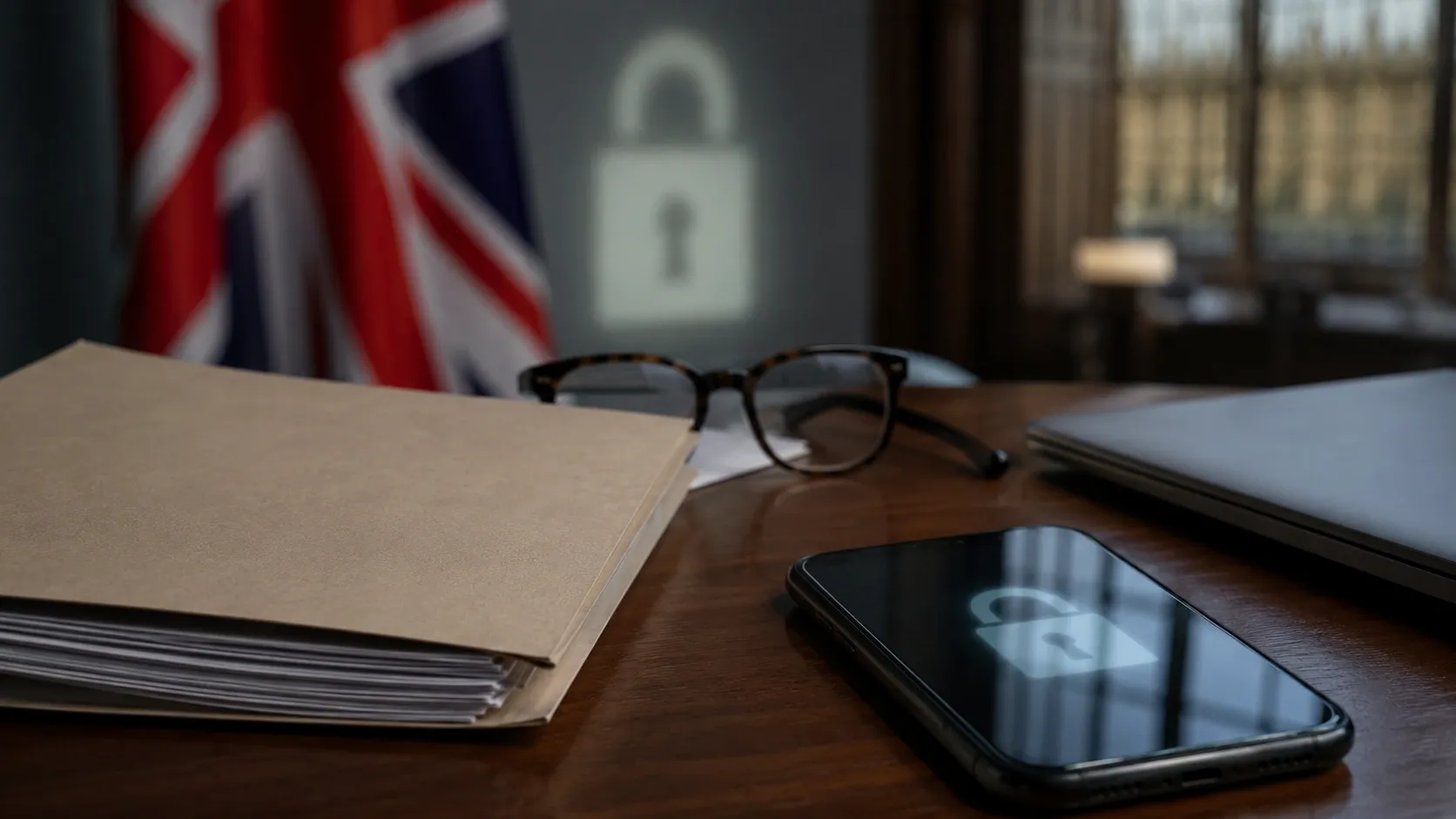
- The UK's "Growing up in the online world" consultation, run by the Department for Science, Innovation, and Technology, closed on May 26, 2026, after running since March 2, with a government response expected in summer 2026.
- On the table are potential social media bans for under-16s, restrictions on addictive design features like infinite scrolling and autoplay, a possible increase to the digital age of consent, and explicit questions about whether children's VPN access should be restricted or whether all users should face age checks before using one.
- The Children's Wellbeing and Schools Act has already become law, giving ministers powers to act on the consultation's findings without waiting for new primary legislation.
- Ofcom published a dedicated research page on children's use of VPNs and experiences of age assurance, framing VPNs largely as circumvention tools rather than privacy infrastructure.
- A coalition of 19 organizations, including the EFF and Mozilla, submitted public statements urging the government to hold platforms accountable rather than age-gate the open web.
Three Months of Asking, One Summer of Deciding
The UK's national online safety consultation, formally titled "Growing up in the online world," closed yesterday at 11:59 pm. For three months, the Department for Science, Innovation, and Technology asked children, parents, civil society, and industry to weigh in on proposals covering minimum ages for social media access, restrictions on addictive design features, the future of the digital age of consent, and whether VPN access itself should be age-gated. A government response is expected in summer 2026.
What's already settled matters. The Children's Wellbeing and Schools Act became law earlier this year, and in February, before the consultation even opened, the Prime Minister announced new legal powers to act on the findings without waiting for fresh primary legislation. The consultation was always positioned as evidence-gathering. The destination was the government's to choose before the first survey was submitted.
VPNs Went Into This Consultation as a Problem to Solve
The consultation's accompanying documents made the government's framing clear from the start: VPNs are primarily interesting insofar as children use them to bypass age restrictions. VPN usage in the UK surged after stricter age assurance measures came into force in July 2025, with daily users reportedly jumping from around 650,000 to more than 1.4 million within weeks.
Naturally, Ofcom responded by publishing a dedicated research page on children's use of VPNs and experiences of age assurance, covering a four-wave tracker survey between July 2025 and January 2026, designed partly to measure how far children are bypassing age assurance measures.
The consultation asked directly whether children's access to VPNs should be restricted and whether everyone should face age checks before using one. The government acknowledged that VPNs serve legitimate purposes for privacy and security, and yet a tool relied on by journalists, domestic abuse survivors, activists, and businesses was being assessed almost entirely through the lens of teenage circumvention.
The government's pick to lead Ofcom, Ian Cheshire, described "the joys of VPNs" at a recent hearing as "technical problems," which tells you exactly where the instinct sits before any of the evidence even comes in.
Industry Said No, Clearly and Repeatedly, and the Government Noted It
Nineteen organizations published a joint statement urging UK policymakers not to undermine the open web by restricting privacy-preserving technologies. Their argument was specific: existing age assurance technologies are either insufficiently accurate, privacy-invasive, or not widely available, and mandating age checks across an ever-expanding list of services risks entrenching the dominance of platform walled gardens while creating new data vulnerabilities for everyone, not just the children the policy claims to protect.
Some VPN providers already prohibit users under 18 from their services, so if mandatory verification arrives anyway, the industry is left with two bad options: build identity checks into tools designed to do the opposite, or rely on third-party verifiers with a demonstrated history of breaches.
Either way, the protection is undermined. And the broader diagnosis the coalition kept returning to was that most online harm doesn't originate from VPNs at all. It comes from platforms optimized for data extraction and engagement maximization, and those platforms are the ones the government keeps finding reasons not to hold directly accountable.
A Consultation That Already Knew Where It Was Going
When Parliament voted 307 to 173 in March to reject a Lords amendment imposing a blanket social media block for under-16s within 12 months, the government positioned this consultation as the responsible alternative. That framing is harder to sustain now that the legal powers to act were secured in February, before a single survey was submitted. The public was asked for directions after the destination was already set.
Restricting VPN access doesn't change what social media platforms are built to do. It doesn't alter the business model, reduce the data extraction, or address the design features engineered to maximize time-on-platform. What it does is establish infrastructure to identity-check every adult who wants to use a privacy tool, with that infrastructure available to every future government once it exists.
Ultimately, how enforceable any VPN restrictions would be remains genuinely unclear. But if you're in the UK and want your privacy protected while these decisions are still being made, a virtual private network is your answer, and you can get Mysterium VPN with 78% off right now.


Be part of the resistance, quietly.
Get Mysterium VPN

Dominykas is a technical writer with a mission to bring you information that will help you keep your digital privacy and security protected at all times. If there's knowledge that can help keep you safe online, Dominykas will be there to cover it.
Related Articles
.png)