Western Australia Just Launched Real-Time Facial Recognition


Key Takeaways
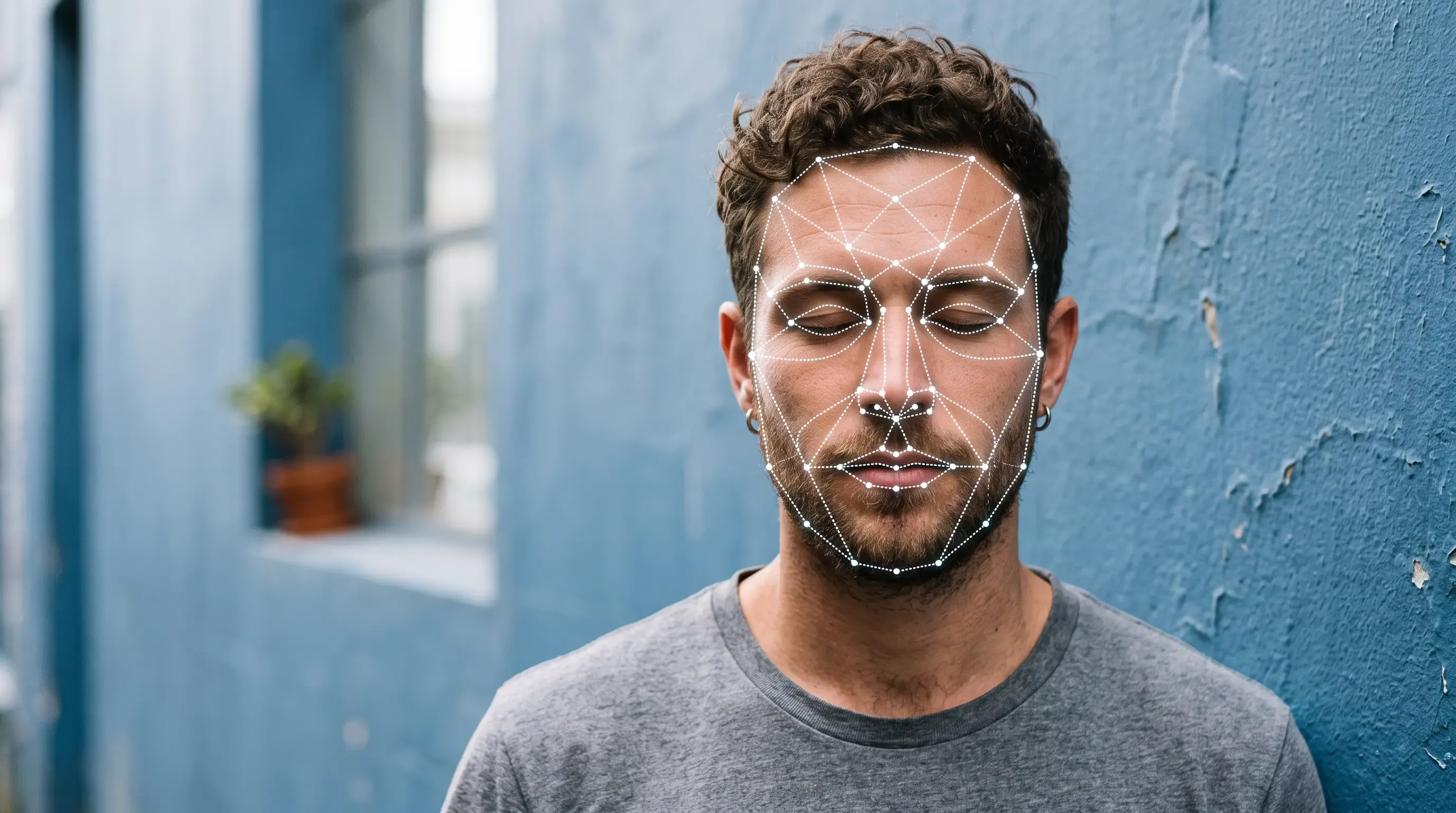
- Western Australia police have launched a real-time facial recognition trial capable of scanning hundreds of faces per minute from live video feeds and instantly cross-referencing them against police databases.
- The trial resulted in an arrest on its first day of operation, which authorities are framing as proof of concept, and critics are flagging as exactly the kind of outcome that accelerates normalization of mass surveillance.
- Privacy advocates and civil liberties groups have raised immediate concerns about false alerts, algorithmic bias, and "function creep" – the gradual expansion of a system beyond its originally stated purpose.
- Western Australia's trial represents a test case for democratic nations: whether a surveillance tool introduced for policing can be contained to that use, or whether it embeds itself into everyday public life.
Western Australia police have launched a real-time facial recognition trial that scans live video feeds, cross-referencing hundreds of faces per minute against police databases, according to reporting by the Guardian. The system produced an arrest on its first day of operation. Authorities are treating that outcome as validation. Privacy advocates are treating it as the beginning of a much harder conversation.
The technology works by pulling faces from live camera footage, the kind already installed across public spaces, transport networks, and commercial areas, and running them against databases of known individuals in real time. Unlike retrospective facial recognition, which matches images after an event, real-time systems identify people as they move through public space. The distinction matters: retrospective systems are investigative tools. Real-time systems are a surveillance infrastructure.
The backlash to the Western Australia trial was immediate, and the concerns raised are familiar to anyone who has followed facial recognition deployments elsewhere. False alerts — cases where the system incorrectly identifies someone as a person of interest — disproportionately affect people from certain demographic groups, a problem consistently documented in facial recognition systems globally.
Algorithmic bias isn’t a hypothetical edge case; it’s a reproducible finding across multiple independent studies of these systems. And then there is the function creep concern: the documented tendency of surveillance tools introduced for a specific purpose to gradually expand into broader uses over time.
The “Day One Arrest” Framing Is Doing a Lot of Work
I want to push back on how the first-day arrest is being framed, because I think it matters. An arrest on day one of a facial recognition trial isn’t evidence that the system is accurate, proportionate, or appropriate for widespread use. It’s evidence that the system can produce a match. Whether that match was correct, whether it would have survived legal scrutiny, and whether the same outcome could have been achieved through less invasive means; none of those questions are answered by the fact of an arrest.
Governments and police departments consistently use early enforcement successes to build the case for expanding surveillance infrastructure before the harder questions get answered. The FTC's ban on Rite Aid's use of AI facial recognition in the US, after the system repeatedly misidentified customers and caused real harm, is a recent example of what happens when that expansion outpaces scrutiny. Western Australia is at the beginning of that curve, not the end of it.
What makes this trial significant isn’t the technology itself; real-time facial recognition has been deployed and debated in the UK, across parts of the EU, and in multiple US cities for years. What makes it significant is the context: a democratic country with functioning civil society institutions and active press freedom is running a trial that will either produce meaningful oversight and accountability, or demonstrate that the "democratic nation" label doesn't prevent surveillance infrastructure from embedding itself without adequate checks.
Normalization Is the Real Risk
The trajectory of surveillance technology in democratic countries follows a pattern. A tool is introduced for a specific, defensible use case, like catching serious criminals, preventing terrorism, and locating missing persons. Early results are highlighted. Criticism is acknowledged but framed as a minority position. The tool expands. The use cases multiply. By the time the question of whether the tool should exist at all gets seriously debated, it is already deeply embedded in infrastructure, contracts, and institutional practice.
Real-time facial recognition is at the introduction stage in Western Australia. The arrest on day one is already being used to normalize its presence. The privacy backlash is real, but it’s also, historically, the stage of the cycle that tends to get managed rather than heeded.
I’m not arguing that policing tools should never exist or that technology has no legitimate role in public safety. I’m arguing that a system capable of scanning and identifying every face in a public space, in real time, without the knowledge or consent of the people being scanned, is a qualitatively different kind of tool — one that changes the nature of public space itself. Walking down a street shouldn’t be a surveillance event. The fact that it increasingly is, in democratic countries as well as authoritarian ones, is worth taking seriously before the infrastructure becomes too embedded to question.


Be part of the resistance, quietly.
Get Mysterium VPN

Gintarė is a cybersecurity writer at Mysterium VPN, where she explores online privacy, VPN technology, and the latest digital threats in editorial pieces. With hands-on experience researching and writing about data protection and digital freedom, Gintarė makes complex security topics accessible and actionable.
Related Articles
.png)