- Blog >
- Using VPN to Buy Things Cheaper: Is It Worth It?
Using VPN to Buy Things Cheaper: Is It Worth It?


.png)
Key Takeaways
- Prices vary by region due to price discrimination, driven by local income levels, currency exchange rates, demand, competition, and taxes — a VPN lets you compare by changing your apparent location.
- Savings potential varies widely by category. Flights, hotels, streaming subscriptions, software, and video games often show the biggest regional price gaps, but many platforms (Steam, streaming services, airlines) explicitly prohibit this in their terms of service.
- Using a VPN this way is legal, but may violate a platform's terms, risking account bans, revoked purchases, or blocked payments — not a legal penalty, but a real practical risk.
- Platforms actively detect and block VPN users through IP blacklists, location/billing mismatches, and behavior patterns like frequent server switching — residential IPs are harder to flag, but there's no guaranteed way to avoid detection.
Using a VPN to buy things cheaper has become a clever trick among savvy online shoppers. But is it just a hack, or is there more to the story? In this guide, we’ll explore how VPNs help uncover lower prices, what kinds of items can be cheaper, and the legal considerations you need to keep in mind before trying it yourself.
At Mysterium VPN, we understand how online pricing models work, and we’re here to help you make smart, secure, and informed shopping decisions online.
What Is Price Discrimination?
Price discrimination is a pricing strategy in which companies adjust prices for the same product or service based on specific consumer characteristics, most commonly your geographic location.
This strategy is widely used in industries such as travel websites, online shopping, streaming services, and music subscriptions, where companies can easily adjust their pricing based on where they think the user, you, is shopping. Many travellers now consider using a VPN for travel to avoid inflated pricing during trip planning.
Other factors that affect price discrimination include, but aren’t limited to, currency value, market demand, and even regional economic conditions that play into these price differences.
By changing your virtual location using a VPN, you can circumvent geographical restrictions and access lower prices that aren't available in your home country. However, you must always check the platform’s terms of service before doing so, as some websites prohibit using VPNs for region-based price changes.
You’re responsible for making sure your use of a VPN for price comparisons is lawful and within the terms of the services you use.
Why Prices Vary by Region
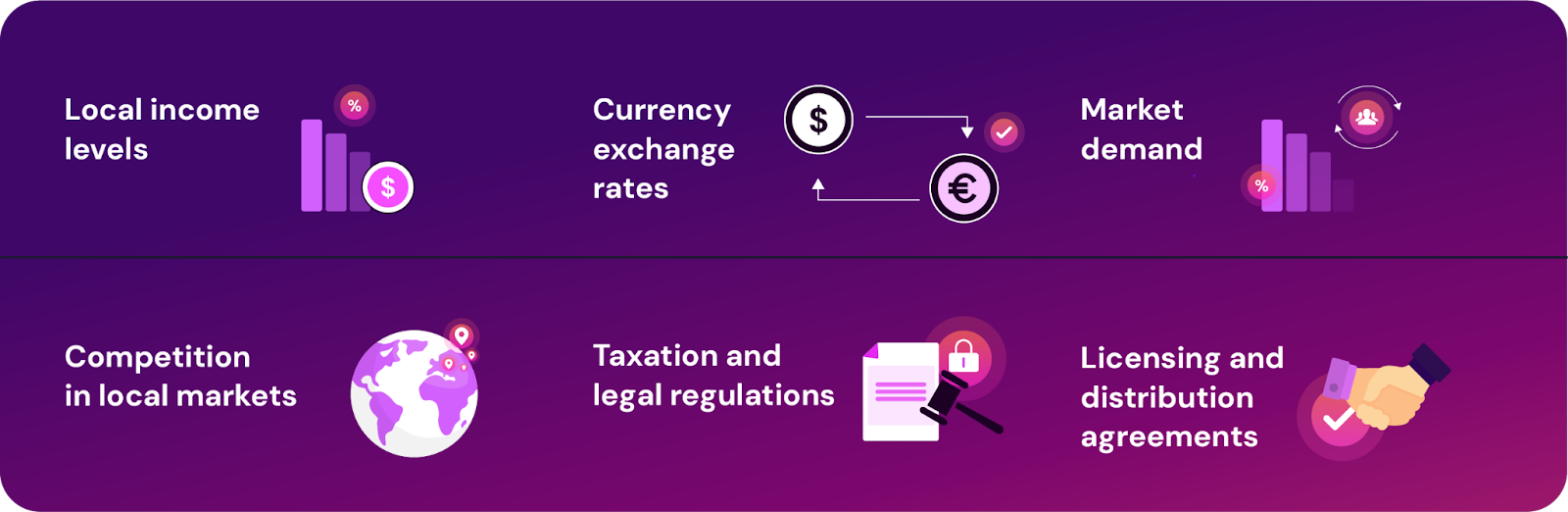
Online pricing isn't random; it’s driven by complex regional pricing strategies that aim to balance profits with local market conditions. Here are some of the most common factors that influence price variations in different locations:
- Local income levels: Oftentimes, companies decide their prices based on what the average consumer in a region can afford, based on the average income.
- Currency exchange rates: Fluctuations in currency value can result in different prices when converted to your local currency. Businesses may adjust regional pricing to align with current exchange rates and avoid customer frustration.
- Market demand: Products in high demand in one region may be priced higher compared to another where interest is low. This demand-based pricing allows businesses to maximise sales and profit margins.
- Competition in local markets: If a business faces more competition in a particular region, it may lower its prices to stay competitive. Conversely, in markets where a brand dominates, prices may be higher due to less local pressure.
- Taxation and legal regulations: Some regions impose higher VAT, sales tax, or import duties, which influence the final retail price. Companies often build these costs into their pricing structures.
- Licensing and distribution agreements: Particularly in digital services and entertainment, regional agreements can restrict what content is available and at what price.
Understanding these factors can help you see why a product or service might be significantly cheaper (or more expensive) in a different country.
How To Get Things Cheaper With a VPN: Step-by-Step Guide
Using a VPN to find better prices is a process that takes a bit of experimentation. Here's a step-by-step guide on how to do it responsibly:
- Choose a reliable VPN service: Pick a VPN with a broad server selection and strong privacy policies like Mysterium VPN.
- Clear your cookies and browser history: This removes any previous location or pricing data from your browsing session.
- Disconnect from your real location: Turn off GPS/location services on your device before launching your VPN.
- Connect to a VPN server: Try a server in a different country to explore regional pricing variations. Always check whether doing so complies with the site’s terms.
- Use Incognito Mode: Prevents cached data from affecting the prices you see.
- Visit the online store or platform: Compare prices across multiple server regions to see if there are differences.
- Use price comparison tools: Combine VPN location-switching with price comparison websites to find the best offers and save money.
- Check exchange rates and taxes: Some regions may show lower base prices but add higher VAT or import fees.
- Read terms and conditions carefully: Before completing online purchases, the most important thing is to verify carefully whether region-specific subscriptions or purchases are allowed on the website.
- Finalize your purchase: If the shop allows using a VPN, you can complete the purchase with a clean conscience and a happy wallet.
Remember: Don’t use a VPN to intentionally violate platform terms or local laws. At Mysterium VPN, we encourage only lawful and respectful uses of our VPN. You’re ultimately responsible for ensuring your actions are legally compliant.
What Can I Buy Cheaper With a VPN
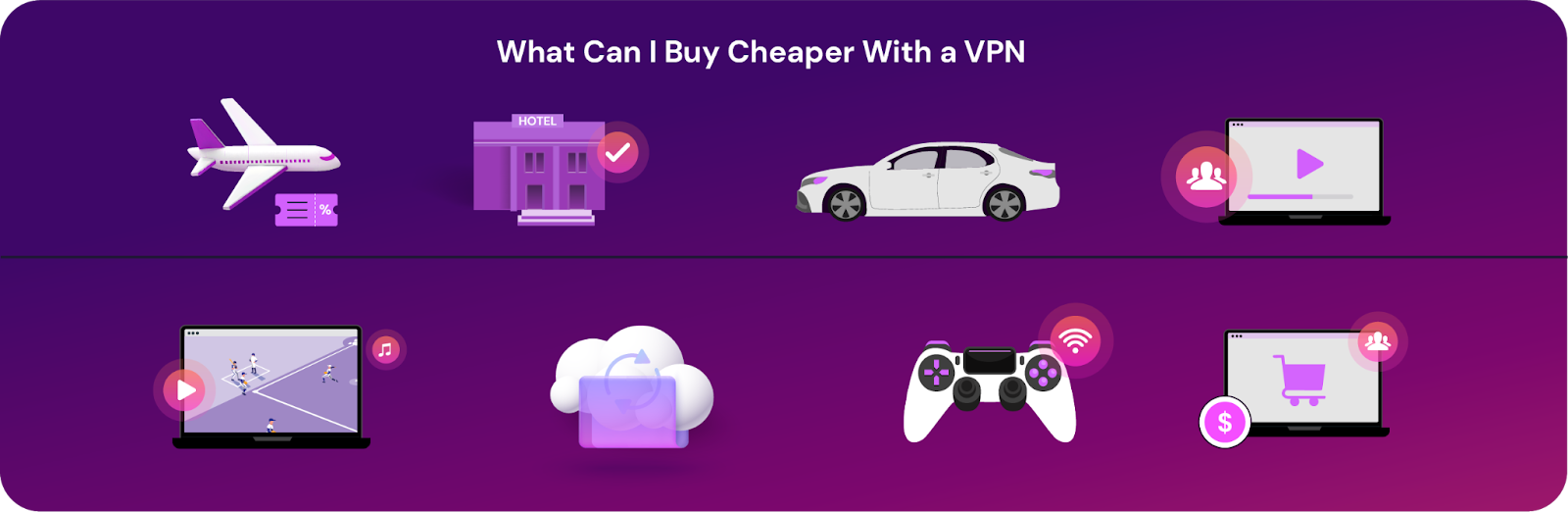
Below are a few key categories where price differences are most noticeable.
Flight Tickets
Airfare is notoriously dynamic and tends to be a headache when planning a holiday. Why? Airlines use location-based pricing that can result in wildly different prices for the same plane journey. By switching your VPN server location, you might notice lower prices.
However, some airline platforms have really strict terms of service that prohibit users from region-switching for the explicit purpose of finding better prices for plane tickets.
Nobody ever wants to lose money because of a loophole, right? Always read the fine print before making a purchase and landing yourself (pun intended) into trouble for cheaper flights!
Hotel Bookings
Just like flights, hotel booking prices are another thing that makes your pockets hurt when planning a trip. The price of hotel rooms can vary by location, even when you're booking the same room.
A VPN helps you compare rates offered to users in other countries. Still, be aware that booking through a location you don’t reside in could violate platform policies. Confirm that regional offers are valid for international users before completing any transactions.
Car Bookings
When you arrive at your dream destination and leave your bags at the hotel, all you need before having fun in town is a trusty car. Sadly, it’s not that cheap.
Rental car companies sometimes offer their potential drivers lower rates based on your geographical location. Switching your VPN server could show you cheaper options for the same vehicle class.
However, just like with hotels and flights, make sure the rental provider permits international bookings at those regional rates. Ignoring terms can lead to denied reservations or unexpected and often, unfortunately, charges at pickup.
Streaming Services
Subscription fees often differ by region, which is super exciting, especially when you’re a bit young and broke. That’s why many people take advantage of lower rates by subscribing from countries where these services are cheaper.
But caution is necessary—many of these platforms ban users who bypass geographic restrictions without a second thought. You should always read the platform’s user agreement to avoid penalties or service termination.
Entertainment Services
Services like online magazines, digital newspapers, e-learning subscriptions, or live sports streaming platforms often offer region-specific deals, discounts, or free trials.
By switching your virtual location with a VPN, you might be able to access these localized promotions that are otherwise unavailable in your country.
However, using this method to exploit region-specific promotions may violate service agreements. Read the terms of each provider and use discretion before proceeding.
Software
Many popular tools—like Adobe Creative Cloud or Microsoft Office—offer country-specific pricing. VPNs can help identify more budget-friendly subscription rates.
Sorry to burst your bubble, but yet again, some software licenses are restricted to specific countries. Purchasing from another region using a VPN might render the license invalid. Always check eligibility terms.
Video Games
Game prices on dedicated gaming platforms such as Steam, Origin, or regional online stores can differ significantly. VPN users sometimes explore these differences before buying.
Steam and similar platforms are very clear about how they restrict purchases based on your true location. Violating these terms can result in your account getting suspended or your purchase getting revoked.
Subscription Boxes & Online Retailers
Some subscription boxes and international retailers adjust their pricing depending on your location. For example, cosmetics or snack boxes might cost less when ordered through a region where local shipping and tariffs are cheaper.
However, shipping limitations or customs laws might affect availability. Always confirm that purchases made through VPN access are allowed under the vendor’s terms and your country’s regulations.
Is It Legal or Illegal To Use a VPN To Get Cheaper Prices
Using a VPN is legal in most countries, including for online shopping purposes.
However, many websites and digital services prohibit VPNs for region-specific pricing or access. Violating these terms could lead to account bans or blocked payments.
Ultimately, it’s your responsibility to follow the rules of the services you're using and ensure compliance with local laws. A VPN can help you find better prices, but should be used ethically.
How Brands Detect and Block VPN Users
While VPNs can be powerful tools for comparing regional pricing, many companies have systems in place to detect and block VPN users. This is often done through a combination of technical methods.
One of the most common is the use of IP blacklists: databases of known VPN server addresses that platforms use to deny access or show error messages when a VPN connection is detected.
Another technique involves comparing your IP address location with other identifying information such as billing address or GPS data. A mismatch between your IP location and your account information or checkout location can trigger automated flags that block or restrict purchases.
Brands also monitor for patterns like frequent server switching or logins from multiple countries in a short timeframe, which can be associated with VPN use.
Some platforms even use advanced fingerprinting techniques that track browser configurations, device settings, and other metadata to detect suspicious activity.
To navigate around such detection mechanisms, privacy-focused users may choose VPNs that offer residential IPs, notably Mysterium VPN. Since residential IPs come from real household connections, their traffic appears much more natural, making them your best bet for avoiding getting blocked.
However, even with all these precautions, there’s no foolproof workaround to avoid detection. It’s simply crucial to stay informed and always respect platform rules and legal frameworks.
Secure Your Online Shopping With VPN
Shopping online isn’t just a way to save money—it also requires strong security. This is especially important if you’re on public Wi-Fi or using a site you haven’t purchased from before.
Follow these steps to shop safely online:
- Connect to a VPN: Using a VPN will encrypt your internet connection to keep all of your personal and payment data private.
- Use trusted websites only: We suggest you stick to well-known platforms with verified payment methods.
- Enable 2FA when possible: Protect your accounts with two-factor authentication, like providing your Face ID or a fingerprint before logging into your account and making a purchase.
- Use secure payment methods: Opt for a credit card or other trusted services like PayPal for added protection.
- Watch for phishing scams: You should be wary of suspicious links and email offers that seem too good to be true.
- Check for HTTPS: Always ensure the site uses HTTPS encryption before entering payment information.
- Don’t save payment info unnecessarily: Only store your card details if you trust the platform and use it frequently.
VPNs add an essential layer of protection, but never rely on them alone. Combine them with good digital hygiene for maximum safety.


Reclaim the internet that took you at your word!
Get Mysterium VPN

Frequently Asked Questions
Gintarė is a cybersecurity writer at Mysterium VPN, where she explores online privacy, VPN technology, and the latest digital threats in editorial pieces. With hands-on experience researching and writing about data protection and digital freedom, Gintarė makes complex security topics accessible and actionable.
Related Articles
.png)