Does NordVPN Have Residential IPs? What You Need to Know


Key Takeaways
- NordVPN doesn’t offer residential IP addresses; it provides shared IPs and an optional paid dedicated IP.
- A dedicated IP is used only by one customer, but it still comes from the datacenter infrastructure rather than a household ISP connection.
- Residential IPs originate from consumer networks and are more likely to resemble ordinary home internet traffic.
- Mysterium VPN is the more suitable option for users specifically looking for access to real residential IPs across multiple locations.
No, NordVPN doesn’t have residential IPs. That’s the short answer, and if you’ve landed here, it’s probably the one you needed. But like most things in the VPN world, the full story is a bit more layered. NordVPN offers dedicated IPs, which, at first glance, might solve the same problems. It doesn’t, at least not in the same way.
This article breaks down the difference. You’ll learn what residential IPs actually are, why NordVPN’s offer doesn’t qualify, and why Mysterium VPN is the better choice if you need residential IPs.
The Short Answer: NordVPN Doesn’t Offer Residential IPs
No, NordVPN doesn’t offer residential IP addresses. What it does offer, however, is a paid add-on: you can buy a dedicated IP, which is a single, unique IP assigned to you rather than shared by many people at once.
That distinction may seem small, but it’s not. A dedicated IP basically means you’re the only one using that IP address. A residential IP, on the other hand, refers to where that address comes from. One (dedicated IP) is about exclusivity. The other (residential IP) is about the origin.
If you take nothing else from this article, take that.
Different IP Types Explained
Part of the reason this topic gets messy is that VPN terminology overlaps in ways that aren’t super obvious. Shared IPs, dedicated IPs, static IPs, residential IPs, they all solve slightly different problems, but they often get bunched together as if they’re interchangeable. They’re not.
A shared datacenter IP is the default option in most mainstream VPNs. That’s an IP address that comes from large datacenter facilities, and “shared" means exactly that – many people are connected to the same IP address at the same time. When you connect to one, your traffic is grouped with dozens or hundreds of other users. It’s great for anonymity, but it can also lead to friction, like CAPTCHA or temporary blocks, because someone else using that same IP may have triggered a flag.
A dedicated IP, though still coming from a data center, removes that shared element. You get more consistency. Fewer checks. But that doesn’t change where the IP comes from, and that’s the part that actually matters when websites decide how to treat your connection.
Residential IPs sit in a completely different category. They aren’t just “better” or “cleaner” versions of VPN IPs. They’re built on a different type of network altogether. Let’s get into it.
Why You Should Specifically Want Residential IPs?
At first, a residential IP might sound like a niche upgrade. In practice, it changes two things that matter a lot: how you appear online and how stable your access is.
First, there’s anonymity. When you connect through a residential IP in another country, you’re not just hiding your location. You’re blending into a pool of real users from that region. To websites, your traffic doesn’t look like it’s coming through a VPN at all. It looks like a normal user browsing from a living room in that location.
Then there’s stability. Because residential IPs aren’t grouped into known VPN server ranges, they bring fewer blocks, fewer forced logouts, and fewer CAPTCHA. The connection behaves more like a regular user session, which means fewer interruptions over time.
This becomes especially important in situations where consistency and discretion matter.
For example, streaming platforms are known to monitor IP ranges closely. Datacenter IPs often get flagged or restricted, even when they technically match the right location. A residential IP is more likely to maintain stable access because it aligns with how real users connect.
The same applies to more sensitive scenarios. Journalists, researchers, or anyone working with location-sensitive information often need their browsing activity to look as normal as possible. Not just hidden, but unremarkable. A residential IP helps achieve that by avoiding the typical “VPN fingerprint” that many services look for.
So while a dedicated IP can reduce some friction, a residential IP changes the underlying signal entirely. It doesn’t just give you a consistent identity. It gives you one that blends in. Blend in with Mysterium VPN’s residential IPs today, currently for 85% off!
What NordVPN Offers Instead: Dedicated IP
So where does NordVPN fit into all of this? It’s the dedicated IP feature. You pay extra, and in return, you get an IP address that’s yours alone for as long as you continue to pay for it. It doesn’t rotate, and it doesn’t get shared with other users.
There are real benefits to that. If you’ve ever been locked out of an account or stuck solving endless CAPTCHA challenges because of shared IP abuse, a dedicated IP that’s only yours can feel like a relief. NordVPN also recommends it for things like accessing corporate systems that rely on IP allowlisting. All of that makes sense.
But even with those advantages, the underlying infrastructure hasn’t changed. The IP still comes from a data center, not a regular ISP tied to a residential location.
What Is a Dedicated IP?
A dedicated IP is exclusive, but it’s still a part of a known cluster of IP addresses owned by a hosting provider like Amazon Web Services (AWS), Microsoft Azure, or Google Cloud. These ranges are publicly registered and widely recognized as non-residential. That’s not a flaw, it’s just how the internet works.
So even though no one else is using your IP, websites can still identify the provider it belongs to. And once they do, they can apply the same rules they use for other datacenter traffic.
In other words, a dedicated IP will improve privacy, but it doesn’t fundamentally change how your connection is classified. The upgrade is useful, but it’s not transformative.
So What if You Actually Need Real Residential IPs?
This is the most important part. If all you need is a stable, personal IP that doesn’t change every time you reconnect, NordVPN’s dedicated IP may be just the thing for you. It solves a specific set of problems, and it does so fairly well.
But if you came here specifically looking for residential IPs, then you’re looking to solve a different problem entirely. And NordVPN simply isn’t designed for it. That’s where Mysterium VPN enters the picture.
Why Mysterium VPN Is the Best Real Residential IP VPN
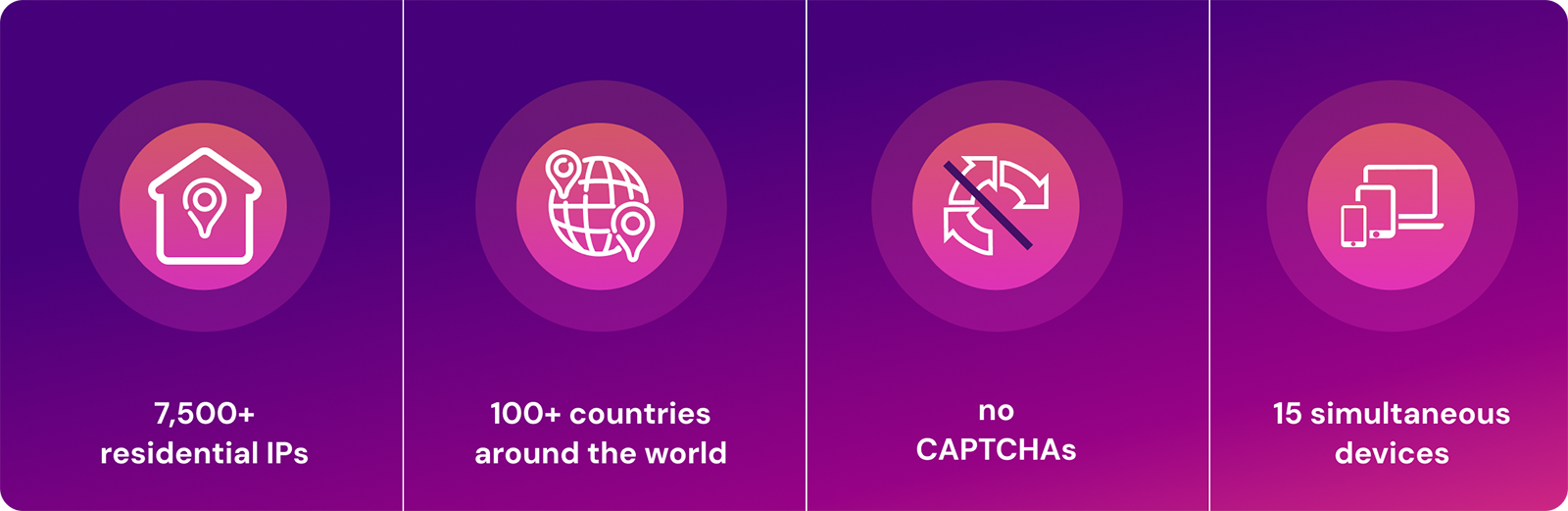
If you want to forget VPN-related issues (like Netflix error code E106) and remain completely anonymous while browsing online, you need a residential IP address. And you’re in luck, because we offer 7,500+ of them from 100+ countries for a seamless experience, no matter where you are.
Sourced from actual people like you and their houses, our residential IPs are super useful if you want smoother access to platforms like streaming websites, if you’re sick of proving you’re not a robot by solving CAPTCHAs, and you want more natural-looking traffic patterns globally.
Learn what true privacy and stable connections feel like with Mysterium VPN, currently 85% off for a limited time!
Mysterium VPN Is Built Around Residential IPs, Not Just Dedicated IPs
What really separates the two approaches is how central the feature is to the product.
For NordVPN, a dedicated IP is an add-on. It’s something you can buy for an extra cost on top of your existing subscription if you need it, layered on top of a traditional VPN architecture.
For Mysterium VPN, our pool of residential IPs is available across most subscription plans, which are already flexibly priced. Residential IPs are included in the price, along with other useful features, such as city-level choices, securing up to 15 devices with a single account, and blocking malware.
Choose Mysterium VPN if You Want a Real Residential VPN
If your priority is access to real residential IPs with broad geographic coverage and a network built specifically for that purpose, Mysterium VPN is a better alternative to NordVPN. It’s built with residential IPs and your needs in mind, not retrofitted to accommodate them.
Choose NordVPN if You Only Need a Dedicated IP
That said, NordVPN still has its place. If you’re looking for a mainstream VPN with the option to get a static IP for fewer CAPTCHA interruptions, and support for things like IP allowlisting, NordVPN does exactly what it promises.
Conclusion: Does NordVPN Have Residential IPs or Not?
No, NordVPN doesn’t offer residential IPs.
What it offers instead is an option to buy a dedicated IP address, which gives you consistency and control but still comes from a datacenter-based network. They’re definitely useful if you never want to solve another CAPTCHA again and don’t plan on traveling abroad, but they’re definitely not equivalent to a residential IP.
If your goal is to use IPs from real household connections, Mysterium VPN is a better fit for that need. For a limited time only, you can get our residential IPs for less than what a cup of coffee would cost you. Take your online browsing to the next level today!


Save up to 85% off for Black Friday!
The ultimate digital shield, now at a fraction of the cost.

Frequently Asked Questions
Gintarė is a cybersecurity writer at Mysterium VPN, where she explores online privacy, VPN technology, and the latest digital threats in editorial pieces. With hands-on experience researching and writing about data protection and digital freedom, Gintarė makes complex security topics accessible and actionable.
Related Articles