Flock Safety Planned to Turn 350,000 Uber Cars Into Spy Cameras


Key Takeaways
- Documents obtained by 404 Media reveal that Flock Safety, a surveillance technology company, planned to partner with dashcam company Nexar to use cameras in approximately 350,000 Uber, Lyft, and other delivery vehicles as mobile license plate readers for its surveillance network.
- The partnership never materialized, but Flock pitched it to at least one government client — the Georgia Office of the Attorney General — as part of its existing network.
- It's not known whether Uber or Lyft drivers would have been informed that their dashcam footage was being used to collect license plate data for a third-party surveillance company.
- The plan, though unrealized, exposes the direction Flock's network was heading: moving from fixed cameras on poles to mobile surveillance infrastructure embedded in civilian vehicles without those civilians' knowledge.
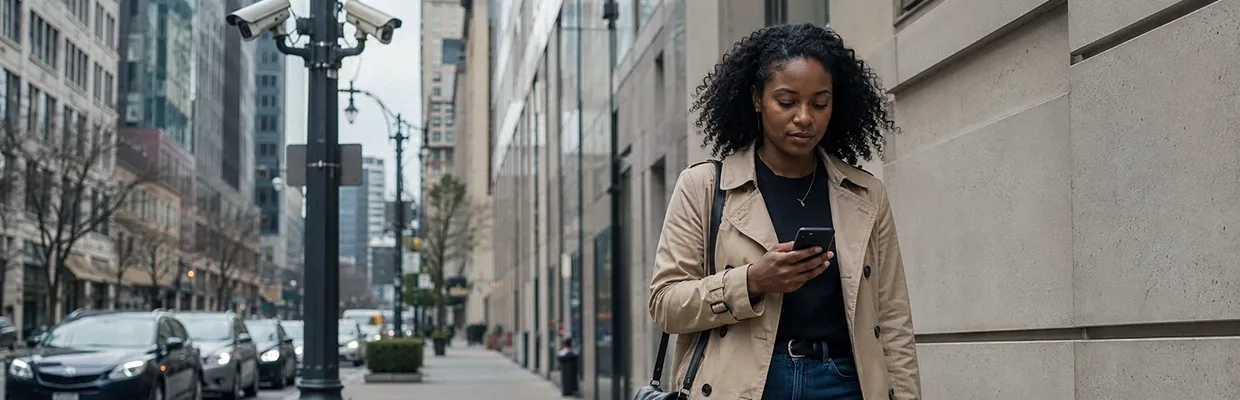
Surveillance technology company Flock Safety planned to partner with dashcam company Nexar to turn approximately 350,000 Uber, Lyft, and other delivery vehicles into mobile license plate readers for its surveillance network, according to documents reported on by 404 Media.
The partnership never went through — Flock confirmed this to 404 Media — but the documents reveal the company was actively pitching it to government clients as a capability it had.
In a presentation to the Georgia Office of the Attorney General, Flock described its network as including: "Hundreds of Commercial Business and HOA in GA are part of the network. Plus Nexar partnership which includes 350k Uber/Lyft and other delivery service devices."
Flock's existing network uses fixed cameras mounted on poles that capture vehicle color, model, and license plate data at specific locations. The limitation is obvious: a camera on a pole only sees what passes that pole. To track a vehicle's broader movements, you need coverage across more locations — which is exactly what 350,000 vehicles with cameras in everyday traffic would provide.
The critical question 404 Media raised, and which remains unanswered: it's not known whether Uber or Lyft drivers would have been aware that data from cameras in their vehicles was being collected and shared with Flock's surveillance network. Their vehicles, their cameras, their daily routes — and potentially not their decision.
This Is What Mass Surveillance Infrastructure Actually Looks Like
The "partnership never went through" framing matters, but it doesn't close the issue. What the documents reveal isn't primarily about a failed deal. It's about the strategic direction of one of the largest private surveillance networks in the United States — and the logic that drives it.
Flock's pitch to the Georgia AG's office treated the Nexar partnership as a selling point, an enhancement to its network's coverage. That means the company was not only planning this arrangement but treating it as a competitive advantage to advertise to law enforcement clients.
The absence of a formal partnership agreement doesn't change what was being proposed: a system in which civilian rideshare drivers would serve as mobile surveillance infrastructure for a private company's network, feeding license plate data to law enforcement clients at scale.
Mobile license plate readers aren't new. Police vehicles have carried them for years. Axon supplies ALPR cameras to law enforcement for that purpose. What's different about the Flock/Nexar proposal is the source: not police vehicles, but civilian rideshare drivers, whose vehicles would become nodes in a surveillance network they didn't sign up for, potentially without their knowledge.
The Difference Between Targeted Surveillance and Ambient Surveillance
There's a meaningful distinction between law enforcement using cameras to investigate a specific crime and building infrastructure that records the movement of every vehicle in a city as a matter of routine. The first is targeted. The second is ambient — a standing record of where every car was, at every moment, available to be queried after the fact.
Fixed ALPR cameras at intersections are already a form of ambient surveillance. Extending the network to 350,000 mobile units embedded in civilian vehicles isn't an incremental expansion — it's a qualitative shift in the density and reach of that surveillance layer. A network that comprehensive doesn't just help solve crimes. It creates a historical record of civilian movement detailed enough to reconstruct the daily patterns of millions of people who have done nothing wrong and consented to nothing.
We've written about real-time facial recognition in Western Australia, AI surveillance of protesters in India, and the creeping normalization of biometric data collection. License plate tracking is older and less viscerally alarming, but the principle is identical: surveillance infrastructure, once built, gets used for purposes that weren't in the original pitch.
The question worth asking about Flock's rideshare plan isn't just whether it would have worked. It's whether we want to live in a world where it could — and where the answer to that question gets decided by a company's partnership agreements rather than by democratic oversight.


Be part of the resistance, quietly.
Get Mysterium VPN
Gintarė is a cybersecurity writer at Mysterium VPN, where she explores online privacy, VPN technology, and the latest digital threats in editorial pieces. With hands-on experience researching and writing about data protection and digital freedom, Gintarė makes complex security topics accessible and actionable.
Related Articles
.png)