The Health Information Girls Need Gets Filtered: International Day of the Girl Child



Key Takeaways
Content filters built to block explicit material routinely catch puberty, menstruation, and reproductive health information too.
The filters can't tell the difference. They match words, and the words overlap.
Girls who have school health education or an adult they can ask have a fallback. Many girls have neither.
Yesterday, October 11th, was the International Day of the Girl Child. Here's a specific problem that doesn't get much attention. The information a girl most needs at a certain age is the information most likely to be blocked. Puberty. Menstruation. How bodies work. What consent means. These are health topics. To an automated filter, they look like something else.
Filters Match Words, Not Meaning
A content filter blocking explicit material works by matching vocabulary. The vocabulary for reproductive health and the vocabulary for pornography overlap considerably. Anatomical terms appear in both. So do words about bodies, development, and sex.
A filter can't tell why a word is being used. It can only tell that it was. So a search about menstrual pain returns nothing. A page explaining puberty gets blocked at the school network. A health charity's article on contraception sits behind an age gate.
None of that was anyone's intention. It's what happens when a system built for one purpose is applied broadly, and nobody checks what else it catches.
This gets worse where the filtering is national rather than institutional. Rules written broadly enough to cover anything can be applied to whatever an authority decides, and obscenity provisions are among the broadest.
Some Girls Have a Fallback. Many Don't
The filtering matters differently depending on what else is available. A girl with comprehensive school health education curriculum has another route. So does one with a parent she can ask questions without embarrassment or risk.
Plenty of girls have neither. School health education is absent, incomplete, or skips the relevant parts in much of the world. And asking an adult isn't neutral everywhere. In some households, asking the question is the problem.
For those girls, the search was the whole plan. When it returns nothing, the outcome isn't that she asks someone instead. It's that she doesn't find out, or she finds out from whatever source wasn't filtered, which is rarely the accurate one.
Filtering tends to remove the careful material first. A health charity writes clearly and uses the correct terms, which is exactly what makes it catchable. Content that's vague or coded slips through.
What the Feed Delivers Instead
Filtering is only half of the problem. The other half is what arrives without being asked for. Recommendation systems optimize for attention. Whatever holds attention gets shown more often. For adolescent users, a significant share of what holds attention is about appearance.
I'll be direct rather than cite a study here, because I've experienced this. Spend enough time in those feeds as a young woman and your sense of what an ordinary face or body looks like changes. No single post does it. The baseline just moves. Nobody decided that should happen. It's what a system produces when the thing it measures is whether you kept watching.
There's a second version that gets discussed less, and it doesn't reach girls directly at all. The same recommendation logic surfaces a different category of content to boys and young men. Material about hierarchy, grievance, and what women are supposedly like.
Research into young men's viewing histories has found that the path there is gradual. It starts with ordinary self-improvement content and escalates from one recommendation to the next. Nobody searches for the end of that sequence. They get delivered to it.
The consequence doesn't stay online. A 2025 study in Child and Adolescent Mental Health linked this material to sexist attitudes in schools, which is where girls encounter it. Not as content in a feed, but as something a boy in their class now believes.
We've argued before that banning boys from social media doesn't address why they were vulnerable to it, and that holds here. The leverage point is what the system amplifies, not who is allowed to log in. A recommendation made to one person becomes someone else's afternoon.
Privacy Depends on Who Owns the Device
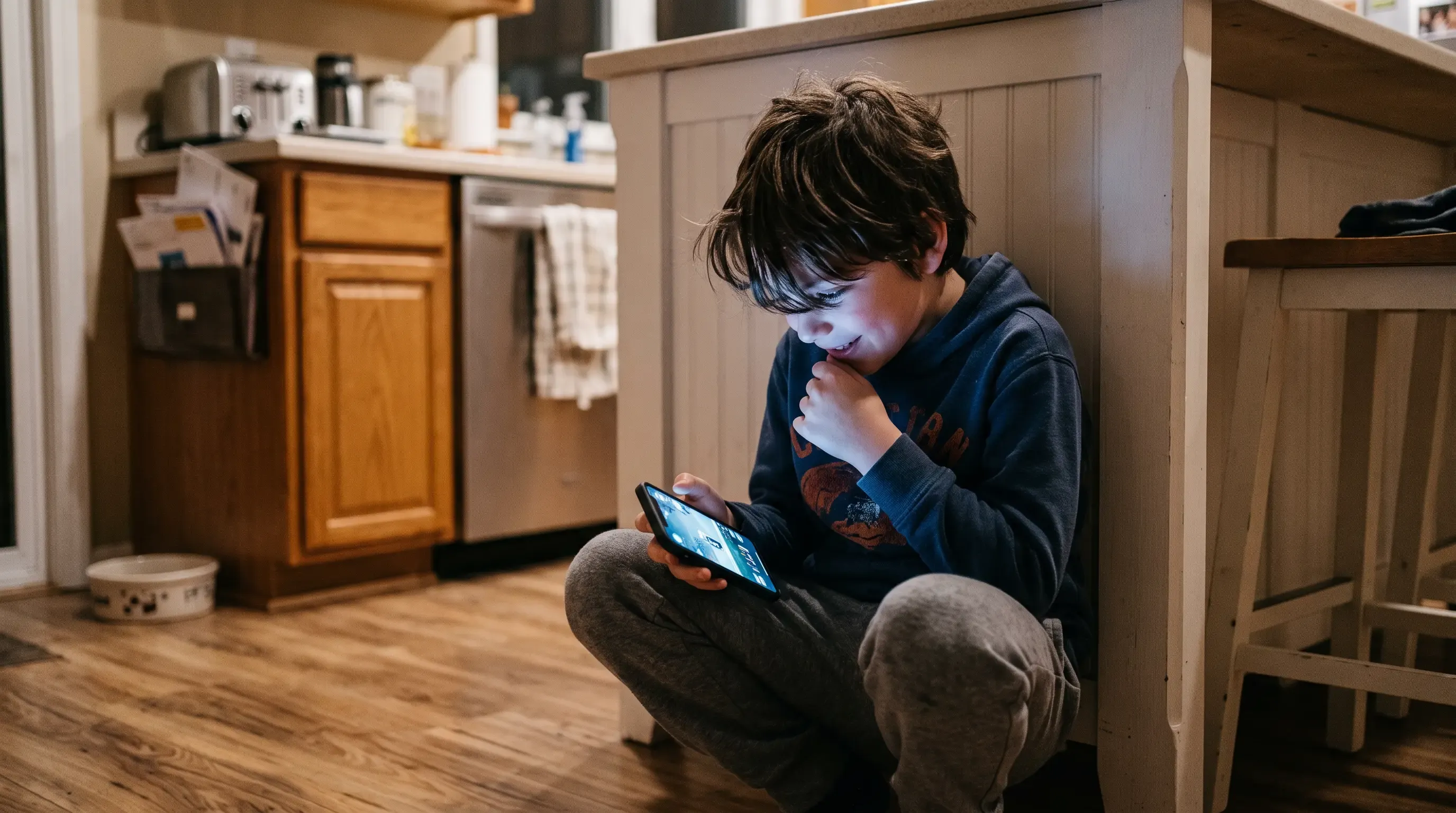
There's another layer that's easy to miss if you've always had your own phone. Girls are less likely than boys to own a personal device in many countries, and more likely to use one that's shared or supervised.
On a shared device, privacy isn't about encryption. It's about browser history, lock screen notifications, and whether anyone checks. Deleting history isn't a security measure. It's a household one.
This is why private messaging matters more for some young people than the general debate suggests. We've written about how restrictions remove the support channels people rely on, and the version that applies here is narrow and serious. A girl who needs to reach a helpline, a relative, or a friend from a monitored device needs a channel that doesn't leave an obvious trace. Measures that remove anonymous or encrypted options remove that too.
What This Day Is Asking For
Health information should be classified as health information. That means filters maintain allowlists for medical and educational sources, rather than treating anatomical vocabulary as a signal on its own.
It also means that when a filter blocks something, there should be a way to find out and a way to challenge it. Most systems offer neither, so the error is invisible to everyone except the person who hit it.
The International Day of the Girl Child is partly about access to education. Health information is education. A girl searching for what's happening to her own body shouldn't get the same response as someone searching for pornography, and the fact that she often does is a design decision nobody made on purpose, and nobody has fixed.


Be part of the resistance, quietly.
Get Mysterium VPN
Gintarė is a cybersecurity writer at Mysterium VPN, where she explores online privacy, VPN technology, and the latest digital threats in editorial pieces. With hands-on experience researching and writing about data protection and digital freedom, Gintarė makes complex security topics accessible and actionable.