Live Facial Recognition Is Now on the London Underground


Key Takeaways
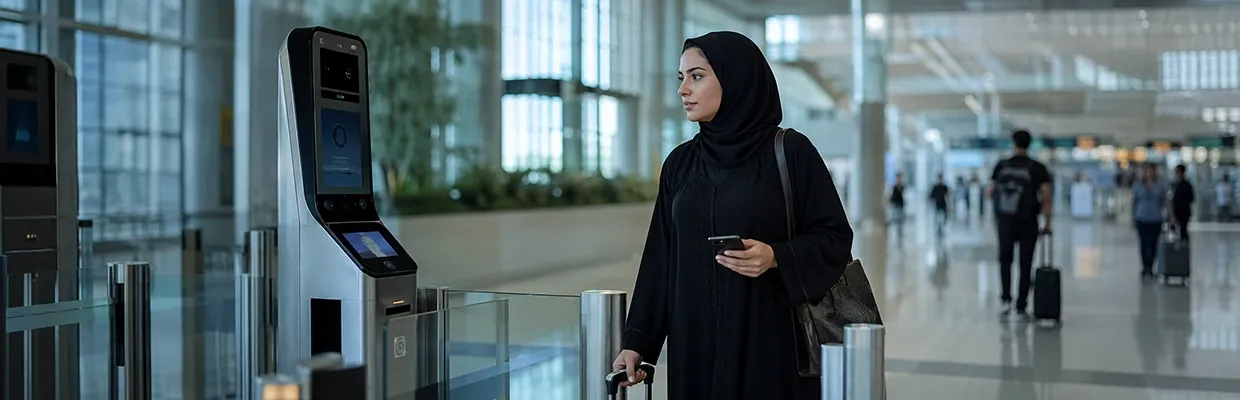
- British Transport Police have expanded live facial recognition trials to London Underground stations, starting at Victoria, with cameras rotating across multiple stations until November.
- Since February, BTP's live facial recognition at UK railway stations has scanned approximately 530,000 faces, resulting in zero matches, zero arrests, and one false identification — based on the BTP's own deployment logs.
- Privacy group Big Brother Watch called the expansion "disturbing and dystopian," arguing it "treats the public like suspects."
- Signage will be posted and "alternative routes" offered for those who don't want to be scanned — a provision that, as TechRadar notes, is presumably also available to the people the cameras are trying to catch.
British Transport Police have expanded their live facial recognition trial to London Underground stations, starting at Victoria and rotating to other stations until November, according to reporting by TechRadar.
The cameras compare faces in real time against a watchlist of people wanted by police or courts — those suspected of serious offences, or breaching bail conditions. Images that don't match are "immediately and permanently deleted," according to the BTP. Images that do match are reviewed by a police officer before any action is taken.
The BTP describes deployments as "intelligence-led," targeting stations based on police data to reduce violence and harassment, including sexual assault, robbery, and knife crime. Signage will indicate where cameras are active. Anyone who doesn't want to be scanned will be offered an alternative route — which presumably the people on the watchlist can also use.
Big Brother Watch director Silkie Carlo called it a "disturbing and dystopian expansion" that "treats the public like suspects." The BTP's own deployment logs support some of that skepticism. Since February, live facial recognition cameras across UK railway stations have scanned approximately 530,000 faces. The result: zero matches, zero arrests, and one false identification.
The technology being expanded across the Tube today has, by its operators' own accounting, not produced a single arrest.
When the Statistics Don't Ask the Right Questions
The BTP's response to the zero-arrest figure will likely be that the trial is still running, that deterrence is a benefit that doesn't show up in arrest statistics, and that the cameras need more time and more locations to demonstrate their value. Those arguments will be made. The expansion will continue.
But the zero-arrest figure does tell us something important: the confidence threshold at which facial recognition produces a "match" and the confidence threshold at which that match justifies police action are two different standards, and the space between them is where the technology causes harm.
We covered a case this week that illustrates exactly what that harm looks like. In Moscow, a 15-year-old was beaten by police after a facial recognition system flagged him as an 85–90% match with a drug suspect. He was taken to a police station, accused of distributing drugs, and released after questioning. Doctors diagnosed him with a concussion, hematomas, and bruises.
Four months on, his family has received only form letters from Russia's Investigative Committee. An 85–90% match sounds high until you consider that it means a one-in-ten or one-in-six chance the system was wrong — and that officers acted on it physically before anyone verified it was right.
London isn’t Moscow. The oversight frameworks, legal constraints, and accountability mechanisms are different. But the technology is the same, and the pattern of how live facial recognition gets normalized is the same everywhere it's been deployed: a trial, official safeguards, a privacy backlash, incremental expansion, and a progressive reduction in the human review step between a match and a consequence.
The Question the Trial Isn't Asking
I'm not arguing that serious offenders shouldn't be identified and apprehended. I'm arguing that 530,000 people walking through railway stations didn't consent to submitting their biometric data to a police database on the off-chance they match a watchlist — and that the public interest test for doing that to half a million people should require more than zero arrests to pass.
The "alternative route" opt-out is worth examining closely too. It's framed as a privacy protection, but what it actually does is make non-participation visible and effortful. Most people will walk through the camera. Some will use the alternative route. The BTP will be able to observe who opts out. None of that is neutral — it just distributes the privacy cost differently.
Public transit should be a space people can move through without being biometrically logged. That principle doesn't become less important because the watchlist is real and the crimes being investigated are serious.
The question isn't whether the watchlist exists. It's whether scanning every face that passes through Victoria station is the right instrument for finding the people on it — and whether a technology that has produced zero arrests across 530,000 scans has earned the right to expand.


Be part of the resistance, quietly.
Get Mysterium VPN
Gintarė is a cybersecurity writer at Mysterium VPN, where she explores online privacy, VPN technology, and the latest digital threats in editorial pieces. With hands-on experience researching and writing about data protection and digital freedom, Gintarė makes complex security topics accessible and actionable.
Related Articles
.png)