Internet Freedom Weekly: News Recap, May 11–15, 2026


Institutions are very good at explaining themselves, and this week they had a lot to explain. The BBC has impartiality standards, which is why it shelved its own forensic Gaza investigation and then edited the criticism of that decision out of its live BAFTA broadcast. The EU has human rights clauses in its export regulations, which is why six member states were able to consider Rwanda's human rights record, find no risk, and sell surveillance technology to it anyway.
Then there’s the FCC with its regulatory procedures, which its own commissioner confirmed this week in writing are being weaponized as a coordinated censorship campaign. And Microsoft has an ethics code, which its internal investigation found had been managed around by the branch growing defense revenue. The system isn't broken. It's producing exactly the outcomes it was built to produce.
This recap covers fifteen stories published between May 11 and May 15, 2026.
A Cold War Doomsday Book Could Now Be Used to Silence Press and Detain Citizens
The legal architecture for wartime press censorship and civilian detention in the United States was built decades ago and has never been dismantled. A Cold War-era emergency framework gives a sitting president the authority to freeze assets, detain civilians, and restrict the press without congressional approval, and a former DHS official has confirmed the infrastructure to activate it is ready.
What's new isn't the powers themselves but who holds them and what they've already demonstrated they're willing to do with regulatory tools. An emergency declaration is a threshold, not a wall, and the documented pattern of using federal agencies to pressure media outlets makes the existence of that threshold worth taking seriously right now.
Cannes 2026 Celebrates World Cinema From Behind a Licensing Paywall
Cannes opened this week to the usual celebration of global filmmaking, and for a big part of the world, that's exactly where the access ends. Licensing agreements, platform gaps, and territorial rights mean the films being celebrated as international art are practically unavailable to audiences outside a handful of markets, often for years after the festival.
For viewers in countries where neither the streaming platform nor the theatrical distributor has acquired rights, the choice is piracy or nothing, with state censorship adding a third layer in several markets. The festival's prestige sits entirely at odds with the distribution infrastructure that determines who actually gets to watch what it premieres.
Eurovision Sells the Dream of a Borderless Europe and Then Geoblocks the Stream
The Eurovision Song Contest has spent seventy years marketing itself as a celebration of European unity, and the 70th anniversary edition is no exception. The actual viewing experience is a different matter: geoblocked streams, paywalled broadcaster deals, and in some cases outright political boycotts that leave entire countries without legal access to the broadcast.
The gap between the mythology and the mechanics is not a coincidence. Eurovision's broadcast rights are sold country by country to national public broadcasters, meaning the "borderless" event is structurally dependent on a system of territorial licensing that creates exactly the borders it claims to transcend. For anyone outside the covered territories, a VPN is the practical answer the organizers pretend isn't necessary.
When Romance Becomes Resistance: Hausa Women Writers and Digital Censorship
In Kano, Nigeria, the state burned the books. The stories survived on WhatsApp. Hausa women romance writers, whose work has been periodically banned by northern Nigerian authorities citing moral and religious objections, have spent years migrating their readership to messaging apps and private groups that enforcement cannot easily reach.
The pattern is one that plays out everywhere censorship meets a community with something to say: the official channel closes, and the community finds the next one. What makes the Hausa case worth attention is the specific combination of gender, language, and platform, with women using encrypted and semi-private digital spaces to maintain a literary culture that state authorities have repeatedly tried to eliminate.
The EU Is Still Funding Serbia While Its Government Vilifies the Press
Physical attacks on journalists in Serbia increased 367% in 2025, and Serbian authorities secured exactly three convictions during that period. Ten press freedom organizations, led by ARTICLE 19 Europe, wrote to European Affairs ministers this week demanding they back EU Enlargement Commissioner Marta Kos's proposal to withhold Serbia's €1.5 billion in EU funding over sustained democratic backsliding.
The March 2026 smear campaign on Serbian national television, which named over 45 journalists as "enemies of the state" and explicitly referenced past murders of journalists in the country, is the clearest signal of where government intent sits. The coalition's position is that the EU already has the leverage to make this expensive and is choosing not to use it, and on the current evidence, that's a fair description.
The FCC Is Waging a Censorship Campaign Against Disney, a Commissioner Confirms
FCC Commissioner Anna Gomez wrote to Disney CEO Josh D'Amaro this week confirming what the regulatory record already showed: the actions taken against Disney and ABC since the network's $15 million Trump's settlement are not coincidental enforcement but a coordinated campaign to pressure a broadcaster into submission. Gomez is the sole Democrat on the commission and named every action taken against Disney in sequence.
"You cannot buy this administration's favor," Gomez wrote. "For the right price, you can only borrow it. And the price always goes up." Disney has hired a Supreme Court litigator and is pushing back, which is the correct response and one the letter explicitly encourages.
Gaza: Doctors Under Attack Wins BAFTA After the BBC Buried Its Own Investigation
The BBC commissioned a forensic investigation into Israeli attacks on hospitals and healthcare workers in Gaza, reviewed it, and in June 2025 declined to broadcast it, citing a risk of "a perception of partiality." Channel 4 acquired and aired the film in July 2025. On May 11, Gaza: Doctors Under Attack won BAFTA's Best Current Affairs award.
At the ceremony, journalist Ramita Navai told the room the BBC "paid for but refused to show" the investigation, and executive producer Ben de Pear asked the BBC directly whether it would also cut them from that night's broadcast. It did. The BBC's compliance team edited Navai's remarks from the delayed broadcast, meaning the institution that shelved its own journalism over partiality concerns then edited out the public criticism of that decision from its own live coverage.
Microsoft's Own Investigation Caught Its Israeli Branch Spying on Palestinians
Microsoft Israel's country general manager Alon Haimovich departed last week following an internal investigation that found Azure had been used by units of Israel's Ministry of Defense for mass surveillance of Palestinian phone calls, in violation of Microsoft's terms of use and creating regulatory exposure under GDPR. IDF Unit 8200's access had already been terminated in September 2025, but the probe found the problem extended well beyond that single unit.
Several governance department managers also left, and Microsoft Israel now reports to Microsoft France. The Ministry of Defense contract is still being renewed. Microsoft is presenting Haimovich's departure as accountability, but a resignation and a reporting line change while the underlying contract continues is the bare minimum required to keep the relationship intact while the press attention fades.
Maldives Sends Two Journalists to Jail Over a Documentary and a Question
On May 11, Adhadhu journalist Mohamed Shahuzaan asked President Muizzu at a press briefing why he had made 58 calls to a former staffer at the center of a documentary alleging presidential misconduct. Muizzu refused to answer, had Shahuzaan removed, and within hours banned all Adhadhu journalists from future briefings. The following day, a court sentenced Shahuzaan to 15 days in jail.
A second journalist, Leevan Ali Nasir, received a 10-day sentence for reporting on the gag order that covered the documentary, with the court ruling that covering the existence of a censorship order was itself a violation of it.
EU Members Sold Spyware to Rights Abusers While Brussels Rewrote the Rules
A Human Rights Watch report published this week found six EU member states, which are Bulgaria, Czech Republic, Denmark, Estonia, Finland, and Poland, exported cybersurveillance technology to over 40 countries between 2021 and 2026, including Azerbaijan, Rwanda, Myanmar, and Bahrain, all with documented records of using such tools against journalists and dissidents.
The EU's 2021 Dual-Use Regulation requires member states to "consider" the human rights record of recipient countries before granting export licenses, with no obligation to refuse. The Commission's 2024 transparency guidelines made accountability harder still, separating technology data from destination data into distinct spreadsheets so the two cannot be linked.
The EU Is Moving Toward a Teen Social Media Ban Built on Contested Research
European Commission President Ursula von der Leyen said at a Copenhagen summit on May 12 that the EU could propose an EU-wide social media delay for minors as early as this summer. Ten member states are already pushing for or implementing their own age restrictions, while the Commission plans to go through with the plan using their age-verification app, which was bypassed in under two minutes soon after being unveiled, using nothing but a standard file explorer.
The scientific basis for these bans is substantially weaker than the political momentum behind them. Independent researchers at UC Irvine, Brown University, and NYU have found the evidence linking social media to youth mental health harm mixed, contested, and insufficient to support blanket restrictions. A study of 100,000 adolescents found moderate social media use correlates with the best well-being outcomes, not the worst, and that finding tends not to make it into the parliamentary briefing notes.
Britain Is Finally Giving Security Researchers the Legal Cover They Were Always Owed
The UK government confirmed via the King's Speech on May 13 that it will overhaul the Computer Misuse Act 1990 as part of the National Security Bill, introducing a statutory public interest defense for good-faith security researchers. The 35-year-old law has no such defense, meaning penetration testers and vulnerability researchers have operated under genuine legal risk for decades alongside the criminal actors the law was meant to target.
The reform has been blocked through multiple legislative vehicles since at least 2021, with Lords amendments and Criminal Justice Bill additions defeated each time. The CyberUp Campaign, which led the push, called it a "genuine turning point" while noting that anything short of a clear, workable defense will not be sufficient. For once, a government did the right thing for the people who keep everyone else's infrastructure from collapsing.
Moscow Bans Drone Strike Photos and Frames It as Fighting Misinformation
Moscow's Anti-Terrorism Commission banned the publication of photos and videos showing drone strike and terrorist attack aftermath on May 13, with no set end date, citing the prevention of misinformation. The ban exempts Russia's Defense Ministry, the mayor's office, and the Moscow city government, which have been determined to pose no misinformation risk, a determination that happens to align perfectly with who controls the official war narrative.
Yet, a misinformation policy that removes publishing rights from civilians and journalists while preserving them exclusively for state actors is a monopoly on the visual record of what the war looks like when it arrives in Moscow is clearly part of the misinformation machine itself. More than 30 Russian regions had already implemented identical bans before the capital joined them.
NetChoice Sues Nebraska Over a Digital ID Law That Is a Cybersecurity Disaster
Nebraska's LB 383 requires residents to submit a digital ID before accessing social media and other routine online services, with the law set to take effect July 1, 2026. NetChoice filed suit on May 14 in the U.S. District Court for the District of Nebraska, arguing the law violates the First Amendment by conditioning access to lawful speech on identity disclosure and creates a concentrated database of sensitive personal data that cybercriminals will target directly.
NetChoice has already won permanent blocks of equivalent laws in Arkansas, Ohio, and Louisiana, with the Arkansas ruling including explicit language that parents, not governments, are best positioned to decide how their children use technology. Nebraska's legislature was aware of that ruling when it voted.
Ofcom Fined a Suicide Forum That Google Kept Sending Vulnerable People To
Ofcom issued a £950,000 fine on May 13 against the provider of a US-based pro-suicide forum, the first and largest penalty under the Online Safety Act, following a 13-month investigation. The forum has been linked to at least 164 UK deaths, and during the investigation its operators pinned their own instructional content, introduced a UK geoblock, and then published instructions on the same landing page advising UK users how to circumvent it.
The fine carries a legal consequence that bereaved families did not want: under the Online Safety Act, criminal proceedings cannot be brought once a financial penalty has been imposed. Families had explicitly called for criminal sanctions against the operators. What remains is a fine against a platform that has already argued it isn't subject to UK law, a 10-day compliance window, and a Google search result that continued surfacing the forum to vulnerable users throughout, with both Google and Ofcom concluding no law required them to act on it.


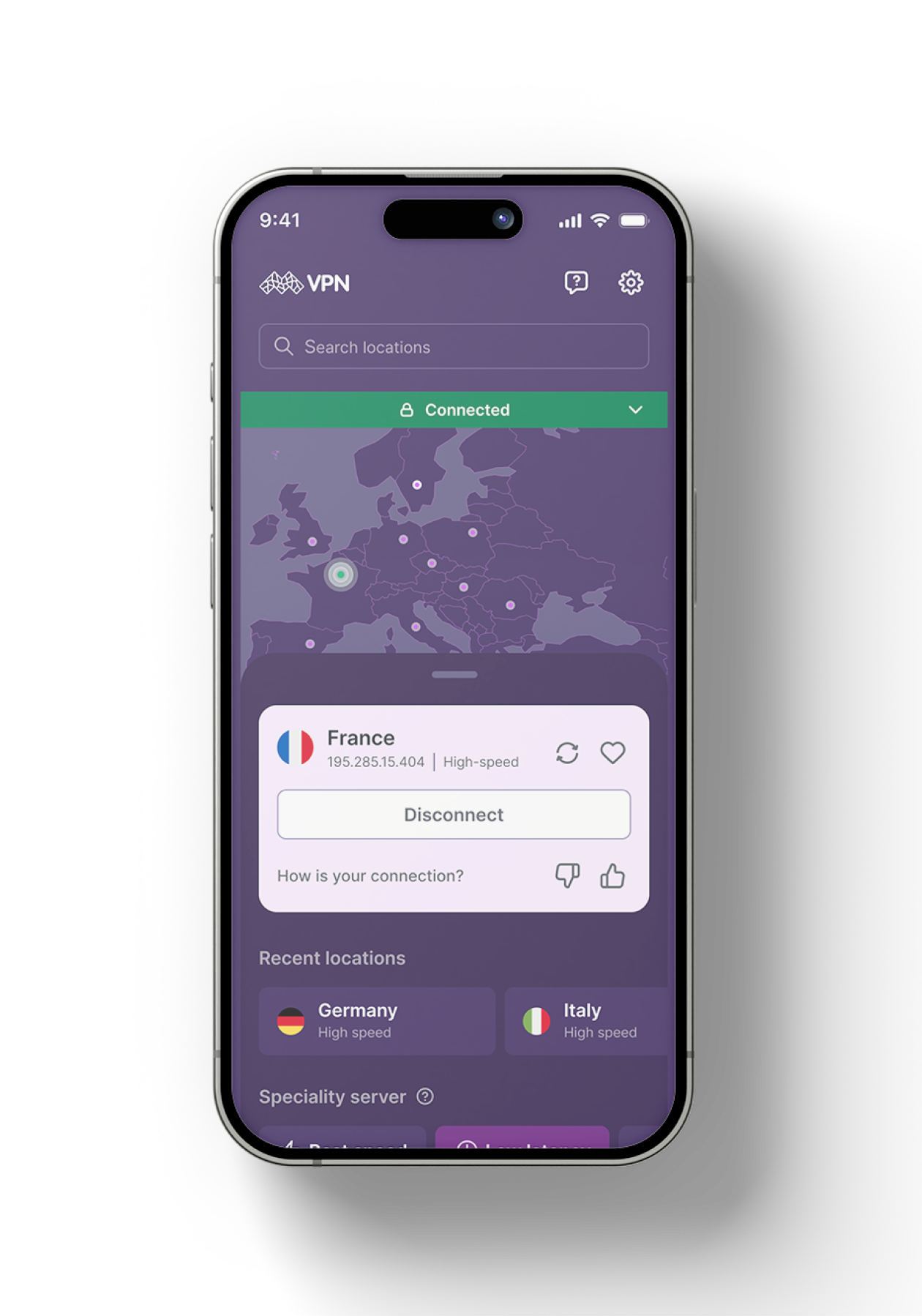
Be part of the resistance, quietly.
Get Mysterium VPN
Dominykas is a technical writer with a mission to bring you information that will help you keep your digital privacy and security protected at all times. If there's knowledge that can help keep you safe online, Dominykas will be there to cover it.
Related Articles
.png)